Plant Overview
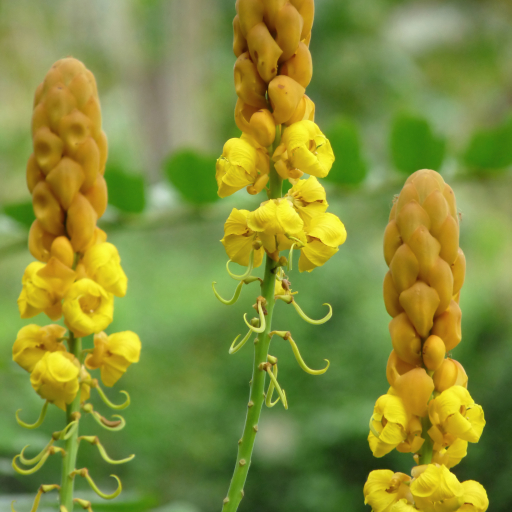
Known globally as the Candle Bush or Empress Candle, Senna alata is a sun-loving tropical giant that commands attention in any landscape. Its towering, bright yellow flower spikes resemble golden candelabras standing tall against a backdrop of lush, emerald foliage. Beyond its beauty, it is often referred to as the "pharmacy in a bush" due to its long history in traditional medicine for treating skin conditions.
🔍 How to Identify
- 🕯️ The "Candles": The most striking feature is the upright flower clusters (racemes) that look like thick yellow wax candles before the individual blossoms fully open.
- 🌿 Winged Foliage: The plant features large, pinnate leaves with 6–12 pairs of rounded leaflets. These leaves have a unique habit of folding up together at night.
- 📦 Winged Pods: After flowering, it produces straight, dark brown seed pods that feature four distinct longitudinal "wings," which is where its Latin name alata (meaning "winged") comes from.
🏡 In Your Garden
- ☀️ Fast & Furious Growth: This is a pioneer species that grows incredibly fast. In a single season, it can transform from a small sapling into a 10-foot shrub. Because it grows so quickly, it can become "leggy," so don't be afraid to prune it back hard after the flowering season to keep it bushy.
- 🦋 Pollinator Magnet: It is a major host plant for various Sulphur butterflies. If you see small green caterpillars munching on the leaves, don't panic—they are the future yellow butterflies that make this plant their home.
⚠️ Safety & Toxicity
- 🟢 Handle with Care: While widely used topically in traditional medicine to treat ringworm and fungal infections, it should not be ingested without professional guidance.
- 🤮 Ingestion Risk: The leaves and seeds contain anthraquinones, which act as a potent laxative. If eaten by pets or small children, it can cause significant stomach upset, nausea, or diarrhea.
✨ Fun Fact
The Candle Bush is a "smart" sleeper! It practices nyctinasty, a rhythmic movement where its large leaves fold upward and close tightly at night to protect its delicate surfaces from dew and to conserve heat.

Detailed Care Instructions
To grow a Senna Alata plant, also known as the candle bush or emperor's candlesticks, follow these steps:
- Climate: Senna Alata thrives in tropical and subtropical regions, where temperatures generally range between 60-85°F (15-30°C). Ensure your climate is suitable for its growth.
- Soil: It prefers well-draining soil that is slightly acidic to neutral pH. Amend heavy clay soils with compost or organic matter to improve drainage.
- Planting: Sow the seeds directly into the garden bed or start with young nursery-grown plants. If planting from seeds, scarify or lightly nick the seeds' hard shell to facilitate germination.
- Sunlight: Senna Alata requires full sun exposure for at least six hours a day. Choose a location that receives ample sunlight.
- Watering: Keep the soil consistently moist, especially during the plant's establishment period. Once established, it is relatively drought-tolerant. Water deeply and allow the soil to dry between watering sessions.
- Fertilizer: Apply a balanced fertilizer once a month during the growing season to encourage healthy growth. Alternatively, incorporating compost or aged manure into the soil before planting can provide essential nutrients.
- Pruning: To maintain a neat shape and encourage bushiness, prune Senna Alata by cutting back any dead or leggy branches. Regularly removing spent flowers (deadheading) will promote continuous blooming.
- Pests and diseases: Senna Alata is generally resistant to most pests and diseases. However, keep an eye out for common garden pests such as aphids or spider mites. Use appropriate organic or chemical controls if necessary.
- Propagation: Propagate Senna Alata either by seeds or stem cuttings. Take stem cuttings of healthy plants, remove the lower leaves, and place them in well-draining potting soil. Keep the soil moist until root development occurs.
- Winter care: In colder regions, Senna Alata is typically grown as an annual plant. If desired, you can overwinter the plant indoors by keeping it in a sunny location and reducing watering.
Remember to check your local regulations before planting Senna Alata, as it may be considered invasive in some areas outside its native range.

Place in a bright room that is sun drenched almost all day. Or directly in a south-facing window.

To water this particular plant, it is important to make sure the soil is slightly moist but not overly saturated. The frequency of watering will depend on the climate and environmental conditions of where the plant is located. Generally, the plant should be watered deeply once a week or every 5-7 days during dry spells. During rainy seasons, it may not require additional watering except when the soil is dry to the touch. It is important to avoid getting the leaves wet as this can lead to foliar diseases. Watering should be done at the base of the plant, either directly onto the soil or using a drip irrigation system. It is advisable to check the soil before watering to avoid overwatering, which can lead to root rot.
- Choose a well-draining soil mix with a pH level between 6.0-7.5.
- Use a balanced fertilizer with equal ratios of nitrogen (N), phosphorus (P), and potassium (K), such as 10-10-10, 20-20-20, or 16-16-16.
- Apply the fertilizer at a rate of 1 tablespoon per square foot of soil every 4-6 weeks during the growing season.
- Water the plants thoroughly after applying the fertilizer to ensure the nutrients reach the roots.
- Avoid over-fertilizing, as this can cause leaf burning and decrease flower production.
- If the plant is in a container, it may require more frequent fertilization due to the limited soil volume.
Senna Alata plant thrives well in well-drained soil with a neutral to slightly acidic pH level. The recommended soil type for this plant is sandy loam or loamy soil. The soil should be rich in organic matter and have good water retention capacity, but not be too wet or waterlogged. It is important to avoid using heavy clay soil that can prevent drainage and lead to waterlogging.
Before planting, it is advisable to prepare the soil by adding organic matter like compost or well-rotted manure. This will help to improve the soil structure, increase water retention, and provide nutrients for the plant's growth. It is also recommended to add a slow-release fertilizer to the soil to promote healthy growth.
When planting the Senna Alata plant, dig a hole that is twice the size of the pot it came in and backfill with the prepared soil. Firm the soil around the plant and water thoroughly. Ensure that the plant is not planted too deep, and the soil is not compacted around the stem as this can cause stem rot. The plant should be placed in a sunny and protected location, and the soil should be kept moist but not waterlogged.
To propagate this plant, you will need to collect mature seeds from the parent plant. Once the seed pods have turned brown and dry, remove them from the plant and extract the seeds. It is best to plant the seeds immediately after extraction as they have a short viability period.
Prepare a well-draining potting mix and sow the seeds at a depth of approximately twice their diameter. Water the seeds gently but thoroughly and place the pot in a warm and bright location. The seeds should germinate within one to two weeks.
Once the seedlings have grown to a height of around 3-4 inches, they can be transplanted into larger pots or directly into the garden. Ensure that the soil is moist and well-drained, and the plant is placed in a location that receives plenty of sunlight.
In addition to seed propagation, Senna Alata can also be propagated through stem cuttings. Select a healthy stem and cut a section around 4-6 inches long. Remove the leaves from the bottom half of the stem and plant the cutting into a well-draining soil mix. Keep the soil moist and place the cutting in a bright location but out of direct sunlight. The cutting should root within 2-3 weeks and can be transplanted into a larger pot or directly into the garden.
Common pests of the candlesticks include Mealybugs, spider mites, whiteflies. Make a habit of checking your candlesticks frequently for pests so that any infestations can be caught and managed early.








