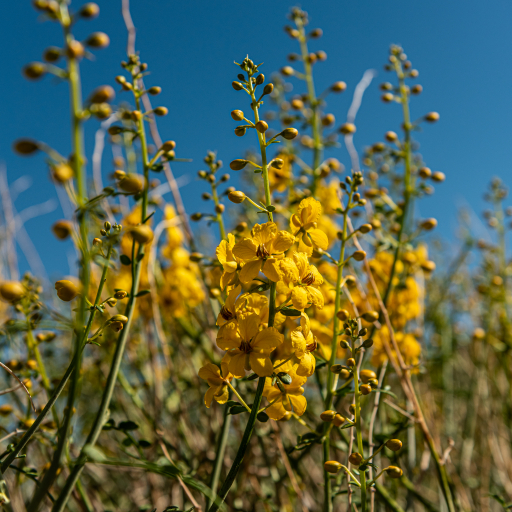
Plant Overview
Often called the Spiny Senna or Armored Senna, this desert specialist looks more like a tangled sculpture of green wire than a traditional bush. Native to the harsh Mojave and Sonoran deserts, it has evolved to be "tough as nails," discarding its leaves early in the season to protect itself from the scorching sun. When it blooms, however, this "pile of sticks" transforms into a brilliant golden beacon of the American Southwest.
🔍 How to Identify
- 🌵 The "Armored" Stems: The most striking feature is its intricate maze of stiff, zig-zagging stems that are pale green to bluish-grey. These stems end in sharp, needle-like points that give the plant its "armata" (armed) name.
- 💛 Golden Pea-Flowers: In late spring, the bush is covered in clusters of showy, five-petaled yellow flowers. These blooms have a sweet, light fragrance that attracts desert bees and butterflies.
- 🍃 Disappearing Leaves: You might miss the leaves entirely! They are tiny and compound, but the plant sheds them almost immediately after rain to prevent water loss, leaving the green stems to handle all the photosynthesis.
🏡 In Your Garden
- 🏜️ The Ultimate Xeriscape Plant: If you live in an arid climate, this is a "set it and forget it" species. It thrives in poor, rocky, or sandy soil where most ornamental plants would wither and die.
- ☀️ Sun Worshipper: This plant requires full, intense sun to maintain its structural integrity. In shade, the stems become weak and "leggy," losing the compact, spiny look that defines the species.
- 💧 The "No-Water" Rule: Once established, Spiny Senna rarely needs supplemental irrigation. In fact, overwatering is the most common cause of death, as it is highly susceptible to root rot in heavy or damp soil.
⚠️ Safety & Toxicity
- ⚔️ Physical Hazard: While the plant is not known to be chemically toxic, it is physically aggressive. The sharp branch tips can easily puncture skin, gardening gloves, or curious pet paws.
- 🐾 Pet & Child Safety: It is generally considered safe regarding ingestion, but because of its "armored" nature, it should be planted away from walkways or areas where children and pets play to avoid accidental stabs.
✨ Fun Fact
- 🐝 Nature's Fertilizer: As a member of the pea family (Fabaceae), the Spiny Senna is a "nitrogen fixer." It hosts special bacteria in its roots that take nitrogen from the air and turn it into plant food, effectively fertilizing the desert soil for its neighbors.

Detailed Care Instructions
Senna armata, also known as the desert senna, is a drought-tolerant and low-maintenance plant that can thrive in arid conditions. Here are some tips on how to grow Senna armata:
- Planting location: Choose a sunny spot with well-draining soil for your Senna armata plant. This plant does well in hot and dry conditions, so make sure it receives full sun for most of the day.
- Soil: Senna armata prefers sandy or rocky soil with good drainage. If your soil is heavy and clayey, consider mixing in some sand or gravel to improve drainage.
- Watering: Senna armata is drought-tolerant once established, so water sparingly. Water the plant deeply but infrequently, allowing the soil to dry out between waterings.
- Fertilizing: Senna armata does not require regular fertilization. If you feel the plant needs a boost, you can apply a balanced slow-release fertilizer in the spring.
- Pruning: Prune Senna armata in the late winter or early spring to encourage new growth and maintain a compact shape. Remove any dead or damaged branches and shape the plant as desired.
- Propagation: Senna armata can be propagated from seeds. Collect seeds from the plant in the fall and sow them in a well-draining potting mix. Keep the soil moist until the seeds germinate.
- Pests and diseases: Senna armata is generally pest and disease-free. However, keep an eye out for any signs of pests or diseases and treat them promptly if necessary.
By following these tips, you can successfully grow Senna armata in your garden or landscape. Enjoy the beautiful yellow flowers and drought-tolerant nature of this unique plant!

Place in a bright room that is sun drenched almost all day. Or directly in a south-facing window.

Senna Armata is a drought-tolerant plant that requires minimal watering once established. When watering, it is important to thoroughly saturate the soil around the plant to encourage deep root growth. It is best to water Senna Armata deeply but infrequently, allowing the soil to dry out between waterings. This plant is sensitive to overwatering, so it is important to avoid creating waterlogged conditions that can lead to root rot. Additionally, it is recommended to water Senna Armata in the early morning or late evening to minimize water loss through evaporation. Overall, it is important to monitor the soil moisture levels and adjust the watering frequency as needed based on the plant's specific needs.
To fertilize the Senna Armata plant, use a balanced fertilizer with equal parts nitrogen, phosphorus, and potassium. Apply the fertilizer once a month during the growing season, which typically lasts from spring to early fall. Be sure to dilute the fertilizer according to the manufacturer's instructions and water the plant well after applying to help the nutrients reach the roots. Avoid over-fertilizing, as this can lead to nutrient imbalances and damage to the plant.
Senna armata is a plant that thrives in well-draining soil with a neutral to slightly acidic pH. It prefers sandy or loamy soil that is rich in organic matter. It is important to ensure that the soil is not waterlogged, as this can lead to root rot. Adding compost or organic matter to the soil can help improve its drainage and nutrient content, making it more suitable for Senna armata. It is also recommended to avoid using heavy clay soil, as it can hinder the plant's growth and overall health.
Senna Armata plant can be propagated through both seeds and cuttings.
To propagate through seeds, collect mature seeds from the plant and sow them in well-draining soil. Keep the soil moist but not waterlogged, and place the pot in a warm and sunny location. The seeds should germinate within a few weeks.
To propagate through cuttings, take a cutting from a healthy and mature plant using a sharp and clean knife or scissors. Remove any leaves from the lower part of the cutting and dip it in rooting hormone powder. Plant the cutting in a pot with well-draining soil and place it in a warm and sunny location. Keep the soil moist and the cutting should develop roots within a few weeks.
Once the new plants have established roots, they can be transplanted into larger pots or directly into the garden. It is important to provide the plants with regular water and sunlight to ensure healthy growth.








