Plant Overview
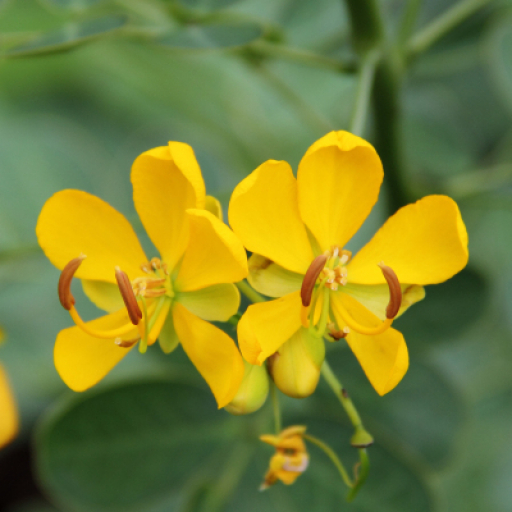
Known affectionately as the Christmas Senna or Winter Cassia, this vibrant shrub is a true gift to the winter landscape. Native to South America, it earns its nicknames by erupting into a golden cloud of blossoms just as most other garden plants are going dormant for the season. It is a sprawling, cheerful grower that brings a tropical "sunny" feel to the shorter days of the year.
🔍 How to Identify
- 🌼 Golden Blooms: Dense clusters of bright yellow, buttercup-like flowers featuring five rounded petals and prominent curved stamens.
- 🍃 Rounded Foliage: Smooth, deep green leaves arranged in pairs (pinnate), usually with 3 to 5 pairs of oval leaflets that have a slightly waxy texture.
- 🫛 Cylindrical Pods: After flowering, it produces distinctive "sausage-shaped" seed pods that hang in heavy clusters and turn from green to a papery brown.
🏡 In Your Garden
- ✂️ Pruning for Shape: True to its "Rambling Senna" name, this plant has a scandent habit, meaning it loves to lean and scramble. To keep it from becoming a messy thicket, prune it back hard after the winter flowering ends.
- 🦋 The Butterfly Nursery: This plant is a vital host for the Cloudless Sulphur butterfly. If you see small green or yellow caterpillars nibbling the leaves, celebrate! They are the next generation of pollinators for your garden.
⚠️ Safety & Toxicity
- 🚫 Mildly Toxic: Like many members of the legume family, the seeds and leaves contain anthraquinones, which have a strong laxative effect.
- 🐾 Pet & Child Safety: While not usually fatal, ingestion can cause significant stomach upset, vomiting, or diarrhea in dogs, cats, and small children. It is best placed in the back of a border where it won't be easily snacked on.
✨ Fun Fact
✨ In some Caribbean cultures, this plant is known as the "Money Bush." The legend suggests that as long as the plant is thriving and covered in its "golden coin" flowers, prosperity will find its way to the household.

Detailed Care Instructions
| Humidity | Normal |
| Lighting | Part Sun |
| Difficulty | Medium |
| Hardiness Zones | 10 - 12 |
To grow Senna bicapsularis, also known as yellow candle bush or buttercup bush, follow these steps:
- Climate and soil requirements: Senna bicapsularis is native to tropical and subtropical regions. It thrives in full sun or partial shade and well-draining soil. Ensure the temperature stays above freezing (minimum of 10°C or 50°F).
- Propagation: You can grow Senna bicapsularis from seeds or by taking stem cuttings. If propagating from seeds, scarify them (lightly nick the seed coat) before planting to speed up germination.
- Germination: Start by sowing the seeds in a pot or directly in the ground during spring. Plant the seeds 1/4 inch deep and keep the soil consistently moist until germination, which usually takes 2-4 weeks.
- Transplanting: Once the seedlings have developed a few sets of true leaves, transplant them to their permanent location. Space the plants about 3-4 feet apart to allow for proper growth.
- Watering: Water the plant regularly, especially during dry spells. Avoid overwatering to prevent root rot. Monitor soil moisture and adjust watering accordingly.
- Fertilization: Apply a balanced slow-release fertilizer in spring and early summer to promote healthy growth. Follow the manufacturer's instructions for dosage.
- Pruning: Prune Senna bicapsularis regularly to maintain its shape and remove any dead or diseased branches. It generally benefits from annual pruning in spring.
- Pest and disease control: Yellow candle bush is generally pest and disease resistant. However, keep an eye out for common garden pests like aphids or mealybugs. If necessary, use eco-friendly pest control methods or consult a local garden center for suitable remedies.
- Mulching: Apply a layer of organic mulch around the base of the plant to help retain moisture, suppress weeds, and improve soil quality.
- Enjoy the blooms: Senna bicapsularis typically flowers in late spring or early summer. It produces bright yellow blossoms, creating an attractive display in your garden.

Place in a window with dappled sun or a spot in the middle of a room. Or directly in a window facing west or east.

To properly water the Senna Bicapsularis plant, you must consider a few essential factors. Firstly, take into account the plant's environmental conditions and growth stage. Provide the plant with sufficient water, particularly during its active growth period and when it is flowering.
When watering the Senna Bicapsularis, it is crucial to consider the soil moisture level. Ideally, the soil should be evenly moist but not saturated. Carefully observe the soil between watering sessions to ensure it does not become too dry or overly saturated.
A useful technique is to water the plant thoroughly, allowing the water to penetrate deeply into the soil. Avoid surface watering as it encourages shallow root development. Deep watering promotes healthy root growth and enhances the plant's ability to withstand periods of drought.
Furthermore, always ensure adequate drainage to prevent waterlogging. Choose a well-draining soil mixture that allows excess water to escape easily. This will prevent the plant's roots from sitting in water for too long, which can lead to root rot or other related issues.
Additionally, watering schedules may vary depending on the plant's growth stage, season, and climate. During the plant's active growth phase, it may require more frequent watering, while in cooler months or during dormancy, irrigation frequency should be reduced.
Lastly, it is recommended to use room temperature or lukewarm water for watering your Senna Bicapsularis plant. Cold water can shock its roots, potentially causing stress or damage.
By following these guidelines and adapting them to your specific growing conditions, you can ensure that your Senna Bicapsularis plant receives the appropriate amount of water for optimal health and growth.
To fertilize the Senna bicapsularis plant, follow these instructions:
- Choose a balanced, slow-release fertilizer with an NPK ratio of 10-10-10 or similar.
- Dilute the fertilizer according to the package instructions. Use half strength or one-quarter strength for young plants, and full strength for mature ones.
- Water the plant thoroughly before applying the fertilizer. This will prevent burn and help the nutrients to distribute evenly.
- Apply the diluted fertilizer to the soil around the plant's base. Avoid getting it on the leaves or stems as it may cause damage.
- Use a watering can or a hose to gently water the plant after fertilizing. This will help the nutrients to penetrate the soil.
- Repeat the fertilization process every 4-6 weeks during the growing season, which typically lasts from spring to early fall.
- Monitor the plant for signs of over- or under-fertilization. If the leaves turn yellow or brown, or if the plant shows signs of stunted growth, adjust the fertilizer application accordingly.
Remember to always read and follow the instructions on the fertilizer packaging for specific guidance tailored to your plant's needs.
When selecting soil for Senna bicapsularis, it is important to consider the specific needs of this plant. Senna bicapsularis thrives in well-draining soil that allows excess water to flow out easily, preventing waterlogged conditions that can lead to root rot. It prefers a slightly acidic to neutral pH level, ideally ranging from 6.0 to 7.0.
As for the soil composition, it is recommended to use a mixture that is rich in organic matter. This will support healthy root growth and provide essential nutrients to the plant. Organic matter can be added in the form of compost or well-rotted manure. Such additions enhance soil fertility and help retain moisture, ensuring adequate hydration for the plant.
In terms of texture, a loamy soil is a good choice for Senna bicapsularis. Loam consists of a balanced mixture of sand, silt, and clay, allowing for good water retention while also promoting sufficient drainage. This type of soil provides a stable structure that allows roots to establish and spread easily.
To further improve soil conditions, consider incorporating perlite or vermiculite into the mixture. These materials enhance drainage and prevent compaction, ensuring optimal aeration for the plant's root system.
Overall, providing Senna bicapsularis with a well-draining, slightly acidic to neutral, organically enriched and loamy soil will create an ideal growing environment, supporting healthy growth and development of the plant.
Propagation of Senna bicapsularis can be done through various methods, including seeds, cuttings, and division. Here is a detailed explanation of each propagation method:
- Seed Propagation:
- Collect mature seeds from the plant when the seedpods turn brown and start to open naturally.
- Carefully remove the seeds from the pods and place them in a container filled with warm water.
- Leave the seeds to soak for 24 hours to soften their outer coating.
- Fill small pots or seed trays with a well-draining potting mix.
- Place one or two seeds in each pot, covering them with a thin layer of soil.
- Water the pots gently to maintain moisture.
- Keep the pots in a warm and bright location, preferably with temperatures around 70-80°F (21-27°C).
- Germination typically occurs within 2-3 weeks.
- Once the seedlings have developed a couple of true leaves, they can be transplanted into individual pots or directly into the ground.
- Cutting Propagation:
- Take 4- to 6-inch (10-15 cm) stem cuttings from a healthy Senna bicapsularis plant using a clean and sharp pair of pruning shears.
- Remove the lower leaves from the cutting, leaving only a few leaves at the top.
- Dip the cut end of each cutting into a rooting hormone powder to promote root development (optional).
- Fill small containers or seed trays with a well-draining rooting medium, such as a mixture of perlite and peat moss.
- Make holes in the rooting medium using a pencil or dibber.
- Insert the cuttings into the prepared holes, gently firming the medium around them.
- Water the cuttings thoroughly but avoid overwatering, as excess moisture can lead to rot.
- Place the containers or trays in a warm location with bright, indirect light.
- Maintain humidity around the cuttings by covering them with a clear plastic bag or using a propagation dome.
- Mist the cuttings occasionally to keep the leaves hydrated.
- Roots will generally develop within 4-6 weeks. Once sufficient roots have formed, the cuttings can be transplanted into individual pots.
- Division Propagation:
- Choose a mature and healthy Senna bicapsularis plant.
- Dig around the plant's base to carefully lift the entire root ball from the soil.
- Gently separate the clumps of the plant by hand or using sharp and sterile gardening tools.
- Each clump should have its own set of roots and shoots.
- Fill individual pots with a well-draining potting mix.
- Plant each separated clump in its own pot, ensuring that the roots are covered adequately with soil.
- Water the newly potted divisions thoroughly and place them in a warm, sunny location.
- Continue watering regularly, keeping the soil slightly moist but not waterlogged.
- Once the divisions have established new growth and roots, they can be transplanted into the desired planting location in the garden.
By following these propagation methods, you can successfully propagate Senna bicapsularis and create new plants for your garden or landscape.








