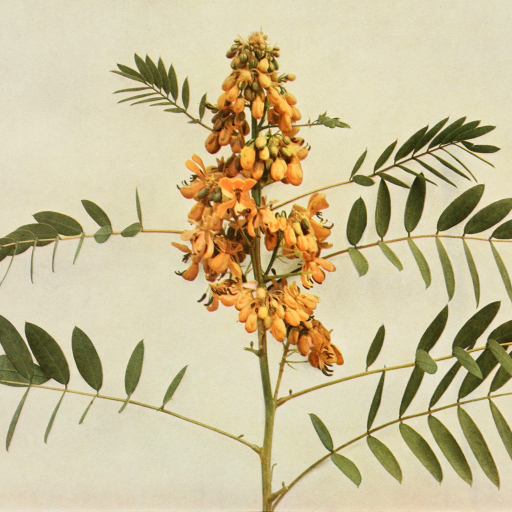
Plant Overview
Known affectionately as Wild Senna, this architectural powerhouse is a favorite for those looking to add structure and a "pollinator party" to their landscape. Native to Eastern North America, it looks like a delicate tropical shrub but possesses the rugged heart of a wildflower. In mid-to-late summer, it explodes with clusters of buttery yellow blossoms that act like a beacon for the most beautiful butterflies in the region.
🔍 How to Identify
- 🌿 The Foliage: The leaves are pinnately compound, meaning they look like a series of small, oval leaflets arranged in pairs along a central stem—resembling a fern or a locust tree leaf.
- 🌼 The Flowers: Look for bright yellow, pea-like blossoms with distinctive dark brown or black centers (anthers). They grow in dense clusters at the top of the plant.
- 🫛 The Seed Pods: After the flowers fade, the plant produces long, flat, slightly hairy green pods that turn a dramatic blackish-brown as they mature in the autumn.
🏡 In Your Garden
- 🦋 Pollinator Paradise: This is a vital host plant for the Cloudless Sulphur and Sleepy Orange butterflies. If you see little green caterpillars munching on the leaves, don't panic—you’re successfully raising butterflies!
- 🏗️ Architectural Anchor: Because it can reach heights of 4 to 6 feet without needing stakes, it’s perfect for the back of a flower bed. It has a deep taproot, which makes it incredibly drought-tolerant once established, but it "hates" being moved once it finds a home.
- 🌾 Soil Improver: Like many members of the legume family, Wild Senna has a symbiotic relationship with soil bacteria that allows it to "fix" nitrogen, naturally improving the soil quality for its neighbors.
⚠️ Safety & Toxicity
- 🟢 Status: Generally safe for gardens, but not for the dinner table.
- 🐾 Details: While not considered "deadly," the Senna genus contains compounds used in medicinal laxatives. Ingesting large amounts of the leaves or seeds can cause digestive upset in humans, dogs, and cats. It is best enjoyed as a visual treat rather than a culinary one.
✨ Fun Fact
Wild Senna is a master of "Buzz Pollination." Because its pollen is tucked tightly away, honeybees often struggle with it, but bumblebees will grab the flower and vibrate their entire bodies at a specific frequency to shake the pollen loose like a salt shaker!

Detailed Care Instructions
To grow Senna hebecarpa, also known as American senna or wild senna, you will need to follow these steps:
- Choose a suitable location: Senna hebecarpa thrives in full sun, so select a location in your garden that receives at least 6-8 hours of direct sunlight per day.
- Prepare the soil: The plant prefers well-draining soil with a pH range of 5.5-7.5. Loosen the soil and amend it with organic matter, such as compost, to improve drainage and fertility.
- Sow seeds directly: Senna hebecarpa is usually propagated from seeds. In colder regions, start the seeds indoors in pots 6-8 weeks before the last frost date. In warmer regions, you can sow the seeds directly into the prepared soil in early spring.
- Plant seeds or seedlings: Plant the seeds or seedlings at a depth of 1 inch (2.5 cm) and space them about 18-24 inches (45-60 cm) apart. Ensure the soil is kept moist but not waterlogged.
- Watering: Water the plant regularly, especially during its first year of growth, to establish a deep root system. However, be cautious not to overwater, as Senna hebecarpa prefers slightly drier conditions once established.
- Mulch and weed control: Apply a layer of organic mulch around the plant to conserve moisture, suppress weeds, and maintain a cool root environment. Regularly remove any weeds that may compete with the plant for nutrients.
- Pruning: During early spring, prune the plant to remove any dead or damaged branches. Pruning also helps shape the plant and encourages compact growth.
- Fertilizer: Senna hebecarpa generally does not require much additional fertilization. However, if your soil is lacking nutrients, you can apply a balanced fertilizer during the growing season following the manufacturer's instructions.
- Pest and disease control: Senna hebecarpa is generally not prone to major pest or disease issues. However, keep an eye out for common pests like aphids, caterpillars, or spider mites. Use organic pest control methods if necessary.
- Harvesting: Senna hebecarpa produces legume-like seed pods in late summer or early fall. Allow the pods to dry on the plant before harvesting them. Collect the seeds and store them in a cool, dry place for future planting.
Remember to always research and follow any specific care instructions for the particular cultivar of Senna hebecarpa you are growing.

Place in a bright room that is sun drenched almost all day. Or directly in a south-facing window.

To properly water this plant, you should first make sure that its soil is moist but well-draining. Water it deeply once a week or more frequently if it is planted in a particularly hot or dry area. Allow the soil to dry slightly in between watering. Avoid overwatering as this plant does not tolerate waterlogged soil. Additionally, you should water the plant at the base and avoid getting the foliage wet to prevent the risk of fungal diseases.
When fertilizing this plant, it is important to use a balanced fertilizer with a ratio of 10-10-10. Apply the fertilizer once a month during the growing season, following the manufacturer's instructions for dilution and application. Be careful not to over-fertilize, as this can lead to excessive growth and weak stems. Water the plant thoroughly before and after fertilizing to prevent root burn.
The soil that is ideal for Senna Hebecarpa plant is a well-drained soil that should be fertile and enriched with compost. It should not be too heavy or clay-like, as this can hold too much moisture and lead to root rot or other problems. The pH should be slightly acidic, between 6 and 7. The roots of the plant should not be disturbed during planting, so care should be taken not to damage them. The plant should be watered regularly, but not too much, as it can lead to overwatering and other problems. Fertilizer can be applied every two weeks during the growing season to maintain good growth. The soil should be kept moist but not waterlogged, and any excess water should be allowed to drain away. Finally, the plant should be placed in an area where it can receive full sun for most of the day, as this is necessary for it to grow properly.
Propagation of this plant can be achieved through several methods, including seed propagation and vegetative propagation. If propagating through seeds, it is important to select mature seeds from a healthy plant during the growing season. These seeds can be sown directly into the soil, or they can be started indoors and then transplanted once they have germinated.
For vegetative propagation, the plant can be propagated through stem cuttings. Select a stem cutting from a healthy plant during the growing season, making sure it is free from pests and diseases. Use a sharp and sterilized knife or scissors to make a clean cut just below a leaf node. Remove any leaves from the lower half of the cutting and dip the cut end into rooting hormone before planting in moist soil or a rooting medium.
Additionally, this plant can be propagated through division of its roots. This method is best done in the spring or fall when the plant is not actively growing. Simply dig up the plant and carefully separate the roots into smaller sections, each with a few stems and leaves. Replant the sections in well-draining soil and water thoroughly.
Regardless of the method, it is important to keep the newly propagated plants moist and in a warm, bright environment until they have established themselves.








