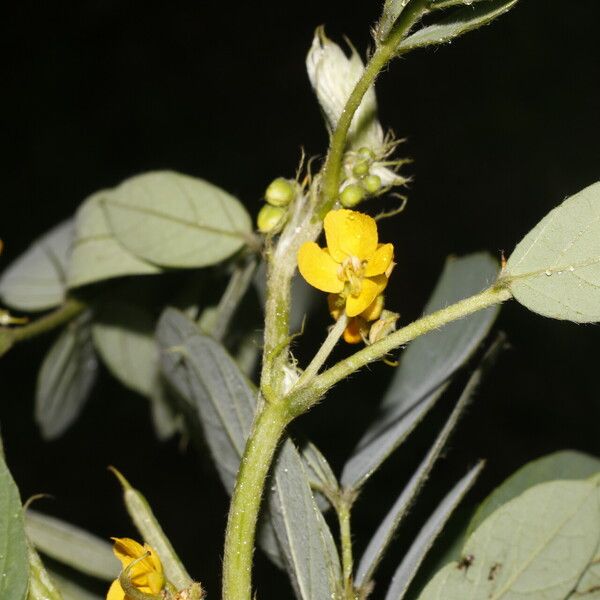
Plant Overview
Commonly known as the One-flowered Senna or Mexican Senna, this resilient legume is often found dancing along roadsides and open fields in tropical Americas. While it may look like a humble wild herb, it is a powerhouse of soil restoration. Its soft, velvet-like leaves and modest yellow blooms give it a gentle, understated beauty that belies its tough-as-nails nature.
🔍 How to Identify
- 🌼 The Lone Bloom: Unlike other Sennas that cluster their flowers, this species typically produces small, pale yellow flowers singly or in very small pairs from the leaf axils.
- 🍃 Fuzzy Foliage: The leaflets are arranged in 3 to 5 pairs and are covered in fine, silky hairs that give the plant a silvery or dusty green appearance.
- 📏 Seed Pods: It produces straight, narrow pods that are also slightly hairy and point upwards, holding the next generation of "sun-seekers."
🏡 In Your Garden
- 🌱 The Soil Healer: As a member of the legume family, this plant is a natural nitrogen-fixer. It works behind the scenes to pull nitrogen from the air and store it in the soil, making it a great "green manure" for tired garden beds.
- ☀️ Drought Warrior: This plant hates being pampered. It thrives in poor, rocky soil and full sun, making it an excellent choice for low-maintenance "wild" corners of a garden where other plants might wither.
⚠️ Safety & Toxicity
- 🐾 Mildly Toxic: While not considered deadly, most Senna species contain anthraquinones, which act as a powerful laxative.
- 👶 Keep Away from Nibblers: If ingested in significant quantities by pets or curious children, it can cause stomach upset, diarrhea, and abdominal pain. It is best treated as an ornamental or ecological plant rather than an edible one.
✨ Fun Fact
In some parts of the world, Senna uniflora is used as a biological weapon against the invasive "Famine Weed" (Parthenium). It grows aggressively enough to outcompete the weed, effectively reclaiming the land without the need for harsh chemicals!

Detailed Care Instructions

Place in a bright room that is sun drenched almost all day. Or directly in a south-facing window.

Some plants require more regular watering than others, which should be done every few days. It's critical to maintain the soil moist all of the time. The water requirements of the same plant placed in pots with varying sizes will differ. Because the water in the smaller pot evaporates faster than the water in the larger pot, it will require more watering. Regardless of pot size, the surface should constantly be maintained moist.








