Plant Overview
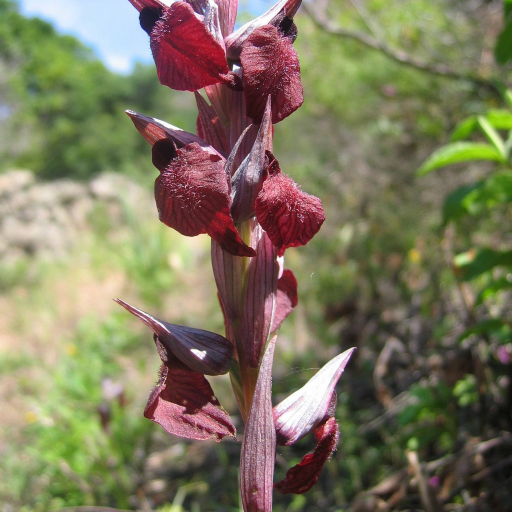
Known affectionately as the Heart-flowered Tongue Orchid, the Serapias cordigera is one of the most dramatic and "moody" looking orchids in the wild. Its deep, velvety burgundy hues and mysterious shape make it a favorite for hikers and botanical photographers across the Mediterranean. Unlike the bright, flashy petals of tropical orchids, this species sports a specialized "tongue" that looks almost like a piece of dark suede hanging from a floral helmet.
🔍 How to Identify
- ❤️ The Heart-Shaped Lip: The most defining feature is the wide, hairy, heart-shaped lip (labellum) that hangs downward. It is typically a rich, dark brownish-red or deep purple.
- ⛑️ The Floral Helmet: The upper petals and sepals fold together to form a pointed, hood-like structure (the galea) that protects the orchid’s reproductive organs from the elements.
- 🍃 Spotted Base: The long, lance-shaped leaves are a soft green, but if you look closely at the very base of the stem, you’ll often find fine purple or reddish spots.
🏡 In Your Garden & Habitat
- 🍄 The Fungal Connection: Like many wild orchids, this plant is a "specialist." It relies on a symbiotic relationship with specific underground fungi to germinate and grow. Because of this complex bond, it is notoriously difficult to transplant or grow in traditional garden soil—it prefers to stay exactly where it chose to sprout.
- 💧 Winter Growth: This orchid follows a Mediterranean cycle; it grows during the damp, cool winter months and sends up its flower spike in late spring. Once the summer heat hits, the plant disappears entirely, retreating into an underground tuber to survive the drought.
⚠️ Safety & Toxicity
- 🌿 Non-Toxic Status: There are no known toxic properties associated with the Serapias cordigera for humans, cats, or dogs.
- 🚫 Conservation Warning: While safe to touch, this plant is protected in many regions. Picking the flowers or attempting to dig up the tubers is often illegal and usually results in the death of the plant because it cannot survive without its native soil microbes.
✨ Fun Fact
The Serapias cordigera doesn't offer nectar to its pollinators. Instead, it acts as a "Bee Hotel." The tubular shape of the flower stays several degrees warmer than the outside air, and solitary bees (specifically of the genus Ceratina) use the flowers as a cozy, dry place to sleep during chilly nights!

Detailed Care Instructions
To grow Serapias cordigera, also known as the Violet Serapias, you can follow these steps:
- Choose the location: Serapias cordigera grows best in full sun or partially shaded areas. It prefers well-draining soils that are rich in organic matter.
- Prepare the soil: Before planting, loosen the soil to remove any weeds or rocks. Amend the soil with compost or well-rotted manure to improve its fertility and drainage.
- Planting: Dig holes that are slightly larger than the root ball of the plant. Place the plant into the hole, ensuring that the crown (where the stem meets the roots) is level with or slightly above the soil surface. Fill the hole with soil, gently firming it around the plant.
- Watering: After planting, water the plant thoroughly to settle the soil and encourage root establishment. Afterward, water regularly but avoid overwatering, as Serapias cordigera prefers dry to moderately moist conditions.
- Fertilization: Serapias cordigera does not require heavy fertilization. However, you can apply a balanced, slow-release fertilizer in early spring to provide essential nutrients for growth.
- Mulching: Applying a layer of organic mulch around the plant can help retain moisture, suppress weeds, and regulate soil temperature.
- Pruning: Serapias cordigera generally does not require pruning. However, you can remove any dead or damaged foliage to maintain a tidy appearance.
- Pest and disease control: Serapias cordigera is relatively resistant to pests and diseases. However, you should regularly inspect the plant for any signs of damage or infestation and take appropriate action if necessary.
- Propagation: Serapias cordigera can be propagated through division. After a few years, when the plant has grown sufficiently, carefully dig out the clump and separate it into smaller divisions. Replant the divisions, ensuring that each has an adequate amount of roots and foliage.
Overall, Serapias cordigera is a hardy plant that requires minimal care. With proper cultivation techniques and suitable growing conditions, it should thrive and produce beautiful violet flowers.

Place in a bright room that is sun drenched almost all day. Or directly in a south-facing window.

Serapias cordigera is a type of flowering plant that requires specific watering techniques to thrive. Here are some details on how to water this plant:
1. Check the soil moisture level: Before watering Serapias cordigera, check the soil moisture level by sticking your finger into the soil. If the soil feels dry to the touch, it is time to water.
2. Choose the right watering method: The best way to water Serapias cordigera is to use a watering can or a hose with a gentle spray nozzle. Avoid using a high-pressure spray that can damage the delicate flowers and leaves.
3. Water deeply and thoroughly: When watering, make sure to soak the soil deeply and thoroughly. The water should penetrate the soil to a depth of at least 6 inches to ensure that the plant's roots are getting enough moisture.
4. Water in the morning: It is best to water Serapias cordigera in the morning, as this allows the plant to absorb the moisture it needs before the heat of the day sets in. Avoid watering in the evening, as this can promote fungal growth.
5. Watch for signs of overwatering: Overwatering is a common problem with Serapias cordigera. Signs of overwatering include yellowing leaves, wilting, and root rot. If you notice any of these signs, reduce the frequency of watering.
6. Adjust watering frequency based on the season: The watering needs of Serapias cordigera can vary depending on the season. During the summer months, the plant may require more frequent watering, while in the winter, it may need less.
By following these tips, you can ensure that your Serapias cordigera plant gets the moisture it needs to thrive.
- Choose a well-draining soil mix with a pH level of 6.5 to 7.5.
- Apply a balanced fertilizer with an N-P-K ratio of 10-10-10 or 20-20-20 once per month during the active growth season.
- Dilute the fertilizer in water according to the manufacturer's instructions.
- Water the Serapias Cordigera plant thoroughly before applying fertilizer.
- Use a watering can or sprayer to apply the fertilizer to the soil around the base of the plant, taking care not to get any on the foliage.
- Avoid over-fertilizing, which can lead to nutrient burn and damage the plant.
- In winter, reduce fertilizer application or stop entirely, as the plant enters dormancy.
It is ideal to use soil that is well-draining and rich in nutrients. It should be composed of a mixture of organic matter, such as compost or peat, and mineral components like sand or perlite. The soil should have a pH level of around 6.5 to 7 and should not be too compacted or heavy. Light and airy soil is recommended as it promotes good root development and prevents waterlogging, which can cause the plant to rot. Additionally, adding a layer of mulch to the top of the soil can help retain moisture and keep the soil cool.
Serapias cordigera is a plant that can be propagated through rhizome division. To do this, dig up the plant and carefully separate the rhizomes (underground stems) into sections that have at least one established shoot and root system. Each section can then be planted individually, making sure to keep the soil moist and providing ample light. It is recommended to propagate Serapias cordigera in the early spring or fall when temperatures are cooler and the plant is not actively growing. After a few weeks, the new plants should start to establish themselves and can be cared for as mature plants.








