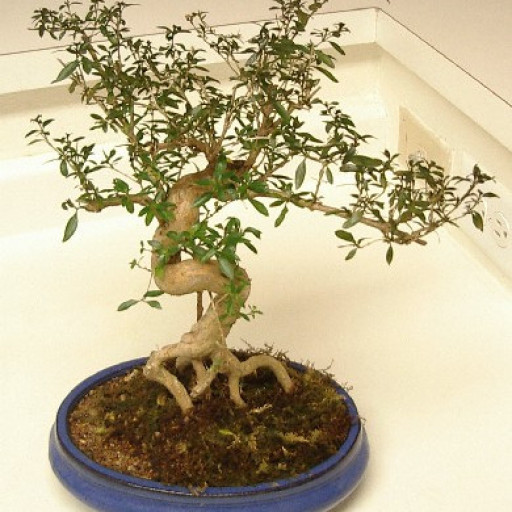
Plant Overview
Often called the "Tree of a Thousand Stars," this elegant evergreen shrub is a crown jewel in the world of bonsai and miniature gardening. Native to the damp, open woodlands of South Asia, it earns its nickname from the hundreds of tiny, snow-white blossoms that can cover its canopy simultaneously. While it is breathtakingly beautiful, it is also famously known as the "diva" of the plant world because of its dramatic reaction to even the slightest changes in its environment.
🔍 How to Identify
- 🌸 The Bloom: Funnel-shaped, tiny flowers (usually white, though some cultivars are pinkish) with five to six petals that look like miniature stars scattered across the foliage.
- 🍃 The Foliage: Very small, oval, dark-green leaves that grow in dense pairs. Some varieties feature striking white or yellow variegated edges.
- 🪵 The Bark: The stems and trunk are thin but woody, developing a rough, gray, and "aged" texture very early in life, which makes young plants look like ancient trees.
🏡 In Your Garden
- 🎭 The "Tantrum" Effect: The Serissa is notorious for dropping its leaves if it is moved, repotted, or experiences a sudden temperature shift. If your plant goes bald overnight after you bring it home, don't throw it away—it is likely just acclimating and will regrow its leaves once it feels settled.
- ☁️ Atmospheric Preference: This plant craves high humidity but hates "wet feet." It thrives best when placed on a pebble tray filled with water, providing a moist microclimate that mimics its native subtropical forest floor.
⚠️ Safety & Toxicity
- 🐾 Pet Safety: The Serissa Japonica is generally considered non-toxic to cats, dogs, and horses, making it a worry-free addition to a pet-friendly home.
- ✂️ Pruning Protection: While not poisonous, the sap can occasionally cause mild skin irritation for those with sensitive skin. It is a good idea to wash your hands after a heavy pruning session.
✨ Fun Fact
👃 A Smelly Secret: Despite its heavenly appearance, the name Serissa is linked to the plant's hidden scent. When the leaves or roots are crushed or pruned, they emit a pungent, slightly unpleasant odor, which is why it is sometimes colloquially referred to as the "Foetid Tree" in older botanical texts.

Detailed Care Instructions
| Humidity | High |
| Lighting | Part Sun |
| Difficulty | Easy |
| Hibernation | Cold Period |
| Temperature | 20°C - 25°C |
| Hardiness Zones | Max 11B |
To grow Serissa Japonica, also known as Tree of a Thousand Stars, you can follow these steps:
- Choose a suitable location: Serissa Japonica prefers bright, indirect sunlight. It can tolerate some direct sunlight, but too much can scorch the leaves. It is best to keep it indoors or in a partially shaded area outdoors.
- Provide the right soil: Use a well-draining soil mix that is slightly acidic. Serissa Japonica prefers slightly acidic soil with a pH between 5.5 and 6.5. You can mix peat moss or pine bark in the soil to create the right acidity level.
- Watering: Serissa Japonica likes to be kept evenly moist but not soggy. Water the plant when the top inch of the soil feels dry. Avoid overwatering as it can lead to root rot.
- Fertilize: Feed the plant with a balanced, water-soluble fertilizer every two weeks during the growing season (spring to fall). Follow the instructions on the fertilizer package for the proper dilution ratio.
- Pruning: Serissa Japonica can be pruned to maintain its shape and promote bushiness. Prune after the flowering period to encourage new growth. Use clean and sharp pruning tools to prevent any damage or disease transmission.
- Repotting: As the plant grows, it may need to be repotted every 1-2 years. Choose a pot that is slightly larger than the current one and use fresh, well-draining soil. Repot during spring or early summer.
- Pest control: Watch out for common pests like aphids, spider mites, and scale insects. If infested, treat the plant with an appropriate insecticide or use organic pest control methods.
- Winter care: Serissa Japonica is sensitive to cold temperatures, so if you live in a region with freezing winters, bring the plant indoors. Avoid placing it near drafts or heat sources as it prefers a consistent temperature.
Remember that Serissa Japonica requires consistent care and attention to thrive. Monitor its water needs, ensure proper lighting, and maintain a well-balanced environment to promote healthy growth.

Place in a window with dappled sun or a spot in the middle of a room. Or directly in a window facing west or east.

To water this plant, it is important to first understand its water requirements. This plant needs to be kept moist, but not waterlogged. It is best to water it deeply, making sure the water reaches the roots, but also allowing excess water to drain away. The frequency of watering will depend on factors such as the temperature, humidity level, and soil type. It is important to pay attention to the soil's moisture level and adjust the watering schedule accordingly. Overwatering can lead to root rot, while underwatering can cause the plant to dry out and wilt. In general, it is better to underwater than overwater this plant. When watering, it is important to avoid getting water on the leaves, as this can promote the growth of fungal diseases. It is also a good idea to use room temperature water, as cold water can shock the roots.
To fertilize this plant, use a balanced liquid fertilizer once a month during the growing season. Avoid over-fertilizing as this can cause burnt roots and leaf drop. Water the plant before fertilizing to prevent fertilizer burn and ensure that the nutrients are absorbed properly. In winter, reduce or stop fertilizing and allow the plant to rest.
The ideal soil for this plant is a well-draining acidic soil with a pH range of 5.5 to 6.5. The soil should be rich in organic matter and slightly moist, but not waterlogged. A mix of peat moss, perlite, and sand can be used to create a suitable soil mixture for optimal growth. It is also important to avoid using hard or alkaline water when watering the plant as this can negatively affect its growth and health.
There are several ways to propagate this plant:
- Softwood cuttings: Take a 4- to 6-inch cutting from the top of the plant, making a clean cut just below a leaf node. Remove the lower leaves and dip the cut end in rooting hormone. Plant the cutting in a well-draining soil mix and keep it moist. Place the container in a warm, bright spot and mist the cutting regularly until new growth appears.
- Hardwood cuttings: In late autumn or winter, take a 8- to 10-inch cutting that is woody at the base but still has some green at the tip. Remove the lower leaves and dip the cut end in rooting hormone. Plant the cutting in a well-draining soil mix and keep it moist. Place the container in a cool, bright spot and mist the cutting regularly until new growth appears.
- Air layering: Select a healthy stem on the plant and make a small cut about halfway through the stem, just below a leaf node. Wrap a small ball of moist sphagnum moss around the cut and secure it in place with string or wire. Cover the ball of moss with plastic wrap and keep it moist. Roots should develop in 4-6 weeks. Once rooted, cut the stem below the moss ball and plant it in a well-draining soil mix.
- Division: If the plant has grown too large for its pot, gently remove it from the pot and divide the roots into smaller sections. Replant the sections in fresh soil mix in separate containers and water thoroughly.
These are the different ways to propagate this plant without using its common names.
Common pests of the snowrose include Mealybugs, spider mites, aphids. Make a habit of checking your snowrose frequently for pests so that any infestations can be caught and managed early.








