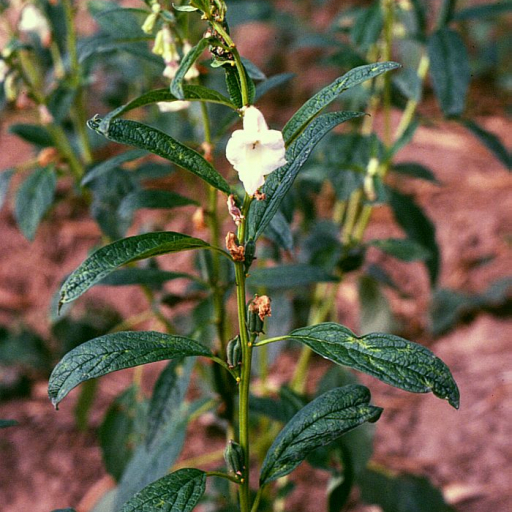
Plant Overview
Often called the "Queen of Oilseeds," Sesamum indicum is one of the oldest cultivated crops in human history, dating back over 5,000 years. Famous for its tiny, nutrient-dense seeds and the magical phrase "Open Sesame" from the tale of Ali Baba, this plant is a resilient survivor that thrives where other crops wither. Whether you know it as "Benne" or simply Sesame, this upright annual brings a touch of ancient agricultural history to any warm-weather garden.
🔍 How to Identify
- 🌿 Stately Stems: The plant grows tall and upright, reaching 2 to 3 feet, with stems that are slightly hairy and often square-shaped in cross-section.
- 🌸 Foxglove-like Blooms: It produces beautiful, bell-shaped flowers that are usually white or pale pink, appearing tucked into the leaf axils along the stem.
- 🍃 Variable Foliage: The leaves are interestingly diverse; those at the bottom are broad and lobed, while the upper leaves are narrow and lance-shaped.
- 📦 Seed Capsules: After the flowers fade, small rectangular pods (capsules) develop. When ripe, these pods split vertically to release the flat, teardrop-shaped seeds.
🏡 In Your Garden
- ☀️ The Sun Worshipper: Sesame is incredibly heat-tolerant and thrives in conditions that would make other plants wilt. It requires a long, warm growing season to produce seeds, so it’s best for regions with hot summers.
- 💧 Drought Resilience: Once its taproot is established, it is remarkably drought-resistant. It actually dislikes "wet feet," so well-draining soil is a must to prevent root rot.
- 🐝 Pollinator Magnet: The tubular flowers are highly attractive to bees and butterflies, making it a functional and beautiful addition to a wildlife-friendly vegetable patch.
⚠️ Safety & Toxicity
- ✅ Safe for Humans: The seeds are a global culinary staple. However, sesame is a common allergen for some individuals, so caution is advised if you have known food sensitivities.
- 🐾 Pet Safety: The plant is generally considered non-toxic to dogs and cats. While a few stray seeds shouldn't hurt them, the high oil content in the seeds can cause digestive upset if consumed in large quantities.
- 👐 Skin Contact: The fine hairs on the stems and leaves may cause mild mechanical irritation to those with very sensitive skin during harvesting.
✨ Fun Fact
The legendary phrase "Open Sesame" isn't just a random magic word! It actually refers to the biological "shattering" of the sesame pod. When the seeds are fully ripe, the capsule pops open with a distinct snapping sound, revealing the "treasure" inside.

Detailed Care Instructions
| Color | White, Purple, Blue |
| Soil Ph | Neutral, Sweet (No Salt) |
| Humidity | Normal |
| Lighting | Part Sun |
| Soil Type | Medium Texture, Well-Drained |
| Bloom Time | Summer |
| Difficulty | Medium |
| Plant Type | Tropical |
| Mature Size | 3-4 Feet |
| Native Area | Sub-Saharan And North Africa, India |
| Temperature | 14°C - 16°C |
| Sun Exposure | Full Sun |
| Hardiness Zones | 10 And Above |
To grow Sesamum Indicum, also known as sesame, you can follow these steps:
- Climate and temperature: Sesame plants prefer warm climates with temperatures between 60°F to 85°F (15°C to 30°C). Ensure that your region has a long enough growing season of at least 100-140 days.
- Soil preparation: Sesame plants thrive in well-drained, sandy loam soil with a pH level ranging from 5.5 to 8.0. Prepare the soil by removing any weeds or debris and loosening it to a depth of around 12 inches. It is also beneficial to amend the soil with organic matter such as compost or aged manure to improve its fertility.
- Germination: Sesame seeds can be started indoors or directly sown into the ground. If you choose to start indoors, plant the seeds in small pots filled with seed-starting mix. Place the pots in a warm and sunny location, keeping the soil moist until germination occurs. Once the seedlings have developed a few true leaves, they can be transplanted into the garden.
- Direct sowing: If you opt for direct sowing, wait until the soil has warmed up to around 65°F (18°C) before planting the seeds. Sow the seeds about 1/2 inch deep, spacing them 4 to 6 inches apart. Leave about 18-24 inches of space between rows.
- Watering: Sesame plants are drought-tolerant but still require regular and consistent watering, especially during dry periods. Water deeply once or twice a week, ensuring that the soil is evenly moist but not waterlogged.
- Fertilization: Apply a balanced, slow-release fertilizer at the time of planting, following the package instructions. If the plants show signs of nutrient deficiency during the growing season, you can supplement with a liquid fertilizer.
- Weed control: Keep the area around the sesame plants free from weeds by regularly cultivating the soil or applying a layer of mulch. This will help prevent competition for nutrients and water.
- Pests and diseases: Sesame plants are relatively resistant to pests and diseases. However, keeping the garden area clean and free from debris can help prevent any potential issues. If necessary, treat pest infestations or diseases using organic or chemical controls.
- Harvesting: Sesame plants typically begin flowering after 6-8 weeks, and the seeds are ready for harvest in about 3-5 months from planting. Harvest when the lower leaves start to turn yellow and the seed pods turn brown. Cut the entire plant at the base and hang it upside down in a cool, dry location to allow the seeds to dry further. Once the seed pods are dry, you can remove the seeds by rubbing or threshing them.
Follow these steps, and with proper care and attention, you should be able to grow a healthy and productive Sesamum Indicum plant.

Place in a bright room that is sun drenched almost all day. Or directly in a south-facing window.

Sesamum Indicum is a type of plant that requires adequate watering for its growth and development. To water this plant, it is essential to use a small watering can or a watering hose with a fine nozzle to avoid flooding the soil.
As a rule of thumb, it is recommended to water the Sesamum Indicum plant once or twice a week, depending on the prevailing weather conditions. During the hot and dry weather, watering should be more frequent, while during the cold and damp weather, it should be reduced.
Before watering the plant, it is essential to check the moisture level of the soil by inserting a finger into the soil. If the soil feels dry to the touch, it's a sign that it needs watering. When watering, it is recommended to direct the water to the base of the plant, avoiding the leaves and stems.
When watering, ensure that the soil is adequately watered but not overwatered, as this can lead to waterlogging and root rot. Also, avoid watering during the hottest time of the day to reduce the risk of scorching the plant.
In conclusion, adequate watering of Sesamum Indicum plant involves using a small watering can or a watering hose with a fine nozzle to water the soil once or twice a week while avoiding overwatering or watering during the hottest time of the day.
To fertilize this plant, apply a balanced fertilizer that contains equal amounts of nitrogen, phosphorus, and potassium. Apply the fertilizer at a rate of one tablespoon per square foot of soil every two weeks during the growing season. Water the plant well after fertilizing to ensure proper absorption of the nutrients. Avoid over-fertilizing, as this can lead to excessive growth and reduce seed production. Additionally, consider using organic fertilizers such as compost or manure for a more natural approach to fertilizing.
Sesamum Indicum is a type of crop that requires a well-draining soil that is rich in organic matter and nutrients. It can adapt to a range of soil types, including sandy, loamy, and clayey soils with a pH range of 5.5 to 8.0. However, the best soil type for this plant is a fertile, slightly acidic soil that is well-drained and aerated.
The soil should be prepared before planting by incorporating organic matter such as compost, manure or green manure. This will help improve soil structure and fertility, as well as provide essential nutrients for the plant. It is also important to avoid soil compaction by not walking on the soil or using heavy machinery in the garden.
Furthermore, soil testing is crucial to determine the current nutrient level and pH of the soil. If the soil is acidic, the addition of dolomite lime may be necessary to raise the pH to the required level.
In summary, Sesamum Indicum thrives in a well-draining, fertile soil with adequate organic matter, nutrients, and a slightly acidic pH level. Proper soil preparation, regular watering, and fertilization will help ensure a healthy and bountiful crop.
Sesamum Indicum is a type of plant that can be propagated through several methods such as seed propagation and vegetative propagation.
Seed propagation involves harvesting seeds from mature plants and sowing them in well-prepared soil. The seeds must be soaked in water for a few hours before sowing to accelerate germination. The ideal temperature for germination is between 23-27°C. Once germinated, the plants need to be watered regularly and protected from pests and diseases.
On the other hand, vegetative propagation can be done through stem cuttings or layering. To propagate through stem cuttings, select a healthy stem of the plant and cut it at a 45-degree angle using a sterilized pair of scissors. The cutting should be at least 10 cm long and should have at least 2-3 sets of leaves. Remove the leaves from the bottom half of the cutting and dip the cut end in rooting hormone powder. Then, plant the cutting in a well-prepared soil mixture and water regularly.
To propagate through layering, select a healthy stem of the plant and bend it towards the soil. Make a small incision on the stem and cover it with soil. The stem will produce roots at the incision site, and a new plant will emerge. Once the new plant has established itself, it can be separated from the original plant and transplanted to a new location.
In summary, Sesamum Indicum can be propagated through seed propagation, stem cuttings, and layering. Each method has its benefits, and the choice of propagation method depends on the grower's preference.
Common pests of the sesame include Aphids, whiteflies, larvae, snails. Make a habit of checking your sesame frequently for pests so that any infestations can be caught and managed early.








