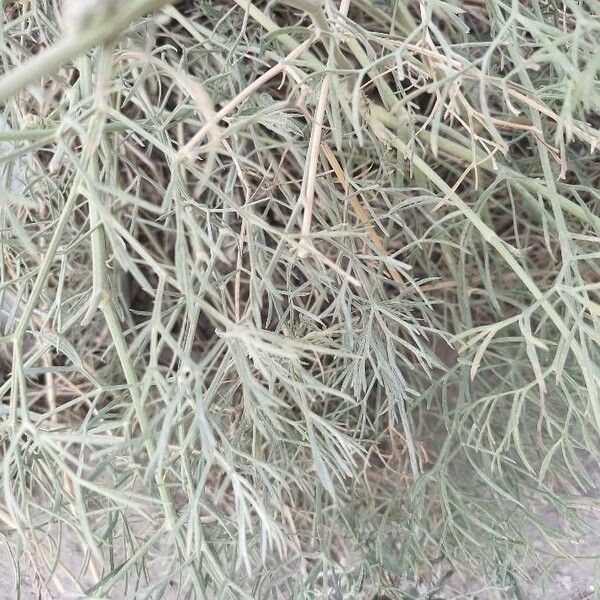
Plant Overview
Often found clinging to rocky Mediterranean cliffs or tucked into dry, sandy meadows, Seseli tortuosum is a plant defined by its "tortured" or twisted architecture. Commonly known as the Twisted Moon Carrot, this hardy survivor thrives where other plants wither, offering a delicate lace of white flowers against a rugged, blue-green backdrop. It is a favorite for those who appreciate the wild, skeletal beauty of drought-tolerant flora.
🔍 How to Identify
- 🌀 The Stem: Characteristically "tortuous" or zig-zagged. The stems are rigid, waxy, and often change direction at every node, giving the plant a frantic, sculptural look.
- 🌿 The Foliage: The leaves are finely divided into narrow, almost needle-like segments. They have a "glaucous" (blue-gray) waxy coating that helps the plant retain moisture.
- ☁️ The Bloom: Small, white flowers arranged in flat-topped clusters called umbels. Unlike many of its cousins, it often blooms later in the season, from mid-summer into the autumn.
🏡 In Your Garden
- 🪨 Rocky Resilience: This plant is a specialist in poor, stony soils. It hates "wet feet," so if you plant it at home, ensure the soil is gritty and well-draining. It is an excellent choice for rock gardens or xeriscaping.
- 🌬️ Coastal Toughness: It is highly salt-tolerant and wind-resistant. Its twisted stems aren't just for show—they are a structural adaptation that allows the plant to bend without breaking in harsh coastal gales.
⚠️ Safety & Toxicity
- 🧴 Skin Sensitivity: Like many members of the Carrot family (Apiaceae), the sap contains compounds that can cause "phytophototoxicity." If the sap gets on your skin and is then exposed to sunlight, it can cause a red, itchy rash or even blistering.
- 🚫 Look-alike Warning: Always be cautious with the Apiaceae family. While Seseli tortuosum is generally safe to handle with gloves, it can visually resemble highly toxic plants like Poison Hemlock to the untrained eye.
- 🐾 Pet Safety: It is generally not considered highly toxic to pets, but ingestion can lead to mild stomach upset or drooling.
✨ Fun Fact
The name tortuosum comes from the Latin word for "winding" or "full of twists." It shares the same linguistic root as the English word "tortuous," describing something that is incredibly complex or twisty—a perfect description for this plant's zig-zagging stems!

Detailed Care Instructions

Place in a bright room that is sun drenched almost all day. Or directly in a south-facing window.

The Seseli Tortuosum plant should be watered regularly to keep the soil moist but not overly wet. It is important to allow the soil to dry slightly between waterings to prevent the roots from becoming waterlogged. The amount and frequency of water will depend on the climate, the size of the plant, and the type of soil it is planted in. It is important to avoid getting water on the leaves or flowers to prevent possible fungal diseases. It is also important to use lukewarm water to prevent shocking the plant's roots. Overwatering or underwatering can lead to the plant's health declining, so it is important to monitor the soil and water accordingly.
Seseli tortuosum is a plant that prefers well-drained soil with a neutral to alkaline pH level. The soil should have a good balance of organic matter and mineral content. It is important to avoid soil that is too heavy or compact, as the plant prefers loose soil that allows for good air circulation to the roots. The addition of perlite or sand to the soil mixture can help improve drainage and prevent waterlogging. It is also recommended to fertilize the plant regularly with a balanced fertilizer to promote vigorous growth and blooming. Overall, the ideal soil for Seseli tortuosum should provide good drainage, nutrient-rich content, and a loose texture.








