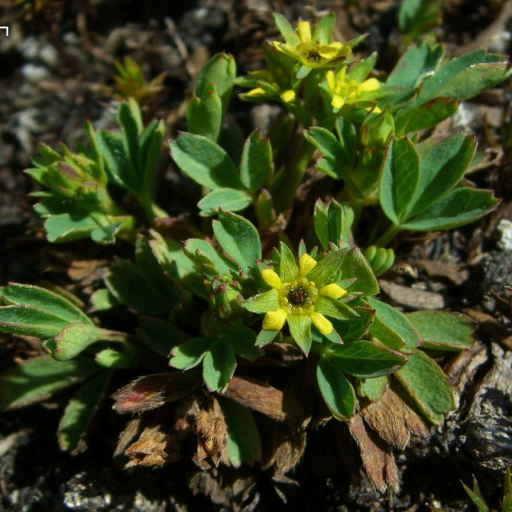
Plant Overview
Known as the Creeping Sibbaldia or "Highland Sibbaldia," this tiny alpine survivor looks like a miniature, rugged version of a wild strawberry. It is a true mountaineer, often found huddled in the rocky crevices of the Northern Hemisphere's highest peaks or coldest tundras. In botanical circles, it is respected for its extreme resilience, acting as a silent witness to the harshest winters while waiting patiently under deep snow for the briefest flash of summer.
🔍 How to Identify
- 🍃 The Leaf Trick: Each leaf is divided into three distinct leaflets, much like a clover or strawberry. However, look closer at the tips—they have three very specific "teeth" or notches that make the ends look like they’ve been neatly snipped by tiny scissors.
- 🌼 Subtle Blooms: The flowers are tiny, yellowish-green, and easily missed. Unlike their flashy rose-family cousins, these blooms often lack petals or have very minute ones, staying tucked low against the foliage.
- 🌱 Ground-Hugging Habit: True to its Latin name (procumbens), it grows prostrate. It forms dense, low-matted cushions that help it trap heat and protect its delicate stems from freezing mountain winds.
🏡 In Your Garden
- 🏔️ The Rock Garden Star: This isn't a plant for a humid, tropical border. It thrives in "alpine" conditions—meaning it needs gritty, poor soil with exceptional drainage. It is a perfect choice for cold-climate rock gardens or stone troughs.
- ❄️ The Snow Lover: In the wild, this plant is an "indicator species" for snowbeds. It actually prefers areas where snow lingers late into the spring, using the white blanket as insulation against deep freezes. In a garden setting, it hates "wet feet" during the winter but enjoys a cool, moist root zone.
⚠️ Safety & Toxicity
- ✅ Safe Status: Sibbaldia procumbens is generally considered non-toxic to humans, dogs, and cats. It does not possess the thorns or chemical irritants found in some of its wild relatives.
- 🧤 General Caution: While safe, it is a wild plant and not intended for consumption. As with any alpine plant, the fine hairs on the leaves may trap dust or environmental particles, so it’s best enjoyed visually rather than handled frequently.
✨ Fun Fact
The genus was named in honor of Sir Robert Sibbald, a 17th-century Scottish physician who co-founded the Royal Botanic Garden Edinburgh. He was a pioneer in documenting the "extremophile" plants that survive on Scotland’s highest, most wind-swept ridges!

Detailed Care Instructions

Place in a bright room that is sun drenched almost all day. Or directly in a south-facing window.

To properly water this plant, you should first take note of the soil moisture level. Stick your finger into the soil about an inch deep. If the soil feels dry, then it is time to water the plant. Slowly pour water onto the soil around the base of the plant, being careful not to get water on the leaves or stems. Avoid overwatering or letting the soil become too soggy, as this can cause root rot. Allow the soil to dry out slightly between waterings, and adjust the frequency of watering based on the plant's needs.
Sibbaldia Procumbens requires a well-draining soil mixture that is rich in organic matter. The soil should have a slightly acidic to neutral pH, ranging from 5.5 to 7.0. The soil should be well-aerated and have good water holding capacity, as the plant prefers to be kept moist but not waterlogged. The use of a sandy loam or loamy soil mix, with added peat moss or compost, would be suitable for this plant. A soil with a good nutrient balance, including nitrogen, phosphorus, and potassium, is also recommended for optimal growth and health of the plant.








