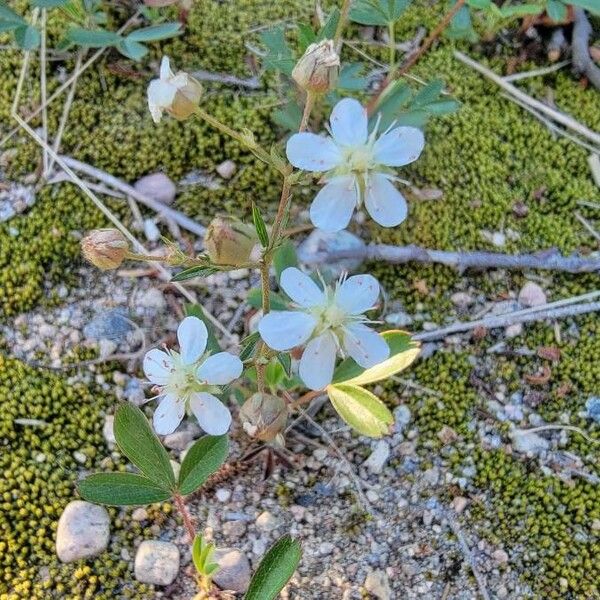
Plant Overview
Often called the "Three-toothed Cinquefoil" or "Wineleaf," this rugged little evergreen is a champion of the high peaks and rocky barrens. While it looks delicate, it is one of the toughest groundcovers in the plant kingdom, often found clinging to granite ledges where few other things can grow. In the fall, it earns its "Wineleaf" nickname by transforming from a glossy green into a spectacular, deep burgundy.
🔍 How to Identify
- 🍃 The "Trident" Leaves: The most famous feature is the foliage; each leaf is split into three leaflets, and each leaflet has exactly three sharp teeth at its very tip.
- 🌸 Starry Blooms: During early summer, it produces clusters of tiny, five-petaled white flowers that look like miniature versions of strawberry blossoms.
- 🪵 Woody Base: Although it looks like a soft herb, it is actually a "subshrub," meaning it develops a tough, woody base over time that helps it anchor into rocky crevices.
🏡 In Your Garden
- 🪨 Rocky Foundations: This plant is the ultimate choice for rock gardens or "crevice" gardening. It hates "wet feet" and thrives in gritty, acidic, and well-drained soil that mimics its mountain home.
- 🏔️ Cold Weather Specialist: Sibbaldia tridentata is incredibly cold-hardy. It doesn't just tolerate winter; it requires a cold dormant period to thrive, making it perfect for northern climates or high-altitude gardens.
⚠️ Safety & Toxicity
- ✅ Pet & Human Friendly: There are no known toxic properties associated with Sibbaldia tridentata. It is generally considered safe to plant around curious dogs, cats, and children.
- 👐 Soft Foliage: Unlike some alpine plants that can be prickly or irritating to the skin, the Wineleaf Cinquefoil is smooth and pleasant to handle.
✨ Fun Fact
- 🧊 A Glacial Relict: This plant is often considered a "glacial relict." As the massive ice sheets retreated northward after the last Ice Age, Sibbaldia tridentata followed the cold, staying behind on high, wind-swept mountain peaks where the climate still feels like the Arctic.

Detailed Care Instructions
Sibbaldia tridentata, commonly known as three-toothed sibbaldia, is a perennial plant that typically grows in alpine and rocky areas. Here are some guidelines on how to grow Sibbaldia tridentata effectively:
Planting Location
- Sunlight: Choose a location that receives full sun to partial shade. Ideally, it should get at least 6 hours of sunlight a day.
- Soil: This plant prefers well-drained soils that are slightly acidic to neutral. A mixture of sandy, loamy, or gravelly soil works well. Ensure the soil is not too rich in organic matter.
- Drainage: Good drainage is crucial to prevent root rot; consider planting in raised beds or rocky areas to enhance drainage.
Planting Process
- Seeds or Seedlings: You can propagate Sibbaldia tridentata from seeds or by division of existing plants. If using seeds, sow them in late winter or early spring indoors or directly in the ground after the last frost.
- Spacing: If planting multiple plants, space them about 12 to 18 inches apart to allow for adequate air circulation and growth.
- Depth: Plant seeds at a shallow depth, usually just covering them lightly with soil. For divisions, plant at the same depth they were previously growing.
Watering
- Water the plants regularly, especially during dry spells. However, ensure that the soil dries out between waterings to prevent overwatering.
Fertilization
- Fertilization is typically not necessary for this plant, but you can apply a light application of a balanced, slow-release fertilizer in the spring if your soil is particularly poor.
Maintenance
- Weeding: Keep the area around the plants free from weeds to reduce competition for nutrients and water.
- Mulching: Applying a light mulch can help retain soil moisture, but be careful not to smother the plant.
Pest and Disease Management
- Sibbaldia tridentata is generally resistant to pests and diseases, but keep an eye out for common garden pests. If you notice any issues, treat them with appropriate organic methods.
Winter Care
- In colder climates, you may want to provide some winter protection, such as a layer of mulch, especially in areas with harsh winters.
Propagation
- You can propagate Sibbaldia by division in spring or fall. Carefully separate the root clumps and replant them.
With the right conditions and care, Sibbaldia tridentata can thrive, adding beauty to your garden with its lovely foliage and flowers. Happy gardening!

Place in a bright room that is sun drenched almost all day. Or directly in a south-facing window.

Sibbaldia tridentata is a plant that thrives in well-drained soils and is often found in alpine or rocky environments. When watering this species, consider the following guidelines:
1. Soil Check: Before watering, check the moisture level of the soil. The top inch or so of soil should be allowed to dry out between waterings. Stick your finger into the soil; if it feels dry, it’s time to water.
2. Watering Technique: When watering, apply water directly to the soil around the base of the plant rather than overhead. This helps to minimize foliar diseases and ensures that the roots receive adequate moisture.
3. Water Amount: Use a moderate amount of water. The goal is to moisten the soil without creating puddles or waterlogging, as this plant prefers drier conditions. Ensure that excess water can drain away freely.
4. Watering Frequency: Depending on the climate and season, the frequency of watering will vary. During dry spells or hotter months, increase the frequency of watering. In cooler, wetter conditions, reduce the frequency.
5. Water Quality: Use clean, chlorine-free water if possible. If you’re using tap water, allow it to sit for a few hours before applying, as this can help to dissipate chlorine.
6. Seasonal Adjustments: During the plant's active growing season, typically spring and early summer, it may require more frequent watering. In the fall and winter, reduce the amount and frequency since the plant enters a dormant phase.
7. Environment Factors: Consider the environmental conditions such as humidity, temperature, and wind, as these factors can influence how quickly the soil dries out.
By following these guidelines, you can effectively water this species, promoting its health and growth while preventing issues related to overwatering.
For optimal growth of Sibbaldia tridentata, follow these fertilizing instructions:
- Soil Testing: Conduct a soil test to determine nutrient levels and pH. This will help tailor your fertilization approach.
- Fertilizer Type: Use a balanced, slow-release fertilizer with equal ratios of nitrogen (N), phosphorus (P), and potassium (K), such as a 10-10-10 or similar formulation. This ensures the plant receives necessary nutrients over time.
- Application Timing: Apply fertilizer in early spring as new growth begins, and again mid-summer if the plant appears to need a nutrient boost.
- Amount: Follow the manufacturer's instructions for the recommended amount based on the area around the plant. Generally, a rate of about 1 ounce per square foot of garden bed is suitable.
- Application Method: Evenly distribute the fertilizer around the base of the plant, avoiding direct contact with stems and leaves. This prevents potential burn and allows for deeper root absorption.
- Watering: Lightly water the area after application to help dissolve the fertilizer and promote nutrient uptake. Ensure that the soil is moist but not waterlogged.
- Observation: Monitor the plant's health and growth. Adjust fertilization frequency and amounts based on the plant's vigor and any visible nutrient deficiencies, such as yellowing leaves or stunted growth.
- Organic Options: If preferred, organic alternatives like compost or well-rotted manure can be used to gradually enrich the soil. Apply during the same time frames as synthetic fertilizers.
Remember to avoid over-fertilization, as this can lead to poor growth or root burn. Regularly observe your plant's condition and adjust your care accordingly.
Sibbaldia tridentata thrives best in well-drained, sandy, or gravelly soils. An ideal soil mix would include a combination of loamy soil supplemented with sand or fine gravel to enhance drainage. The pH level should be slightly acidic to neutral, typically ranging from 6.0 to 7.0. It's important to avoid heavy clay soils, as they can retain too much moisture and lead to root rot.
Incorporating organic matter, such as well-rotted compost, can provide nutrients while still maintaining good drainage. When potting or planting in the ground, ensure the root zone has adequate air circulation and does not stay overly moist. Overall, a well-aerated, well-draining soil that retains some moisture while allowing excess to escape will support the healthy growth of this plant.
To propagate Sibbaldia tridentata, you can utilize both seed propagation and vegetative methods such as division or cuttings. Here’s how to approach each method:
Seed Propagation
- Seed Collection:
- Collect mature seeds from the plant in late summer to early fall, once they have dried on the plant but before they disperse.
- Collect mature seeds from the plant in late summer to early fall, once they have dried on the plant but before they disperse.
- Seed Preparation:
- Clean the seeds to remove any debris or material from the seed pods.
- It may be beneficial to stratify the seeds by placing them in a damp medium and refrigerating them for a few weeks to mimic winter conditions, as some seeds require a cold treatment to break dormancy.
- Clean the seeds to remove any debris or material from the seed pods.
- Sowing Seeds:
- Prepare a seed-starting mix or a well-draining potting medium.
- Sow the seeds on the surface and lightly cover them with a thin layer of soil, as they generally require light for germination.
- Water gently to moisten the soil without over-saturating it.
- Prepare a seed-starting mix or a well-draining potting medium.
- Germination Conditions:
- Place the pots in a warm location with indirect sunlight.
- Maintain consistent moisture but avoid waterlogging.
- Place the pots in a warm location with indirect sunlight.
- Transplanting:
- Once seedlings have developed several true leaves and are large enough to handle, they can be carefully transplanted into larger pots or directly into the garden, ensuring they are acclimatized to outdoor conditions if started indoors.
Vegetative Propagation
- Once seedlings have developed several true leaves and are large enough to handle, they can be carefully transplanted into larger pots or directly into the garden, ensuring they are acclimatized to outdoor conditions if started indoors.
- Division:
- The best time to divide established plants is in the spring or early fall, during their active growth period.
- Carefully dig up the parent plant, trying not to damage the roots.
- Gently separate the rhizomes or clumps using a sharp, sterile knife, ensuring each division has adequate roots and at least one growing point.
- The best time to divide established plants is in the spring or early fall, during their active growth period.
- Replanting:
- Replant the divisions immediately in suitable soil that drains well. Plant them at the same depth they were growing previously.
- Water the newly planted sections thoroughly.
- Replant the divisions immediately in suitable soil that drains well. Plant them at the same depth they were growing previously.
- Cuttings:
- While less common for this species, you may take stem cuttings. Select healthy stems and cut them below a node.
- Remove any lower leaves to reduce moisture loss and plant the cuttings in a well-draining medium.
- Keep the cuttings in a humid environment and provide indirect light until they establish roots.
Care After Propagation
- While less common for this species, you may take stem cuttings. Select healthy stems and cut them below a node.
- Watering: Ensure newly propagated plants receive adequate moisture without becoming overly saturated.
- Fertilization: Use a diluted, balanced fertilizer sparingly when the new growth begins.
- Light Conditions: Ensure that young plants are protected from direct sunlight until they are adequately established.
Monitoring Growth
- Regularly check for pests and diseases, and provide appropriate care to ensure healthy growth.
- Once established, continue to monitor the plants, ensuring they are in an environment that suits their preferences for moisture and sunlight.
By using these methods, you can successfully propagate Sibbaldia tridentata and expand your collection of this perennial plant.








