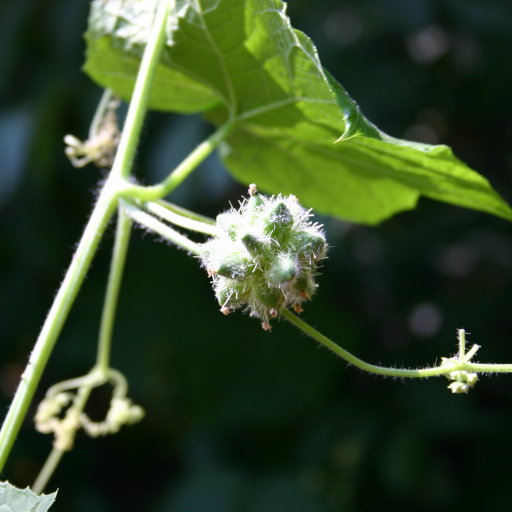
Plant Overview
Known affectionately (or notoriously) as the Bur Cucumber or Star-Cucumber, this North American native is the wild, untamed cousin of your backyard garden vegetables. It is a vigorous annual vine that acts like a botanical architect, quickly draping fences, shrubs, and riverbanks in a thick, lush curtain of green. While it shares a family tree with pumpkins and cucumbers, it has traded edible fruit for a clever, prickly defense system.
🔍 How to Identify
- 🍃 Lobed Foliage: The leaves are broad, heart-shaped, and usually feature 3 to 5 shallow, pointed lobes. They feel slightly rough or "toothy" to the touch, resembling a domestic cucumber leaf.
- 🌸 Clustered Blooms: It produces small, greenish-white flowers. The male flowers grow in long-stemmed upright clusters, while the female flowers sit in tight, round bunches at the leaf axils.
- 🌵 The Prickly "Bur": The fruit is the most distinct feature—small, flattened, egg-shaped pods that grow in star-like clusters. They are densely covered in long, translucent, needle-like bristles.
🏡 In Your Garden
- 🧗 The Master Climber: Sicyos angulatus uses coiled, branched tendrils to "lasso" nearby structures. It can grow up to 15-20 feet in a single season, making it excellent for quick privacy screening, though it can overwhelm smaller, delicate plants.
- 💧 Hydration Hogs: In the wild, you’ll find them near riverbanks and damp thickets. In a garden setting, they demand consistent moisture and rich soil to maintain their rapid growth rate. If the soil dries out, the large leaves will wilt quickly.
⚠️ Safety & Toxicity
- 🧤 Physical Irritant: The plant is generally non-toxic if touched, but the "burs" (seed pods) are covered in sharp spines that can cause localized skin irritation or "stings" if handled with bare hands.
- 🐾 Pet & Child Safety: While not considered high-risk for ingestion, the prickly seed pods are a mechanical hazard. They easily get stuck in long pet fur and can cause painful irritation to the mouths or paws of curious animals.
✨ Fun Fact
Unlike many other vines that use "twining" stems, the Bur Cucumber uses a "touch-sensitive" tendril system. Once a tendril touches a solid object, it can begin to curl and tighten around it in as little as a few minutes!

Detailed Care Instructions
To grow Sicyos angulata (also known as one-seeded bur cucumber), follow these steps:
- Start with seeds: Obtain Sicyos angulata seeds from a reputable source. You can purchase them online or try to collect mature fruits from existing plants.
- Prepare the soil: Sicyos angulata prefers fertile, well-draining soil. Ensure the soil is loose and workable. Remove any weeds or debris from the area where you plan to grow the plant.
- Plant the seeds: Sow the seeds directly into the ground once there is no longer a risk of frost. Plant the seeds about 1 inch deep and several feet apart. Alternatively, you can start the seeds indoors in small pots and transplant them once they have developed their first true leaves.
- Provide proper water and sunlight: Sicyos angulata thrives in full sun but can tolerate partial shade. Keep the soil consistently moist until the seeds germinate and throughout the plant's growth. Water deeply but avoid waterlogged conditions.
- Build a support structure: As Sicyos angulata is a climbing vine, it needs a structure to support its growth. Install a trellis, fence, or provide a mesh for the vine to climb. This will allow it to grow vertically and save space in your garden.
- Mulch and weed control: Apply a layer of organic mulch around the base of the plant to help retain moisture and suppress weeds. Regular weeding is crucial, as weeds can compete for water, nutrients, and sunlight.
- Monitor for pests and diseases: Keep an eye out for common garden pests such as aphids or cucumber beetles. In case of an infestation, use appropriate organic pest control methods. Watch for any signs of disease, such as powdery mildew, and treat accordingly.
- Harvest and propagate: Once the bur cucumbers mature and turn brown, they can be harvested. Cut them carefully from the vine and allow them to dry before removing the seeds. The seeds can be saved and planted the following season.
By following these steps, you should be able to successfully grow Sicyos angulata. Enjoy the unique and interesting bur cucumbers that this vine produces!

Place in a bright room that is sun drenched almost all day. Or directly in a south-facing window.

To water this plant, you should first check the soil moisture level before watering. Stick your finger into the soil approximately 1-2 inches deep to check if the soil feels dry. If it does, you can water the plant thoroughly, making sure that the water reaches the roots. Avoid letting the soil become too dry or too wet. It's best to water the plant early in the morning or late in the day, as watering during the hottest part of the day can cause the water to evaporate quickly. It's also important to avoid getting water on the leaves and stem of the plant, as this can cause fungal diseases to develop.
To fertilize this plant, use a balanced fertilizer with a ratio of 10-10-10 or 20-20-20. Apply the fertilizer every two weeks during the growing season, from spring to early fall. Dilute the fertilizer to half strength before applying, to prevent burning the roots. Water the plant thoroughly before and after applying the fertilizer. Avoid fertilizing in the winter or during periods of drought or stress.
To grow the Sicyos Angulata plant, it is recommended to use soil that is well-draining and has good aeration. The soil should be rich in organic matter and nutrients for optimal growth. A combination of loamy soil, peat moss, and perlite can provide an ideal growing medium for this plant. The soil should have a pH level between 6.0 to 7.5, which is slightly acidic to neutral. It is important to choose soil that is free from pests, diseases, and contaminants that can harm the plant. The Sicyos Angulata plant prefers a soil that is moist but not waterlogged, so it is essential to monitor the soil moisture levels regularly and provide adequate drainage.
Propagation of this plant can be done using its seeds or cuttings.
To propagate through seeds, collect mature seeds and soak them in water for a day. Sow the seeds in a potting mix and keep them moist until they germinate. Once the seedlings have grown enough, transplant them into individual pots.
To propagate through cuttings, take stem cuttings from the parent plant by cutting just below a node and removing any leaves from the lower half of the stem. Dip the cutting in a rooting hormone and plant it in a well-draining potting mix. Keep the cutting moist and in a warm, bright spot until it develops roots and can be transplanted into its own pot.
Regardless of the method chosen, make sure to keep the planting media moist until roots have developed and the plant has established.
Common pests of the wild cucumber include Spider mites, thrips, whiteflies. Make a habit of checking your wild cucumber frequently for pests so that any infestations can be caught and managed early.







