Plant Overview
Often called the Bur Cucumber or Star-cucumber, this native North American vine is a master of the vertical climb. While it shares a family tree with your garden-variety cucumbers and pumpkins, this wild cousin is far more interested in overtaking your fence than ending up on your dinner plate. Its rapid growth and delicate, star-shaped flowers make it a common sight in moist, sun-drenched woodlands and riverbanks.
🔍 How to Identify
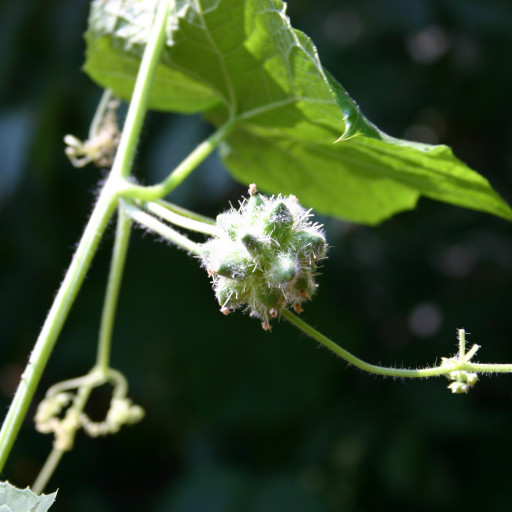
- 🍃 Lobed Leaves: The plant features large, heart-shaped leaves that typically have 3 to 5 shallow, pointed lobes, resembling a soft-edged maple leaf with a slightly fuzzy texture.
- 🧶 Spiral Tendrils: Look for long, three-forked, spring-like tendrils that emerge from the stems, allowing the vine to "lasso" and hoist itself up neighboring plants or structures.
- 🎆 Prickly Seed Pods: Unlike smooth garden cucumbers, these fruits are small, dry, and clustered in "stars" of 3 to 10 pods, all covered in long, translucent, needle-like bristles.
🏡 In Your Garden
- 🌱 The Great Smotherer: Because it is an annual vine that can grow over 20 feet in a single season, it can easily overwhelm slower-growing perennials. If it hitches a ride into your garden, it’s best to manage it early before it shades out your prized flowers.
- 💧 Moisture Indicator: This plant is a "water-lover." Finding it in your landscape usually indicates rich, damp soil or a spot where rainwater naturally collects and lingers.
⚠️ Safety & Toxicity
- 🧤 Physical Irritant: While the plant is not known to be chemically toxic, the sharp prickles on the seed pods are notorious for causing skin irritation and "splinters." Always wear gloves if you plan to pull it.
- 🐾 Pet & Child Safety: The plant is generally non-toxic if accidentally nibbled, but the "burs" are a significant mechanical hazard. They can become painfully lodged in a dog's fur or a child's hand.
✨ Fun Fact
🥒 The Empty Promise: Despite the name "Bur Cucumber," there is no juicy fruit inside those prickly pods! Each "cucumber" is actually a dry casing containing exactly one large, flat seed—a fortress of spines designed to hitch a ride on passing animals.

Detailed Care Instructions
To grow Sicyos angulatus (also known as bur cucumber or star cucumber), follow these steps:
- Obtain seeds: You can purchase Sicyos angulatus seeds from a garden center or online. Alternatively, you can collect seeds from a mature bur cucumber plant.
- Germination: Start the seeds indoors about 4-6 weeks before the last frost date in your area. Fill a seed tray or pots with seed starting mix. Sow the seeds about 1/4 inch deep and cover with a thin layer of soil. Water gently so as not to disturb the seeds. Keep the soil consistently moist.
- Provide optimal conditions: Bur cucumber plants thrive in full sun but can tolerate partial shade. Place the seed tray or pots in a sunny location, ensuring the temperature is around 70-80°F (21-27°C). Use a heat mat, if necessary, to maintain the desired temperature.
- Transplanting: Once the seedlings have developed their second set of true leaves, they are ready to be transplanted outdoors. Choose a location with well-draining soil. Prepare the soil by incorporating compost or organic matter. Dig holes large enough to accommodate the seedlings' root systems, keeping about 12 inches (30 cm) of spacing between each plant.
- Watering and mulching: Water the plants regularly to keep the soil consistently moist. Mulch around the plants with organic material, such as straw or wood chips, to help retain moisture as well as suppress weed growth.
- Provide support: Sicyos angulatus is a vine plant that benefits from support to climb. You can install a trellis, fence, or other vertical structures near the plants to offer support for the vines.
- Regular maintenance: Monitor the plants for pests and disease. Remove any weeds that compete for nutrients, water, and light. Regularly prune excessive growth to encourage fruit development. Also, keep the area around the plant clean to discourage pests and diseases.
- Harvesting: Your bur cucumber plant should start producing edible fruits after about 60-70 days. Harvest the fruits when they are still green and tender. Keep in mind that mature fruits can become very spiky and should be handled with care.
By following these steps, you should be able to successfully grow Sicyos angulatus and enjoy the harvest of fresh bur cucumbers.

Place in a bright room that is sun drenched almost all day. Or directly in a south-facing window.

Sicyos angulatus, or the plant in question, requires regular watering to maintain its health and proper growth. When watering, it is important not to let the soil become too dry or too wet. Overwatering can cause root rot and other plant diseases, while underwatering can lead to inadequate moisture levels and stunted growth.
To water Sicyos angulatus, it is best to use a watering can or a hose with a gentle spray nozzle. This helps to avoid damaging the delicate leaves and stems. Water the plant at the base, avoiding getting water on the leaves as this can encourage the growth of mold and mildew.
The frequency of watering will depend on several factors, including the size and age of the plant, the soil composition, and the environmental conditions. As a general rule, it is best to water Sicyos angulatus when the soil is starting to dry out, but before it becomes completely dry.
It is also important to provide proper drainage to prevent water from pooling around the roots. This can be achieved by placing the plant in a pot with drainage holes or ensuring that the soil in garden beds is well-draining.
Overall, regular and consistent watering is essential for maintaining the health and vitality of Sicyos angulatus. By providing the right amount of moisture and care, this unique plant can thrive and add beauty to any indoor or outdoor space.
To fertilize this plant, you should use a balanced, water-soluble fertilizer once a month during the growing season. Be sure to follow the instructions on the fertilizer package and dilute it appropriately before applying it to the soil around the plant. Avoid applying fertilizer in excessive amounts as this can lead to burned foliage and negatively affect the plant's growth.
The Sicyos Angulatus plant may require a nutrient-rich and well-draining soil that is capable of holding moisture without becoming waterlogged. A loose and fertile soil that provides good aeration and drainage can be suitable for promoting the healthy growth of this plant. The soil may also need to have a slightly acidic to neutral pH level that ranges from 6.0 to 7.5. An ideal soil mix for this plant may consist of a combination of organic matter, such as compost or well-rotted manure, perlite or sand to improve drainage, and loam or clayey soil to provide structure and nutrients. It is important to avoid using heavy or compact soil that may hinder root growth or cause waterlogging, which can lead to root rot. Adding soil amendments, such as lime or sulfur, to adjust the pH level may also be necessary depending on the soil composition and the plant's requirements.
Sicyos angulatus can be propagated through stem cuttings or by collecting and planting its seeds. To propagate through stem cuttings, select a healthy stem with several nodes and a few leaves. Cut the stem just below a node and strip the lower leaves from the stem. Place the cutting in a pot filled with a well-draining soil mix and keep it moist. The cutting should root within a few weeks.
To propagate through seeds, collect the mature seeds from the plant and let them dry in a cool, dry place for several days. Plant the seeds about 1/2 inch deep in a pot filled with moist soil mix and keep the pot in a warm, bright location. The seeds should germinate within about two weeks.
It is important to note that Sicyos angulatus is a fast-growing and vigorous plant that can become invasive in some areas, so check with local authorities before planting it.
Common pests of the burcucumber include Spider mites, thrips, whiteflies. Make a habit of checking your burcucumber frequently for pests so that any infestations can be caught and managed early.








