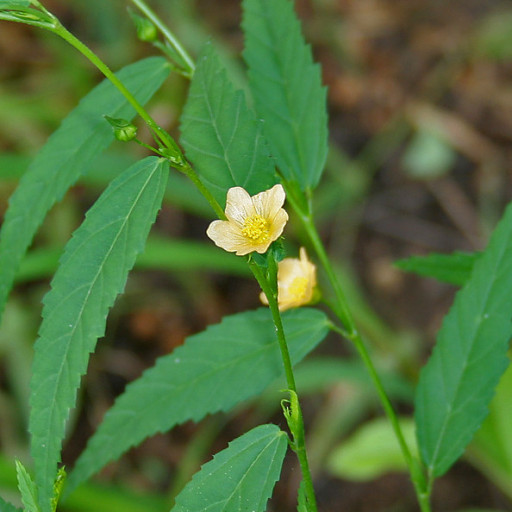
Plant Overview
Known as the "Common Wireweed" or "Broomweed," Sida acuta is a resilient traveler that has made itself at home in tropical and subtropical regions worldwide. While many gardeners view it as a stubborn weed, it has a long history of utility, with its tough, wiry stems being harvested for everything from broom-making to basket weaving. Its cheerful, pale yellow flowers bloom briefly each day, acting as a small sun-dial for the observant nature lover.
🔍 How to Identify
- 🍃 Saw-Toothed Leaves: The leaves are lance-shaped with distinct, sharply serrated (jagged) edges and a smooth upper surface.
- 🌼 Sun-Kissed Blooms: Look for small, five-petaled flowers that range from creamy yellow to light orange; they usually appear tucked between the leaf and the stem.
- 🧶 The "Wire" Stem: The stems are incredibly tough, fibrous, and difficult to break by hand, often becoming woody at the base as the plant matures.
- 🌱 Growth Habit: It typically grows as a low, branching shrub, reaching about 1 to 3 feet in height depending on the soil quality.
🏡 In Your Garden
- ☀️ The Ultimate Survivor: This plant loves "disturbed" soil—think cracks in the pavement, overgrazed pastures, or the edges of garden beds where the soil is compacted.
- 🌾 A Tough Competitor: Because it develops a deep, sturdy taproot very quickly, it is notoriously difficult to pull out once established. If you find it in your garden, it’s a sign that your soil might be quite dense or dry.
- 🦋 Pollinator Magnet: Despite its reputation as a weed, its flowers provide a reliable source of nectar for small bees and butterflies throughout the warmer months.
⚠️ Safety & Toxicity
- ✅ General Safety: Sida acuta is generally considered non-toxic to humans and pets when touched.
- 🐾 Pet Note: While not poisonous, the high fiber content and tough stems can cause mild digestive irritation if a curious dog or cat decides to chew on it.
- 🚫 Invasive Alert: In many regions, it is classified as an invasive species because it spreads rapidly via seed and can crowd out native flora.
✨ Fun Fact
The stems of Sida acuta are so remarkably strong that they have been studied for use as a "bio-fiber" in industrial composites! In some cultures, the plant is bundled and tied to a stick to create a functional, long-lasting broom, which is how it earned the nickname "Broomweed."

Detailed Care Instructions
To grow Sida Acuta (also known as wireweed or spinyhead sida), follow these steps:
- Obtain seeds or cuttings: You can either purchase Sida Acuta seeds or obtain cuttings from an existing plant. If you're starting from seeds, soak them in warm water overnight before planting.
- Prepare the soil: Sida Acuta prefers well-draining soil with a neutral to slightly acidic pH. Sandy or loamy soil would work well. Clear away any weeds or debris, and loosen the soil to a depth of about six inches.
- Plant the seeds or cuttings:
- If using seeds: Plant the seeds about 1/8 to 1/4 inch deep in the prepared soil, spacing them 6-12 inches apart.
- If using cuttings: Insert the cuttings about 1-2 inches deep into the soil, leaving at least two sets of leaves above the soil level.
- If using seeds: Plant the seeds about 1/8 to 1/4 inch deep in the prepared soil, spacing them 6-12 inches apart.
- Watering and sunlight:
- Water the newly planted seeds or cuttings gently to keep the soil moist but not waterlogged. Avoid overwatering, as it can lead to root rot.
- Sida Acuta prefers full sun to light shade. Ensure the plant receives at least 6 hours of direct sunlight per day.
- Water the newly planted seeds or cuttings gently to keep the soil moist but not waterlogged. Avoid overwatering, as it can lead to root rot.
- Maintenance:
- Regularly water the plant when the top inch of soil feels dry.
- Monitor for pests, such as aphids or spider mites, and take appropriate measures if necessary.
- If the plant grows too tall or becomes leggy, pruning can help maintain a bushier shape.
- Regularly water the plant when the top inch of soil feels dry.
- Harvesting:
- Once the plant has grown to maturity (usually within a few months), you can harvest leaves, stems, or flowers. Use a clean pair of scissors or pruning shears to avoid damaging the plant.
- Harvesting should be done during the morning hours when the plant's essential oils are at their peak.
- Once the plant has grown to maturity (usually within a few months), you can harvest leaves, stems, or flowers. Use a clean pair of scissors or pruning shears to avoid damaging the plant.
- Storage and use:
- Hang the harvested plant parts in a well-ventilated area away from direct sunlight to dry. Once fully dried, store them in airtight containers.
- Sida Acuta has various uses, including herbal remedies, culinary purposes, or ornamental display. Research the specific application you have in mind to determine the best use for your harvest.
Remember to check your local regulations and seek expert advice if you plan to use Sida Acuta medicinally, as it may have specific guidelines or precautions.
- Hang the harvested plant parts in a well-ventilated area away from direct sunlight to dry. Once fully dried, store them in airtight containers.

Place in a bright room that is sun drenched almost all day. Or directly in a south-facing window.

Sida Acuta should be watered regularly to keep the soil consistently moist, but not waterlogged. You can check the moisture level by sticking your finger into the soil - if it feels dry to the touch, it's time to water. Water at the base of the plant rather than overhead to prevent fungal diseases. Make sure the plant has good drainage to prevent root rot. Consider using a drip irrigation system or watering early in the day to allow excess water to evaporate before nighttime. Adjust your watering schedule based on the plant's specific needs and environmental conditions.
To fertilize Sida Acuta, first perform a soil test to determine the nutrient deficiencies in the soil. Generally, use a balanced fertilizer with equal amounts of nitrogen, phosphorus, and potassium. Apply the fertilizer in early spring and mid-summer, and water thoroughly after application. Avoid over-fertilizing, as this can damage the plant and harm the surrounding environment.
Sida Acuta plant requires a well-draining and fertile soil that is rich in nutrients to thrive. The soil should have a slightly acidic to neutral pH level, preferably between 6.0 to 7.0. It is recommended to use a soil mix that contains a blend of organic matter such as compost, peat moss, or well-decomposed manure. The soil should be loose, aerated, and well-draining to prevent waterlogging, which can lead to root rot. It is important to avoid using heavy clay soils or sandy soils as they may not retain enough moisture or nutrients for the plant to grow properly. Additionally, Sida Acuta plants prefer slightly moist soil but do not tolerate waterlogged conditions. Therefore, it is recommended to water the plants moderately and only when the soil is slightly dry to the touch.
To propagate this plant, start by collecting fresh seeds from the plant when they are ripe. Remove the seed coat before sowing the seeds in a mixture of well-draining soil. Keep the soil moist and warm by covering the container with plastic wrap or using a seedling heat mat. The seeds should germinate within a few weeks.
Another method of propagation is by taking stem cuttings. Choose a healthy stem from the plant and cut it at a 45-degree angle using a clean, sharp blade. Remove any leaves or flowers from the bottom of the stem and dip it into rooting hormone powder. Plant the stem cutting in well-draining soil and keep it moist, but not waterlogged. Within a few weeks, the stem should start growing new roots and leaves.
Sida Acuta can also be propagated through division. Carefully dig up the plant and separate the root ball into smaller sections, making sure that each section has healthy roots and shoots. Plant each division in a pot filled with well-draining soil and keep it moist until it becomes established.








