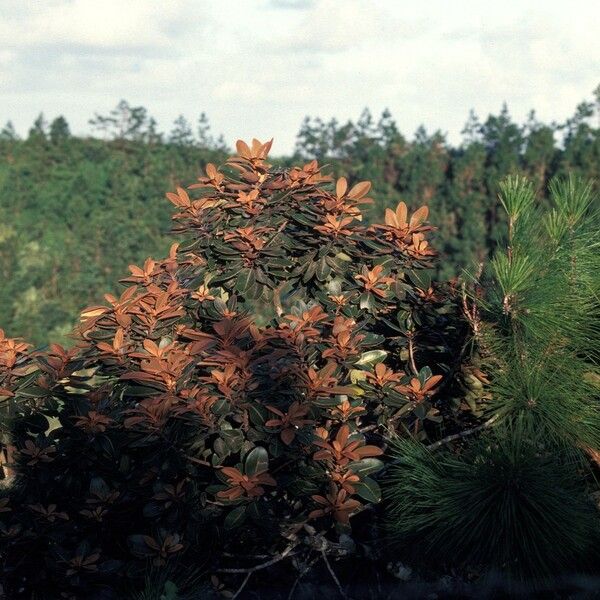
Plant Overview
Known as the "Manglier Gris" or Gray Ironwood, this resilient beauty hails from the sun-drenched Mascarene Islands of Mauritius and Réunion. It is a slow-growing testament to endurance, often found clinging to rocky coastal cliffs or tucked away in dry lowland forests. In its native home, it stands as a symbol of the islands’ unique and fragile biodiversity, representing a lineage of plants that have adapted to harsh island winds for millennia.
🔍 How to Identify
- 🍃 The Foliage: The leaves are thick, leathery, and often display a subtle grayish-green tint (the name cinereum literally means "ash-colored"). They are typically oblong or oval, with a smooth margin and a blunt tip.
- 🪵 The Bark: As the tree matures, the bark becomes deeply textured and rugged. It transitions from a relatively smooth gray to a more cracked, protective "skin" that helps it withstand salt spray.
- 🌸 The Blooms: It produces clusters of tiny, inconspicuous white or cream-colored flowers that emerge from the leaf axils, eventually giving way to small, fleshy berries that turn dark purple or black when ripe.
🏡 In Your Garden
- 🏝️ Coastal Resilience: Because it evolved in island environments, the Manglier Gris is remarkably salt-tolerant. It is an excellent choice for seaside gardens where other plants might wither from the salt air and stiff breezes.
- 🐢 A Lesson in Patience: This is not a plant for gardeners seeking an "instant" hedge. It grows at a glacial pace, focusing its energy on creating incredibly dense, "iron-like" wood rather than rapid height.
- 💧 Soil Specifics: It thrives in well-draining, even rocky or sandy soils. It is highly drought-tolerant once established and suffers quickly if left in standing water or heavy, compacted clay.
⚠️ Safety & Toxicity
- 🐾 Low Risk: There are no widespread reports of high toxicity for this specific species, but like many members of the Sapotaceae family, it may contain a milky latex in the stems.
- 🚫 Skin & Digestion: The sap can cause mild skin irritation in sensitive individuals. While the berries might look tempting to birds, they are generally considered unpalatable for humans and should not be eaten by pets or children.
✨ Fun Fact
The wood of the Sideroxylon genus is so incredibly dense and heavy that it is one of the few types of wood in the world that will actually sink in water rather than float! This density earned it the common name "Ironwood" across many different cultures.

Detailed Care Instructions
To grow the Sideroxylon cinereum plant, also known as the grey ironbark or the large-leaved ironbark, you can follow these steps:
- Obtain seeds or a young plant: Sideroxylon cinereum can be propagated from seeds or by transplanting a young plant. Seeds can be collected from mature fruits or purchased from a reputable nursery.
- Determine the planting location: Choose a spot with full sun to partial shade, preferably with sandy or loamy soil that is well-drained.
- Prepare the soil: Before planting, prepare the soil by removing any weeds, rocks, or debris. Loosen the soil to improve drainage and add compost or well-rotted organic matter to enrich the soil.
- Sow the seeds or transplant the young plant: If growing from seeds, sow them directly into the soil at a depth of 1/4 to 1/2 inch (0.6-1.3 cm) and cover them with a light layer of soil. If transplanting, dig a hole slightly larger than the root ball and place the plant in the hole, backfilling with soil gently around the roots.
- Water the plant: After planting, water thoroughly to settle the soil and provide moisture to the roots. Water the plant regularly, allowing the soil to slightly dry out between each watering. Be careful not to overwater, as the plant prefers well-drained soil.
- Provide regular care: Mulch around the plant to help retain moisture and suppress weed growth. Fertilize with a balanced slow-release fertilizer in the spring to promote healthy growth. Prune the plant as needed to remove dead or damaged branches.
- Protect from extreme weather conditions: If you live in an area with harsh weather conditions, such as frost or extreme heat, consider protecting the young plant by covering it with a frost cloth during cold weather or providing shade during hot summer days.
- Monitor for pests and diseases: Inspect the plant regularly for signs of pests, such as aphids or scale insects, and treat them accordingly. If any disease symptoms appear, consult a gardening professional for proper diagnosis and treatment options.
With proper care and attention to its requirements, the Sideroxylon cinereum plant should thrive and grow into a beautiful, mature specimen.
To water this plant, it is important to first understand its specific water needs. This can be determined by observing the plant's soil moisture levels and overall health.
Generally, Sideroxylon Cinereum plants prefer well-drained soil that is kept consistently moist but not waterlogged. It is important to avoid letting the soil dry out completely, as this can lead to stress and damage to the plant.
When watering, it is recommended to use room temperature or lukewarm water, as cold water can shock the plant's roots. Water deeply, allowing the water to penetrate the soil and reach the plant's roots.
In addition to regular watering, it is important to monitor the humidity levels around the plant. Sideroxylon Cinereum plants prefer moderate to high humidity, so misting the leaves or using a humidifier can be beneficial.
Overall, it is important to maintain a consistent watering routine and to pay attention to the plant's individual needs. Overwatering or underwatering can lead to plant stress and damage, so it is important to find the right balance for this particular species.
To fertilize the plant, use a balanced fertilizer with a ratio of 10-10-10 or 20-20-20. Apply the fertilizer during the growing season, which is usually in the spring and summer months. Dilute the fertilizer according to the package instructions and apply it to the soil around the plant. Avoid getting the fertilizer on the leaves or stems, as this can cause damage. Water the plant before and after fertilizing to prevent salt buildup in the soil.
Sideroxylon Cinereum requires a well-draining soil that is rich in organic matter. The ideal pH range for the soil is slightly acidic to neutral, with a pH between 6.0 and 7.5. When planting, it is recommended to amend the soil with compost or other organic matter to improve drainage and soil quality. It is also important to ensure that the soil is not too compacted, as this can impede root development. The plant prefers soil that is slightly moist at all times, but not waterlogged. Additionally, Sideroxylon Cinereum can benefit from regular fertilization, particularly with a slow-release organic fertilizer.
To propagate this plant, you will need to collect ripe seeds from the fruit of the mature plant. The fruit can be harvested directly from the plant or collected from fallen fruits on the ground.
Begin by cleaning the seeds, removing any flesh or debris that may be attached. Soak the seeds in water for 48 hours to help soften the hard seed coat. Scarify the seeds with sandpaper or a nail file to allow water to penetrate the seed coat.
Plant the seeds in a well-draining potting mix that is lightly moistened. Cover the seeds with a thin layer of soil and place the pot in a warm, bright location with indirect sunlight. Keep the soil moist but not waterlogged.
Germination of the seeds can take up to several weeks. Once the seedlings have grown to a height of 2-3 inches, gently transplant them into individual pots with a more suitable growing medium.
It is also possible to propagate this plant through cuttings. Take a 6-8 inch cutting from the tip of a mature branch and remove the lower leaves. Dip the cut end in rooting hormone and plant it in a container with well-draining potting soil. Water the cutting sparingly, keeping the soil lightly moistened. Cover the container with plastic to create a humid environment. The cutting should root within a few weeks.








