Plant Overview
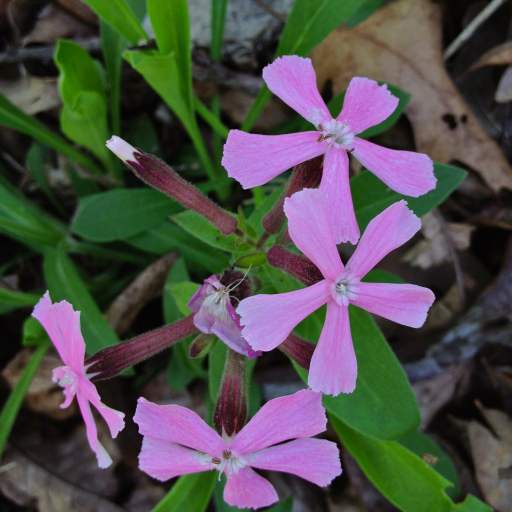
Often called the "Wild Pink," this dainty woodland treasure paints rocky slopes and forest edges in vibrant shades of rose and carnation pink. Native to the eastern United States, it is a hallmark of spring, often seen poking through crevices where other plants struggle to survive. Its low, mounding habit makes it look like a carefully placed garden ornament, though it is a wild, resilient spirit at heart.
🔍 How to Identify
- 🌸 Five-Petal Flowers: Each bloom features five distinct petals that are often slightly notched at the tip, giving the flower a delicate, fringed star appearance.
- 🌿 Sticky Stems: The flower stalks are covered in fine, glandular hairs that feel tacky to the touch—a clever botanical defense mechanism.
- 🍃 Ground Rosette: The base of the plant consists of a low-growing rosette of narrow, lance-shaped green leaves that stay close to the earth, helping it conserve moisture.
🏡 In Your Garden
- 🪨 The Rock Star: Unlike many thirsty garden favorites, the Wild Pink thrives in "difficult" spots. It prefers well-drained, sandy, or even gravelly soil and is a perfect candidate for rock gardens, stone walls, or slopes.
- 🦋 Pollinator Magnet: Its bright color and tubular shape act as a neon sign for early-season butterflies and hummingbirds. It provides a vital nectar source in mid-to-late spring when many other native flowers haven't yet bloomed.
⚠️ Safety & Toxicity
- ✅ Generally Safe: Silene caroliniana is not known to be highly toxic to humans or common household pets.
- 🐾 Mild Irritant: Like many members of the Pink family (Caryophyllaceae), it contains saponins. While not dangerous, if a pet ingests a large amount, they may experience mild drooling or an upset stomach. It is best treated as an ornamental rather than a snack.
✨ Fun Fact
The Wild Pink is nicknamed "Catchfly" because of its sticky stems. While it isn't carnivorous (it doesn't eat the bugs it catches), the "glue" serves a specific purpose: it prevents small, crawling insects like ants from climbing up to steal nectar without helping the plant pollinate!

Detailed Care Instructions
To grow Silene Caroliniana, also known as Carolina catchfly, you can follow these steps:
- Obtain seeds or young plants: You can try acquiring Silene Caroliniana seeds from a reputable online or local plant nursery. Alternatively, you may find young plants ready for transplanting.
- Choose the right location: Silene Caroliniana thrives in full sun to partial shade. Select a well-draining area in your garden or prepare a container with proper drainage holes if growing indoors.
- Prepare the soil: Carolina catchfly prefers slightly acidic to neutral soil with a pH range of 5.8-7.0. Loosen the soil and remove any rocks, debris, or weeds. You can improve drainage and fertility by adding organic matter like compost.
- Planting seeds or transplants:
- Seeds: Sow the seeds in the prepared soil during the late fall or early spring. Lightly sprinkle the seeds on the soil surface and lightly press them into the ground—although they require light for germination, avoid burying them too deep. Gently water the area to keep the soil consistently moist until germination occurs.
- Transplants: If using young plants, dig a hole that is slightly larger than the plant's root ball. Place the plant in the hole and fill it with soil, ensuring that the top of the root ball is level with the soil surface. Firmly press the soil around the plant and water it thoroughly.
- Watering: Once established, Silene Caroliniana is tolerant of drought conditions. However, it still requires occasional watering, especially during extended dry periods. Water the plants deeply but infrequently, allowing the soil to dry out slightly between watering sessions.
- Fertilization: Carolina catchfly generally does not require heavy fertilization. However, you may provide a balanced, slow-release fertilizer during the growing season, following the manufacturer's instructions.
- Maintenance: Remove any weeds that may compete with the Silene Caroliniana plant for nutrients and space. Regularly monitor the plants for pests or diseases and take appropriate action if needed.
- Propagation: Silene Caroliniana can be propagated by collecting and sowing seeds in the fall or early spring. You can also divide mature plants in early spring or late fall by carefully digging up the clumps and separating them into smaller sections before replanting.
By following these steps, you can grow and enjoy the beautiful Silene Caroliniana plant in your garden or home.

Place in a bright room that is sun drenched almost all day. Or directly in a south-facing window.

To water this particular plant, you should first make sure that the soil is slightly dry to the touch before proceeding with watering. When watering, it's best to use room temperature water and to thoroughly saturate the soil until you see water draining out the bottom of the container. Be sure to wait until the excess water has drained away before placing the plant back in its spot. The frequency of watering depends on the temperature, humidity, and light conditions in your particular environment, so it's important to monitor the soil moisture regularly and adjust your watering schedule as needed. Avoid overwatering, as this can lead to root rot and other problems.
To feed Silene Caroliniana, it is recommended to use a balanced fertilizer every two weeks during the growing season. It is important to dilute the fertilizer to half strength before application to avoid burning the plant. Alternatively, you can apply a slow-release fertilizer once a month during the growing season. Ensure that the soil is moist before fertilizing and avoid over-fertilizing as it can lead to excessive growth and weak stems.
Silene Caroliniana prefers well-draining soil with a slightly acidic to neutral pH level. A combination of sand, loam and peat moss can be used to create a loose, fertile and moist soil that allows for good aeration. It is important to avoid heavy clay soils as they retain too much water and can lead to root rot. Adding organic matter like compost or aged manure can help improve soil fertility. Ensure the soil remains moist but not water-logged, as this plant is sensitive to overwatering. It can also benefit from a layer of organic mulch to help retain moisture and regulate soil temperature.
Silene Caroliniana is a plant species that can be propagated through several methods. One of the most common ways is through the use of seeds. Seeds can be collected from the mature plants and planted in well-drained soil. It is important to provide adequate moisture and light for the seeds to germinate and develop into young plants.
Another way to propagate Silene Caroliniana is through stem cuttings. Cut a stem from the plant near the base and remove any leaves from the bottom half of the stem. Then, dip the stem in rooting hormone and plant it in a pot or directly in the soil. Keep the soil moist and make sure the new plant gets enough light.
Propagation can also be done through division. Divide the mature plant into smaller sections and replant them in a new location. It is important to make sure that each section has sufficient roots and foliage to sustain growth.
Overall, propagation of Silene Caroliniana can be done through various methods such as seeds, stem cuttings, and division. With proper care and attention, they can develop into healthy and thriving new plants.








