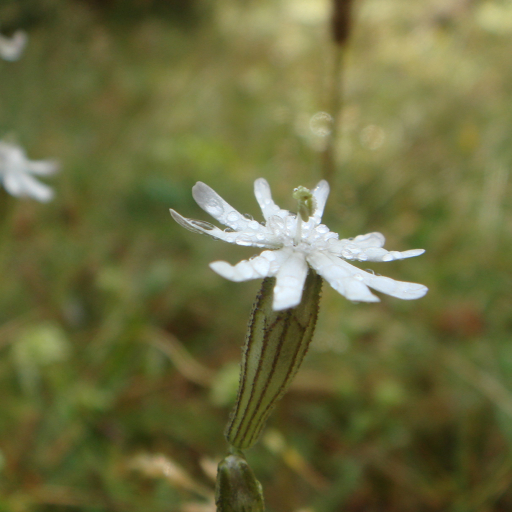
Plant Overview
Often called the Italian Catchfly, this elegant wildflower is like a graceful ghost of the Mediterranean. Known for its tall, airy stature and moon-white blossoms, it has long been a staple of rocky hillsides and dry grasslands. Its most intriguing feature is the "sticky" defense system that lines its stems, earning it a place in the fascinating family of plants that actively discourage uninvited insect guests.
🔍 How to Identify
- 🌸 The Flowers: Features five delicate white petals, each deeply notched in the center, giving them a "forked" or heart-shaped appearance.
- 🧤 The Texture: The stems and leaves are covered in fine, velvety hairs and a sticky substance (glandular hairs) that feels tacky to the touch.
- 🏺 The Calyx: Each flower sits atop a long, narrow tube (the calyx) marked with ten distinct green or purple vertical veins, resembling a tiny striped vase.
🏡 In Your Garden
- 🏜️ Drainage is Key: This plant is a specialist in dry, rocky soils. In a garden setting, it hates "wet feet" and will likely suffer in heavy clay. It’s the perfect candidate for a rock garden or a xeriscaped (low water) border.
- 🐜 Natural Security: The "catchfly" name comes from its ability to trap small crawling insects like ants on its sticky stems. It does this to prevent these "nectar thieves" from stealing the flower's sugar without actually pollinating it, saving the prize for flying insects like moths.
⚠️ Safety & Toxicity
- 🟢 General Safety: Silene italica is not considered highly toxic, but like many members of the Pink family, it contains saponins.
- 🐾 Pets & Kids: While it won’t cause severe harm, ingesting the plant can lead to mild stomach upset or nausea. The sticky sap on the stems can occasionally cause very mild skin irritation for those with highly sensitive skin.
✨ Fun Fact
Unlike many bright garden flowers that scream for attention during the day, the Italian Catchfly is often most fragrant in the evening. This is a clever evolutionary trick to attract its primary fans: nocturnal moths!

Detailed Care Instructions
To grow Silene italica (Italian catchfly) plants, you can follow these steps:
- Obtain seeds: Purchase Silene italica seeds from a reputable seed supplier. Make sure the seeds are fresh and viable.
- Choose a suitable location: Silene italica thrives in full sun or partial shade. Select a well-draining area in your garden or a container with good drainage.
- Prepare the soil: The soil should be fertile, loamy, and well-draining. Amend the soil with compost or organic matter to improve its fertility and drainage.
- Sow the seeds: Sow the Silene italica seeds directly into the soil after the last frost date. Lightly sprinkle the seeds on the soil surface, ensuring they are not buried too deeply.
- Watering: Water the seeds gently immediately after sowing. Keep the soil consistently moist, but avoid overwatering, as it can lead to rot or fungal diseases. Water whenever the top inch of soil feels dry.
- Germination and thinning: Silene italica seeds typically germinate within 2-4 weeks. Once the seedlings are large enough to handle, thin them out to maintain a spacing of about 12-18 inches between plants.
- Maintenance: Weed the area regularly to prevent competition for nutrients and space. Apply a layer of organic mulch around the plants to keep the soil moisture levels stable and suppress weed growth.
- Fertilization: Silene italica plants generally don't require heavy feeding. However, if you notice weak growth or poor flowering, you can apply a balanced, slow-release fertilizer following the instructions on the package.
- Pests and diseases: Silene italica is relatively resistant to pests and diseases. However, watch out for common garden pests like aphids, snails, or slugs. Use organic pest control methods or handpick them if necessary.
- Blooming and deadheading: Silene italica plants produce beautiful pink or white flowers from late spring to early summer. Deadhead the faded flowers regularly to encourage continuous blooming.
- Propagation: Silene italica plants can be propagated by collecting and sowing seeds, or through division in early spring or fall. Divide the clumps into smaller sections and replant them in suitable locations.
Remember to check your specific growing zone and adjust the planting time accordingly. Silene italica is relatively low-maintenance and can add attractive blooms to your garden or containers.

Place in a bright room that is sun drenched almost all day. Or directly in a south-facing window.

To water this plant, you should first assess the moisture level of the soil by sticking your finger about an inch into the soil. If it feels dry, then it is time to water. Use a watering can or hose to gently pour water onto the soil at the base of the plant until the top inch of soil feels moist. Avoid getting water directly on the leaves or flowers as this can cause damage or disease. Depending on the climate, this plant may need to be watered once or twice a week during the growing season, and less frequently during the dormant season. Overwatering can lead to root rot, so it is important to not water too frequently.
To fertilize Silene Italica, you can follow these instructions:
- Choose a balanced, water-soluble fertilizer with an NPK ratio (nitrogen, phosphorus, potassium) of 10-10-10 or similar.
- Dilute the fertilizer according to the package instructions, typically around 1 tablespoon per gallon of water.
- Water the Silene Italica thoroughly before applying fertilizer to ensure the soil is moist.
- Pour the diluted fertilizer solution around the base of the plant, avoiding direct contact with the leaves and flowers.
- Be cautious not to over-fertilize, as it can cause root burn and damage the plant. Carefully follow the recommended dosage on the product label.
- Repeat the fertilization every four to six weeks during the growing season, which is typically in spring and summer.
- Monitor the plant's response to the fertilizer. If you notice any signs of fertilizer burn or excessive leaf growth, reduce the frequency or strength of the fertilizer.
- Water the plant regularly to ensure the fertilizer reaches the roots and doesn't accumulate on the surface.
- Consider fertilizing organic alternatives like compost or well-decomposed manure, following similar dilution and application guidelines.
- Keep in mind that individual plant requirements may differ, so observing the plant's growth and adjusting fertilization accordingly is recommended.
Silene Italica is a type of flowering plant that grows best in well-draining soil that is rich in nutrients. The ideal soil for this plant should be slightly acidic, with a pH range of 6.0-7.0. It should be loose and friable, allowing for good aeration and water drainage. A mixture of sandy loam and organic matter such as compost or well-rotted manure is recommended. The soil should be kept moist but not waterlogged, as this can lead to root rot and other diseases. It is important to avoid using heavy or clayey soils, as they can hinder the plant's growth and development. Adding a slow-release fertilizer can help to provide the plant with essential nutrients throughout the growing season. Overall, the key to successful growth of Silene Italica is to ensure a well-draining, nutrient-rich soil that is kept consistently moist but not waterlogged.
To propagate Silene Italica, you can follow these steps:
- Select a healthy and mature Silene Italica plant from which you want to propagate.
- Identify a suitable stem to take cuttings from. Look for a stem that is not too woody or too soft.
- Using a clean and sharp knife or pair of gardening shears, make a clean cut just below a leaf node on the stem. A leaf node is where a leaf attaches to the stem.
- Remove any leaves from the lower half of the cutting. This will reduce the amount of moisture lost through transpiration.
- If desired, you can dip the cut end of the stem in a rooting hormone powder or gel to encourage faster root development.
- Prepare a small pot or tray with a well-draining potting mix. You can use a mixture of peat moss, perlite, and vermiculite or a specialized propagation mix.
- Make a small hole in the potting mix and gently insert the cutting so that at least one or two leaf nodes are buried in the soil.
- Firmly press the soil around the cutting to ensure good contact with the stem.
- Water the cutting thoroughly, making sure the soil is evenly moist but not waterlogged.
- Place the pot or tray in a warm and well-lit area, but avoid direct sunlight, as it can scorch the cutting.
- Mist the cutting with water regularly to maintain humidity around the plant.
- It typically takes several weeks for the cutting to develop roots. You can gently tug on the stem after a few weeks to check for resistance, indicating root growth.
- Once the cutting has developed a strong root system, you can transplant it into a larger pot or directly into the garden, taking care to provide regular watering and appropriate sunlight for its growing conditions.
It is important to note that Silene Italica can also be propagated through seed sowing. It produces small seeds that can be sown directly into the garden bed or started indoors in seed trays before transplanting.








