Plant Overview
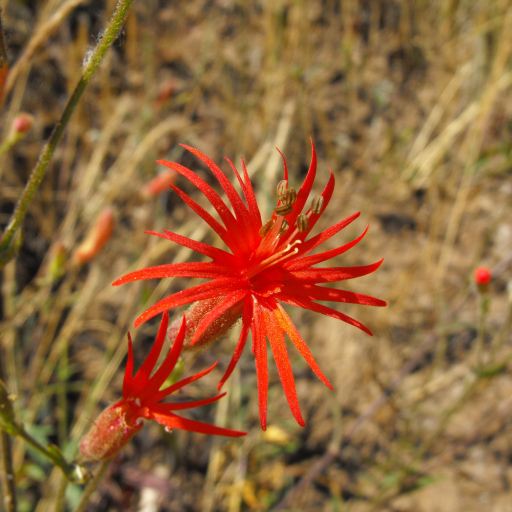
Known famously as the Mexican Fringed Pink or Cardinal Catchfly, Silene laciniata is a vibrant wildflower that looks like it was meticulously cut from crimson silk. Native to the rugged landscapes of the Southwestern United States and Mexico, this plant is a favorite of hummingbirds, who are drawn to its fiery intensity like moths to a flame.
🔍 How to Identify
- 🌸 Petal Shape: The most striking feature is its five bright red petals, each deeply "laciniate" (fringed or slashed) into four or more narrow segments, giving the flower a shaggy, starburst appearance.
- 🌿 Sticky Stems: The stems and calyx (the base of the flower) are covered in tiny, glandular hairs that feel tacky to the touch. This "sticky trap" is designed to deter crawling insects.
- 🍃 Foliage: It features narrow, lance-shaped leaves that grow in opposite pairs along slender, sometimes sprawling, green stems.
🏡 In Your Garden
- ⛰️ Drainage is Key: In its natural habitat, this plant clings to rocky slopes and open woodlands. If planting at home, ensure your soil is gritty and well-draining; it loathes "wet feet," which can quickly lead to root rot.
- 🐦 Hummingbird Magnet: Because of its tubular shape and brilliant red hue, it is a primary nectar source for migrating hummingbirds. Positioning it near a window provides a front-row seat to their acrobatic feeding displays.
- ☀️ Light Nuance: While it loves the sun, in exceptionally hot climates, it appreciates a bit of "dappled shade" in the afternoon to prevent its delicate fringed petals from scorching.
⚠️ Safety & Toxicity
- 🐾 Mild Caution: Like many members of the Pink family (Caryophyllaceae), this plant contains saponins. While not considered deadly, it is best kept away from curious pets.
- 🤢 Potential Irritant: If ingested in large quantities, it may cause mild gastrointestinal upset in dogs or cats. Some gardeners with sensitive skin may experience slight irritation from the sticky sap.
✨ Fun Fact
The common name "Catchfly" comes from the plant’s sticky stems, which act as a natural defense system. It traps small "nectar thieves" (like ants) that try to crawl up to the flower without actually pollinating it, reserving the sweet reward specifically for flying visitors like bees and birds!

Detailed Care Instructions
To grow Silene laciniata, also known as the Indian pink or Mexican catchfly, you can follow these steps:
- Choosing the right location: Silene laciniata thrives in full sun to partial shade. It prefers well-draining soil, so make sure the location you choose has good drainage.
- Soil preparation: Prepare the soil by loosening it with a garden fork or tiller. Remove any rocks, weeds, or roots that may interfere with the plant's growth. You can enhance the soil quality by adding organic matter such as compost or well-rotted manure.
- Planting: Sow the seeds directly into the ground in late spring or early summer, after the last frost date in your area. Alternatively, you can start them indoors about 6-8 weeks before the last frost date and then transplant them outside.
- Seed treatment: Some gardeners recommend cold stratification for Silene laciniata seeds to enhance germination rates. This process involves keeping the seeds in a moist, cool environment, such as the refrigerator, for several weeks before planting. Check if your particular variety requires cold stratification.
- Seed spacing: Space the seeds about 12-18 inches apart, as Silene laciniata plants can spread out as they grow.
- Watering: Keep the soil consistently moist, especially during the germination period. Ensure that the plants receive about 1 inch of water per week, but avoid overwatering, as this can cause root rot.
- Mulching: Apply a layer of organic mulch around the plants to help retain moisture in the soil and suppress weed growth.
- Fertilizing: Silene laciniata plants generally do not require a lot of fertilizer. However, you can apply a balanced, slow-release fertilizer according to the package instructions once or twice a season.
- Care and maintenance: Monitor the plants for any signs of pests or diseases and promptly take appropriate measures to control them. Remove any dead flowers or faded foliage to keep the plant tidy and encourage new growth.
- Propagation: Once established, Silene laciniata can self-seed. To collect seeds, allow the flowers to dry on the plant, then harvest the seeds and store them in a cool, dry place for future planting.
By following these guidelines, you can successfully grow Silene laciniata plants and enjoy their beautiful blooms.

Place in a bright room that is sun drenched almost all day. Or directly in a south-facing window.

Silene Laciniata is a plant that requires regular watering in order to maintain its health and appearance. However, it is important not to overwater this plant as it can lead to root rot and other issues. To water this plant properly, you should wait until the top layer of soil feels dry before watering. When you water the plant, pour water slowly over the soil, being careful not to get the leaves wet. Allow the water to soak in before pouring more, and avoid letting water pool in the saucer beneath the pot. Additionally, it is important to use a well-draining potting mix to prevent water from becoming stagnant in the soil.
To fertilize the plant, use a balanced fertilizer with equal amounts of nitrogen, phosphorus, and potassium. Apply the fertilizer at a rate of 1 tablespoon per square foot of soil in early spring and again in mid-summer. Water the plant thoroughly after fertilizing to ensure the nutrients are absorbed properly. Avoid over-fertilizing as it may lead to excessive vegetative growth and decreased flowering.
Silene Laciniata plant thrives in well-draining soil that is rich in organic matter. It prefers soil that is slightly acidic, with a pH ranging from 6.0 to 6.5. The soil should be moist but not waterlogged, as the plant does not tolerate waterlogging well. A mix of sandy loam soil and compost is ideal for growing Silene Laciniata. The soil should be light, airy and loose, as the plant has delicate roots and requires good drainage. Adding perlite or vermiculite to the soil mix can improve drainage and aeration. It is also important to ensure that the soil is free of weeds and other debris that may compete with the plant for nutrients and water. Regularly amending the soil with organic matter, such as compost or aged manure, can help improve soil fertility and support the growth of Silene Laciniata.
To propagate the plant, take a stem cutting from the parent plant that is approximately 4-6 inches long. Remove the leaves from the bottom 2 inches of the stem. Dip the cut end in rooting hormone and place it in soil that has been moistened ahead of time. Water once a week and keep in a location that gets bright, indirect light. The cutting should root within 4-6 weeks. Once rooted, transplant the new plant into its own pot or outdoor location.








