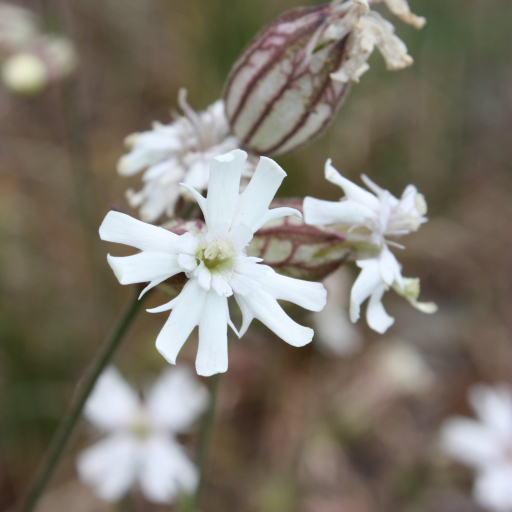
Plant Overview
Commonly known as Parry’s Catchfly, this resilient wildflower is a rugged beauty of the high mountains. Often found clinging to rocky ridges or subalpine meadows across Western North America, it gets its "Catchfly" nickname from the sticky, glandular hairs that coat its stems. Like a tiny, alpine sentinel, it braves the wind and cold with elegance.
🔍 How to Identify
- 🌸 The Petals: The flowers are typically white to soft cream or pale pink. Each of the five petals is deeply notched—sometimes divided into four lobes—giving them a delicate, fringed appearance.
- 🎈 The Balloon Calyx: The base of the flower (the calyx) is notably inflated and "puffy," often marked with distinct purple or dark green veins that look like pinstripes.
- 🕸️ Sticky Stems: If you touch the stem, it feels tacky. This "glue" is a defense mechanism designed to stop crawling insects from stealing nectar without pollinating the plant.
🏡 In Your Garden
- 🏔️ Alpine Aspirations: Because this is an alpine specialist, it thrives in "scree" conditions—think very rocky, lean soil with excellent drainage. It hates "wet feet" and will quickly succumb to root rot if the soil stays soggy.
- 🌬️ Tough as Nails: Parry’s Catchfly is incredibly wind-tolerant and cold-hardy. It makes a perfect addition to a dedicated rock garden or a high-altitude native plant restoration project.
⚠️ Safety & Toxicity
- 🐾 Low Risk: Silene parryi is generally not considered highly toxic, but like many members of the Pink family (Caryophyllaceae), it contains saponins.
- 👅 Mild Irritant: If ingested in large quantities by curious pets or toddlers, it can cause mild stomach upset or drooling. It is best treated as an ornamental plant rather than a forageable one.
✨ Fun Fact
The "sticky" defense of Parry's Catchfly is a clever evolutionary filter. While it traps small "nectar-thieving" ants that can't fly, it allows larger, stronger flying pollinators like moths and bees to land, drink, and carry pollen to the next flower!

Detailed Care Instructions

Place in a bright room that is sun drenched almost all day. Or directly in a south-facing window.

Some plants require more regular watering than others, which should be done every few days. It's critical to maintain the soil moist all of the time. The water requirements of the same plant placed in pots with varying sizes will differ. Because the water in the smaller pot evaporates faster than the water in the larger pot, it will require more watering. Regardless of pot size, the surface should constantly be maintained moist.








