Plant Overview
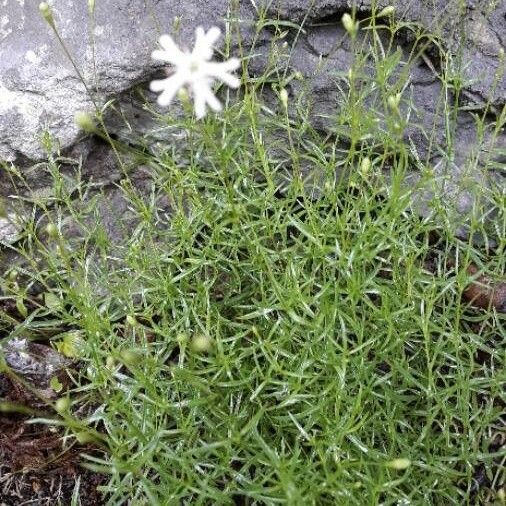
Often called the Saxifrage Catchfly, this resilient alpine beauty is a master of survival in the rocky crags of the Mediterranean and Central European mountains. It forms delicate, moss-like cushions that erupt into starry blooms, bridging the gap between rugged endurance and fragile elegance. It is a prized choice for rock gardeners who want a plant that can withstand harsh winds while looking effortlessly dainty.
🔍 How to Identify
- 🌸 The Petals: Look for five small, deeply notched petals that are typically bright white on top, often featuring a subtle pink or greenish-purple tint on the underside.
- 🍃 Tufted Foliage: The leaves are very narrow, almost needle-like, and grow in dense evergreen mats that resemble a soft cushion of moss when the plant is not in bloom.
- 🎈 The Calyx: Each flower emerges from a distinctive, elongated tube (the calyx) that is ribbed and slightly inflated, acting like a tiny, striped vase for the delicate petals.
🏡 In Your Garden
- 🪨 The "Stone-Lover": True to its name (saxifraga meaning "stone-breaker"), this plant thrives in the tightest crevices. It is perfect for stone walls or gravel gardens because it requires exceptional drainage; "wet feet" during the winter is its primary enemy.
- 🧪 Sticky Stems: If you touch the stems, you might notice a slight tackiness. This is a clever evolutionary trait used to discourage crawling "nectar thieves" (like ants) from reaching the flowers without providing pollination services.
⚠️ Safety & Toxicity
- ✅ Generally Safe: Silene saxifraga is not known to be toxic to humans or common garden visitors.
- 🧼 Saponin Content: Like many members of the Pink family (Caryophyllaceae), it contains saponins. While these are poorly absorbed by the body and generally harmless, they can cause mild stomach irritation if large quantities are ingested by curious pets.
✨ Fun Fact
The genus name Silene is believed to be derived from Silenus, the drunken forest god and companion of Dionysus in Greek mythology. He was often described as being covered in foam, a reference to the frothy or "sticky" secretions found on the stems of many species in this family!

Detailed Care Instructions
To grow Silene Saxifraga, also known as the alpine catchfly or moss campion, follow these steps:
- Obtain Silene Saxifraga seeds or plants from a reputable nursery or seed supplier.
- Choose a well-draining soil mix that is slightly acidic to neutral (pH level between 5.5 and 7.0). The plant prefers sandy or loamy soil.
- Select a sunny location with at least 6 hours of direct sunlight per day. Silene Saxifraga can tolerate light shade but blooms best in full sun.
- Clear the area of any weeds or unwanted vegetation. It is essential to provide the Silene Saxifraga plant with enough space and room to grow freely.
- Prepare the soil by removing any rocks, debris, or large clumps. Break up the soil to create a loose texture that allows for proper root development.
- Sow the seeds directly onto the soil surface if you have obtained seeds. Lightly press the seeds into the soil and cover them lightly with a thin layer of soil or sand.
- If you have acquired Silene Saxifraga plants, dig a hole slightly larger than the root ball. Place the plant in the hole and fill it with soil, gently firming it around the roots.
- Water the plants thoroughly after planting to ensure proper moisture penetration to the root zone.
- Maintain regular moisture levels but avoid over-watering, as Silene Saxifraga prefers well-draining soil. Water when the top inch of soil feels dry to the touch.
- Mulch around the base of the plant to help retain moisture and suppress weed growth.
- Fertilize with a balanced, slow-release fertilizer once or twice during the growing season. Alternatively, you can use a diluted liquid fertilizer every two to four weeks.
- Deadhead spent flowers regularly to encourage continuous blooming and prevent seed production, as Silene Saxifraga can self-seed prolifically and become invasive in some areas.
- Monitor for any pests or diseases, such as aphids or powdery mildew, and take appropriate measures to control them if necessary.
- During winter, Silene Saxifraga prefers cold temperatures and can tolerate snow cover. However, if you live in an area with severe frost or extreme winter conditions, providing some winter protection, such as a layer of mulch or straw, can be beneficial.
- Enjoy the beautiful and delicate blooms of your Silene Saxifraga plant as they appear throughout the growing season.

Place in a bright room that is sun drenched almost all day. Or directly in a south-facing window.

Silene Saxifraga is a plant that requires regular watering to thrive. As a general rule, it is advisable to water the plant deeply once a week instead of giving it frequent, shallow waterings. This encourages the roots to grow deeper into the soil and helps the plant become more drought-resistant as well.
To water this plant, it is important to water it at the base of the stem, rather than at the leaves or flowers. Watering the foliage can promote fungal growth and other diseases. Additionally, it is important to avoid getting water on the leaves or flowers during watering, as this can cause damage or discoloration.
Keep in mind that soil moisture needs may vary depending on the specific environmental conditions and time of year. In periods of heavy rainfall or high humidity, the plant may not need to be watered as frequently as it does during periods of drought or low humidity.
It is important to observe the plant closely and adjust watering as needed. Overwatering can be just as harmful to the plant as underwatering, so it is important to strike a balance and provide the plant with just the right amount of water it needs to thrive.
To fertilize this plant, apply a balanced fertilizer, such as a 10-10-10 formula, at a rate of 1 tablespoon per square foot of soil. Apply the fertilizer evenly around the base of the plant, being careful not to get any on the foliage. Water the plant thoroughly after fertilizing to help the nutrients penetrate the soil. Fertilize once every 4-6 weeks during the growing season (spring through fall) for best results.
The optimal soil for this plant should have a well-draining texture, and the pH level should be slightly acidic to neutral. The soil must be rich in nutrients and organic matter, ensuring that the plant can access all the necessary minerals for proper growth and development. The ideal composition for the soil can be achieved by mixing equal amounts of garden soil, peat moss, and perlite. This combination will provide the plant with good aeration, moisture retention, and sufficient drainage. Additionally, the soil should be kept moist but not too wet, as this can lead to root rot. Over time, the plant may benefit from occasional fertilization to promote healthy growth and blooming.
Silene Saxifraga is a perennial flowering plant that can be propagated through various methods such as seed propagation, stem cutting, and division of root clumps.
To propagate Silene Saxifraga through seed propagation, collect the seeds in the late summer when they are ripe and ready. Sow the seeds in a well-draining soil mixture and lightly cover with soil. Keep the soil moist and place the container in a shaded area for germination. Once the seedlings have developed a good root system, they can be transplanted to a permanent location.
To propagate through stem cutting, select a healthy stem that is about 4-6 inches long and cut it just below a leaf node. Remove all the leaves except for the top two and dip the cut end into rooting hormone. Place the cutting into a soilless rooting medium and keep it moist and in bright, indirect light. Once the cutting has developed roots, it can be transplanted to a permanent location.
Division of root clumps is also a great way to propagate Silene Saxifraga. Dig up the plant in the early spring or fall and divide the root clumps into smaller sections with a sharp knife or garden fork. Plant the divided sections in well-draining soil and keep them moist until they establish their own root systems.
Regardless of the method chosen, it is important to provide Silene Saxifraga with proper care and maintenance to ensure healthy growth and development. This includes providing it with adequate water, sunlight, and nutrients, as well as protecting it from pests and diseases.








