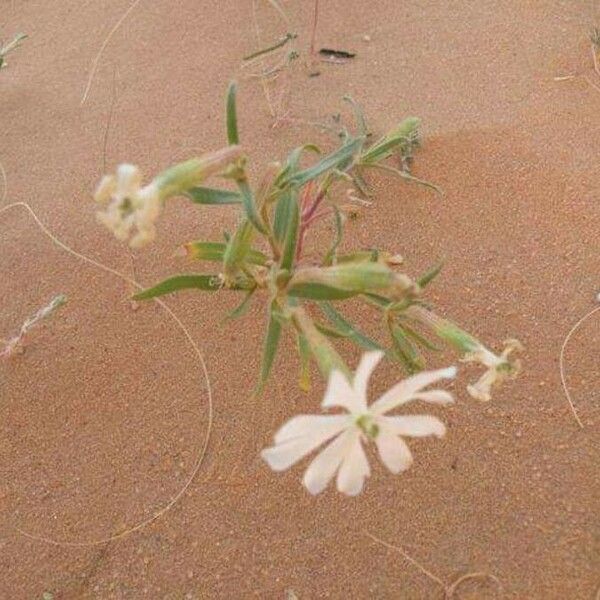
Plant Overview
Meet the Fleshy Catchfly, a resilient wanderer of the Mediterranean and North African coastlines. Often found hugging the salt-sprayed sands and sun-drenched dunes, this plant is a master of survival in extreme environments. Its thick, juicy leaves aren't just for show—they are vital water reservoirs that allow it to thrive where other plants would wither under the intense coastal heat.
🔍 How to Identify
- 🍃 Fleshy Foliage: The leaves are noticeably thick, ovate, and succulent, often covered in a fine, velvety down that helps trap moisture and reflect harsh sunlight.
- 🌸 Cloven Petals: It produces charming white or pale blush flowers with five petals, each deeply notched at the tip, giving the bloom a delicate, fringed appearance.
- 🎈 Inflated Calyx: Look closely at the base of the flower to see a "balloon-like" tube with visible green or purple veins that protects the seeds as they develop.
🏡 In Your Garden
- 🏖️ Sand Specialist: Because it is a "psammophile" (sand-lover), it requires exceptionally well-draining soil. In a home garden, it will struggle in heavy clay; it prefers a gritty, cactus-like mix that mimics its native dunes.
- 🌊 Salt Warrior: This is a top-tier choice for seaside residents. It is highly resistant to salt spray and wind, making it a perfect groundcover for coastal rockeries or "beach-style" landscaping where other plants might fail.
⚠️ Safety & Toxicity
- 🐾 Low Risk: Silene succulenta is generally not considered highly toxic. However, like many members of its family, it contains saponins which can cause mild stomach upset if ingested in large quantities.
- 👶 Pet & Child Safety: While not a "danger plant," it is best kept as an ornamental rather than an edible. The fleshy leaves might look tempting to curious pets, but they are bitter and can cause nausea.
✨ Fun Fact
The genus name Silene is rumored to be derived from Silenus, the foster father of the Greek god Bacchus, who was often depicted covered in foam—referring to the sticky, frothy secretions found on the stems of many "Catchfly" species!

Detailed Care Instructions
To grow Silene Succulenta, also known as Bladder Campion, follow these steps:
- Climate: Silene Succulenta thrives in dry and arid climates, so make sure you live in an area with low humidity and moderate temperatures.
- Soil: Use well-draining soil to prevent waterlogged roots. A mix of sandy soil and perlite or pumice is ideal for this succulent.
- Propagation: Silene Succulenta can be propagated from seeds or stem cuttings. If using seeds, sow them in the prepared soil during spring and lightly cover them with a thin layer of soil. Keep the soil moist until germination occurs.
- Light: This plant loves full sun exposure. Place it in an area where it will receive at least 6-8 hours of direct sunlight each day.
- Watering: Silene Succulenta is a drought-tolerant plant, so water sparingly. Allow the soil to dry completely between waterings to avoid overwatering and root rot.
- Fertilizer: Apply a balanced, slow-release succulent fertilizer during the growing season (spring and summer) to promote healthy growth.
- Pests and diseases: Silene Succulenta is generally resistant to pests and diseases. However, keep an eye out for common succulent pests such as mealybugs, aphids, and spider mites. Treat any infestations promptly.
- Maintenance: Trim back any dead or yellowing leaves to maintain the plant's appearance. Additionally, remove any weeds that may compete with the plant for nutrients.
By following these steps, you should be able to successfully grow Silene Succulenta. Remember to adjust watering and sunlight based on your specific climate and growing conditions.

Place in a bright room that is sun drenched almost all day. Or directly in a south-facing window.

1. Determine the soil's moisture level by sticking your finger an inch into the soil mix. If the soil feels dry, it's time to water the plant.
2. Check the plant's location to ensure that it's getting the right amount of sunlight for its growth requirements. The Silene Succulenta plant prefers bright but indirect light and should be placed near a window that receives light for several hours a day.
3. Use a watering can with a narrow spout to avoid pouring water over the leaves. Water the plant slowly to prevent the water from pooling in the soil or running off the pot's surface.
4. Water the plant until the topsoil is moist. Pay attention to the amount of water you use, as overwatering can lead to root rot.
5. Allow the soil to dry out before watering the plant again. The watering frequency depends on temperature and humidity.
6. Water the plant more frequently in the summer months and less frequently in the winter. In general, it's best to avoid watering the plant during cloudy or rainy days.
7. Avoid getting water on the plant's leaves, as this can cause damage or encourage fungal growth.
8. If the plant is in a container without drainage holes, be sure to use a potting mix that drains well to avoid waterlogging the plant.
To fertilize this plant, it is recommended to use a balanced, slow-release fertilizer with a N-P-K ratio of 10-10-10. Dilute the fertilizer to half strength and apply it to the soil at the base of the plant every 4-6 weeks during the growing season. Do not fertilize during the winter months when the plant is dormant. Avoid over-fertilizing as it can lead to root burn and other problems. Water the plant thoroughly after fertilizing to help distribute the nutrients evenly throughout the soil.
Silene Succulenta prefers a well-draining soil mix that contains a combination of sand, perlite, and peat moss. It is important to ensure that the soil is not too dense or retains too much moisture, as this can lead to root rot and other issues. The soil should be slightly acidic to neutral, with a pH range of 6.0 to 7.5. It is also recommended to add a slow-release fertilizer to the soil mix to provide the necessary nutrients for healthy growth.
To propagate this plant, you will need to take stem cuttings from a mature plant. Choose a healthy stem and cut it just below a node. Remove the lower leaves from the stem cutting and dip it in rooting hormone. Plant the cutting in well-draining soil and keep it in a bright but indirect light. Water the cutting sparingly and mist it regularly to keep the soil slightly moist. It can take several weeks for the roots to grow and for the new plant to establish itself.








