Plant Overview
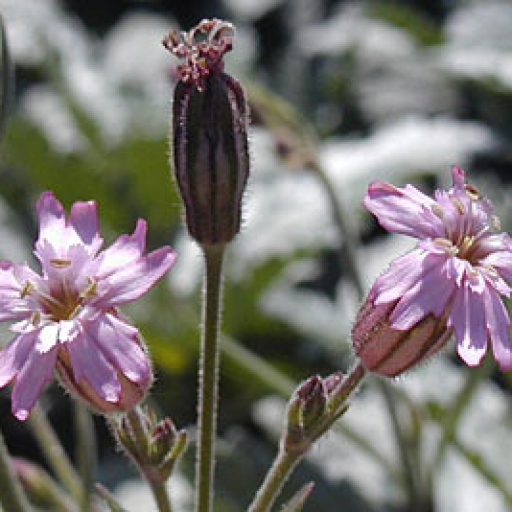
Often called the San Francisco Campion or the "Modest Catchfly," Silene verecunda is a subtle beauty native to the coastal bluffs and sandy dunes of Western North America. Its specific epithet, verecunda, translates to "modest" or "shy," referring to its delicate, unassuming flowers that often peek out from behind sturdier shrubs. It is a resilient survivor, perfectly adapted to the salty winds and poor soils of the Pacific coastline.
🔍 How to Identify
- 🌸 Fringed Petals: The flowers range from pale pink to white and feature petals that are deeply notched or cleft at the tips, giving them a distinctively "shabby-chic" appearance.
- 🍯 Sticky Calyx: The green tube at the base of the flower is covered in tiny, glandular hairs that are noticeably tacky or sticky to the touch.
- 🍃 Narrow Foliage: The leaves are slender, lance-shaped, and usually grow in pairs along the stem, often displaying a soft, grayish-green tint.
🏡 In Your Garden
- 🏖️ Drainage is King: This plant is a specialist of sandy and rocky soils. In a garden setting, it requires excellent drainage to prevent root rot; it is an ideal candidate for rock gardens or coastal restoration projects.
- 🏜️ Taproot Sensitivity: Like many wild Silene species, it develops a significant taproot to find water deep underground. Because of this, it hates being transplanted once established—choose its "forever home" carefully!
⚠️ Safety & Toxicity
- 🐾 Low Risk: Silene verecunda is generally considered non-toxic to humans and common household pets like cats and dogs.
- 👅 Saponin Content: Like many members of the Pink family, it contains saponins. While these are poorly absorbed by the body, ingesting large quantities could lead to very mild stomach upset or a bitter taste that usually discourages animals from eating it.
✨ Fun Fact
The common name "Catchfly" comes from the plant's sticky stems and calyx. While it isn't carnivorous, it uses this natural "flypaper" to trap small, non-pollinating insects (like ants) that try to steal nectar without helping the plant reproduce!

Detailed Care Instructions
To grow Silene Verecunda plant, also known as Showy Catchfly or Sticky Catchfly, follow these steps:
- Choose the right location: Silene Verecunda prefers full sun to partial shade. Select a spot that receives at least 6-8 hours of sunlight per day.
- Prepare the soil: Silene Verecunda does well in well-draining soil. Amend the soil with organic matter, such as compost, to improve its fertility and drainage.
- Sow seeds: Silene Verecunda can be grown from seeds. Sow the seeds directly outdoors in early spring or late fall. Sprinkle the seeds on the prepared soil and lightly cover them with a thin layer of soil or compost.
- Watering: Keep the soil consistently moist but not waterlogged. Water the plant regularly, especially during dry spells. Avoid overwatering, as it can lead to root rot.
- Mulching: Applying a layer of organic mulch around the base of the plant helps conserve moisture, suppress weed growth, and regulate soil temperature.
- Fertilization: Silene Verecunda generally doesn't require frequent fertilization. If the soil is poor, you can feed the plants with a balanced, slow-release fertilizer during the growing season.
- Pruning: Deadhead the spent flowers to encourage continuous blooming and prevent self-seeding. Cut back the plant after flowering to maintain a tidy appearance.
- Pests and diseases: Silene Verecunda is generally resistant to most pests and diseases. However, keep an eye out for common garden pests like aphids, slugs, or snails. Treat any infestations promptly using organic pest control methods.
- Support: Consider providing support, such as stakes or cages, if the plants grow tall and leggy.
- Winter care: Silene Verecunda is a hardy perennial in most regions. It can tolerate mild frost and freezing temperatures. However, in colder climates, it might benefit from a layer of mulch to protect the roots during winter.
With proper care and favorable growing conditions, your Silene Verecunda plant should thrive and reward you with their showy blooms.

Place in a bright room that is sun drenched almost all day. Or directly in a south-facing window.

1. Determine the watering needs of the plant based on its natural habitat, soil type, and climate conditions.
2. Avoid overwatering the plant, as it may cause root rot and other fungal diseases. Allow the soil to dry slightly between waterings.
3. Water the plant deeply and thoroughly, ensuring that the water reaches the roots. Avoid wetting the foliage, as it may increase the risk of foliar diseases.
4. Use a watering can or hose with a gentle spray nozzle to avoid damaging the plant or disturbing the soil.
5. Pay attention to the moisture levels of the soil and adjust the frequency and amount of watering accordingly.
6. Consider using a soil moisture meter or finger test to determine when the plant needs water.
7. In hot and dry weather or during the growing season, the plant may require more frequent watering, while in cold and rainy weather, it may need less water.
8. Monitor the plant for signs of stress, such as wilting or yellowing leaves, which may indicate that it needs more water or that the soil is too dry or waterlogged.
To fertilize this plant, use a balanced fertilizer with equal parts nitrogen, phosphorus, and potassium. Apply the fertilizer every two weeks during the growing season, which typically runs from spring to summer. Be careful not to over-fertilize, as this can damage the plant. Additionally, make sure the soil is moist before applying any fertilizer.
Silene Verecunda requires a well-draining soil mix with moderate fertility. A good option is to use a soil mix consisting of equal parts of sand, perlite, and peat moss. The pH of the soil should be slightly acidic, with a range between 5.5 and 6.5. A soil pH test kit can be used to determine the pH of the soil. Additionally, it is recommended to mix in some organic matter, such as compost or aged manure, to improve soil structure and provide essential nutrients for plant growth. Adequate irrigation is also essential for healthy growth, as Silene Verecunda prefers slightly moist soil but does not tolerate waterlogging.
Silene Verecunda plant can be propagated through seeds or stem cuttings. To propagate through seeds, collect the seed pods when they are dry and brown. Remove the seeds from the pods and sow them into seed trays or directly into the soil in spring or fall. The soil should be well-draining and moist.
To propagate through stem cuttings, use a clean and sharp pair of scissors to cut a 10 to 15cm long stem from a healthy parent plant. Remove the bottom leaves on the stem and dip the cut end in rooting hormone. Plant the cutting in a pot filled with moist potting soil and keep it in a warm and humid spot. Make sure to keep the soil moist.
Both methods of propagation require regular watering, but avoid overwatering as it can cause rotting. It's important to keep the young plants out of direct sunlight until they have established roots. Once the new plants have grown strong enough, they can be transplanted to a bigger pot or outside in the garden.








