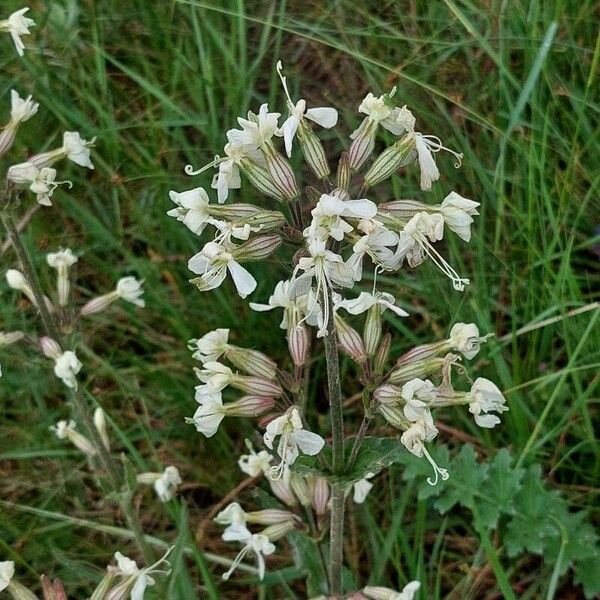
Plant Overview
Often called the Sticky Catchfly or Clammy Campion, this resilient wildflower looks like a delicate spray of white stars but hides a secret defense system. Thriving in the rugged terrains of Europe and Western Asia, it is a pioneer of rocky slopes and sandy meadows. It is a plant that prefers the "tough life," choosing sun-drenched, well-drained spots where more delicate species might wither.
🔍 How to Identify
- 🌸 The Blooms: Features pure white, five-petaled flowers that are deeply notched or "cleft," giving each petal a distinct V-shape that looks like a pair of rabbit ears.
- 🕸️ The "Glue": The stems and the calyx (the tube at the base of the flower) are covered in dense, glandular hairs that exude a sticky resin, which feels tacky or "clammy" to the touch.
- 🍃 Foliage: The leaves are long, wavy, and lance-shaped. They grow in opposite pairs along the stem, often forming a lush green rosette at the base of the plant during its first year of growth.
🏡 In Your Garden
- 🏜️ Drainage is Vital: This plant is a specialist for dry, sandy, or gravelly soils. It hates "wet feet," so if your garden has heavy clay, you’ll need to amend it with plenty of grit or plant it in a raised rockery to prevent root rot.
- 🛡️ The Flypaper Strategy: The stickiness isn't an accident—it’s a tactical defense. By coating its stems in "glue," the plant prevents ants and other crawling insects from climbing up to steal nectar. This ensures the sugary reward is saved specifically for flying pollinators like moths and bees.
⚠️ Safety & Toxicity
- 🐾 Low Risk: Silene viscosa is not known to be highly toxic, but like many members of the Pink family, it contains saponins.
- 🤢 Ingestion: While it won't cause severe poisoning, ingesting large amounts may lead to mild stomach upset or nausea in pets or small children. The sticky resin can also be a bit of a nuisance to wash off fur or skin!
✨ Fun Fact
- 🏺 The Drunken Connection: The genus name Silene is believed to be derived from Silenus, the foster father and tutor of the Greek god Bacchus. Silenus was often described as being covered in a sticky, foamy substance—a cheeky nod to the "frothy" or "sticky" nature of these unique wildflowers.

Detailed Care Instructions

Place in a bright room that is sun drenched almost all day. Or directly in a south-facing window.

Water-loving plants flourish in wet or sloppy soil and near ponds. The extensive root system enables these plants to absorb plenty of water. The surface of the soil should be kept moist at all times. Place your pot in a container filled with water to guarantee that plants get enough water. If the ground becomes dry, it is recommended that you water it well. Plants in smaller pots will need to be watered more frequently. Water the soil in which the plant is standing thoroughly using a watering can.








