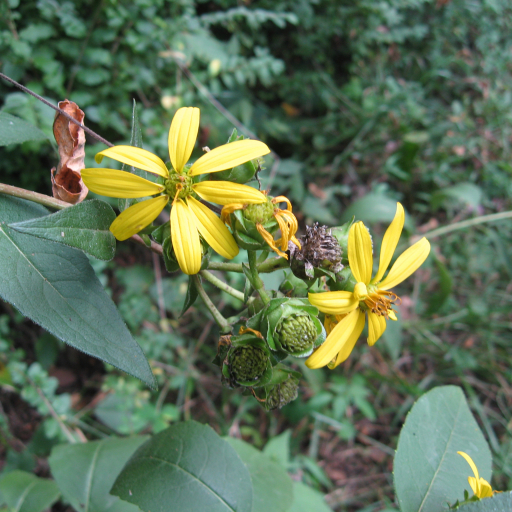
Plant Overview
Often called the Starry Rosinweed, Silphium asteriscus is a rugged North American native that looks like a wild, sun-drenched sunflower caught in a permanent state of celebration. Known for its resilience and "tough-as-nails" attitude, this perennial is a staple of the tallgrass prairie, providing a golden architectural backbone to any native garden or meadow.
🔍 How to Identify
- 🌟 Star-Like Blooms: The flowers feature bright yellow rays surrounding a darker central disk, resembling a classic daisy but with a more rustic, wild appearance.
- 📄 Sandpaper Leaves: One of its most distinct features is the texture of the leaves; they are covered in stiff hairs that feel remarkably like coarse sandpaper to the touch.
- 💧 Resinous Sap: If a stem is broken, the plant secretes a thick, fragrant resin (rosin) that was historically used by Indigenous peoples and pioneers.
🏡 In Your Garden
- 🏗️ The Taproot Commitment: This plant develops a massive, deep taproot early in life. This makes it incredibly drought-tolerant, but it also means it hates being moved—pick its permanent "forever home" carefully!
- 🐝 Pollinator Magnet: It is a high-traffic hub for native bees, wasps, and butterflies. If you want to watch a bustling ecosystem in your backyard, this is the plant to choose.
- 💪 Sturdy Structure: Unlike some tall wildflowers that flop over in the wind, Starry Rosinweed has a stiff, upright habit that provides great vertical interest through the summer and into the fall.
⚠️ Safety & Toxicity
- ✅ General Safety: Silphium asteriscus is generally considered non-toxic to humans and common household pets like cats and dogs.
- 🌵 Physical Irritant: While not chemically poisonous, the "sandpaper" texture of the leaves and stems can be scratchy. Sensitive skin might experience mild redness or itching after handling the plant without gloves.
✨ Fun Fact
Native American children used to collect the dried resin from the stems of Silphium plants to use as a natural, fragrant chewing gum to clean their teeth and freshen their breath!

Detailed Care Instructions
Here are some tips for growing Silphium Asteriscus:
- Soil: Silphium Asteriscus prefers well-draining soil that is rich in organic matter. Prepare the soil before planting by adding compost or aged manure to improve fertility and drainage.
- Light: These plants thrive in full sun to partly shaded areas. Make sure they receive at least 6-8 hours of direct sunlight every day.
- Watering: Silphium Asteriscus plants are quite drought-tolerant once established. Water deeply but infrequently, allowing the soil to dry out between waterings. Avoid overwatering, as they do not tolerate soggy conditions.
- Propagation: You can propagate Silphium Asteriscus from seeds or by division. Sow the seeds directly in the garden after the last frost or in pots indoors. For division, wait until early spring or fall when the plant is dormant. Carefully dig up the plant, separate the smaller rhizomes, and replant them in a new location.
- Pruning: Deadhead the spent flowers regularly to encourage continuous blooming. Cut back the plant to the ground in late fall or early spring to promote vigorous growth and prevent self-seeding.
- Fertilization: Silphium Asteriscus generally does not require much fertilization. However, you can apply a balanced slow-release fertilizer in spring to promote healthy growth.
- Pests and diseases: These plants are relatively pest and disease-free. However, they may occasionally attract aphids or caterpillars. Monitor the plants regularly and use organic, environmentally friendly methods to control any infestations.
With proper care and attention, your Silphium Asteriscus plant should thrive and provide beautiful blooms.

Place in a bright room that is sun drenched almost all day. Or directly in a south-facing window.

Silphium asteriscus is a plant that requires moderate watering. The soil around the plant should be kept consistently moist but not waterlogged. It is important to water the plant deeply but infrequently to encourage deep root growth. To water the plant evenly, a drip irrigation system should be used. It is also important to avoid watering the leaves of the plant, as this can lead to fungal disease. Instead, water the plant at the base, using a watering can or hose with a nozzle that can produce a gentle stream. Since the plant is native to dry prairies, it is tolerant of drought conditions and can survive with little water, but this may cause it to go dormant. It is important to monitor the soil moisture level regularly and adjust watering accordingly.
- Begin fertilizing Silphium Asteriscus in early spring when new growth emerges.
- Use a balanced, slow-release fertilizer with an NPK ratio of around 10-10-10 or 12-12-12.
- Apply fertilizer evenly around the base of the plant, taking care not to let it touch the leaves or stems.
- Water the plant thoroughly after fertilizing to help nutrients reach the roots.
- Repeat fertilization every 4-6 weeks throughout the growing season.
- Reduce fertilization in late summer to allow the plant to prepare for dormancy in the fall.
- Avoid over-fertilizing, as this can lead to excessive growth, weaker stems, and reduced flowering.
The recommended soil for the plant in question should be well-draining, porous and somewhat moist. The pH level of the soil should be slightly acidic to neutral with a range of 6.0-7.0. It is recommended to mix the soil with a good quality compost or peat moss to enhance its fertility and moisture retention capacity. The soil mix should also have good amounts of organic matter and nutrients to support the healthy growth of the plant. The plant prefers to grow in full sun but can also tolerate partial shade. Additionally, it is important to ensure that the soil is not too compacted as this can limit root growth and lead to poor plant health.
To propagate this plant, you will need to first select a healthy parent plant. Take a sharp, sterilized knife or pair of scissors and cut off a stem from the parent plant, making sure the stem is at least 4 to 6 inches long. Remove any leaves from the bottom half of the stem.
Next, fill a small pot with well-draining soil mixture, and use a pencil or similar tool to make a hole in the center of the soil. Dip the cut end of the stem into rooting hormone powder and then carefully insert it into the hole in the soil, making sure to cover the bottom half of the stem with soil.
Water the newly planted stem thoroughly and place it in a warm, bright location with indirect sunlight. Cover the pot with a clear plastic bag to create a humid environment that will encourage rooting.
After a few weeks, gently tug on the stem to see if it has rooted. Once roots have formed, remove the plastic bag and move the new plant to a larger pot or into the garden, being careful not to disturb the roots. Water regularly and soon enough, you will have a new plant that has been propagated from the parent plant.








