Plant Overview
Known as the Milk Thistle, Holy Thistle, or Mary Thistle, this striking Mediterranean native is steeped in ancient folklore. Legend says the milky-white veins running through its leaves were created by a drop of the Virgin Mary’s milk, giving the plant its name and its "blessed" reputation. While it is a structural beauty in a wild garden, it is also a rugged survivor that balances medicinal fame with a prickly, defensive personality.
🔍 How to Identify
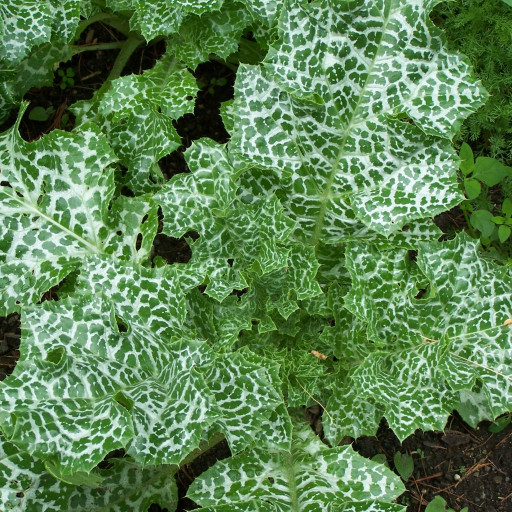
- 🍃 Marbled Foliage: Large, broad, glossy green leaves marked with distinct, creamy-white veins that create a marbled or "spilled milk" pattern.
- 🌸 Thistle Bloom: Large, solitary purple-to-magenta flower heads that sit atop tall stems, surrounded by a "basket" of stiff, outward-pointing spines.
- 🌵 Spiny Margins: The edges of the leaves are deeply lobed and lined with sharp, rigid yellow thorns that demand a "look but don't touch" approach.
🏡 In Your Garden
- 🌱 Tough & Opportunistic: As a biennial, it spends its first year as a flat rosette of leaves and its second year shooting up a tall flower stalk; it loves poor, well-draining soil and is exceptionally drought-tolerant once its taproot is established.
- 🐝 Wildlife Value: Despite its "weedy" reputation, it is a high-value nectar source for honeybees, bumblebees, and butterflies, while goldfinches frequently visit to eat the oily seeds in late summer.
- ✂️ Containment Strategy: It is a prolific self-seeder; if you don't want a field of thistles next year, you must "deadhead" the flowers (cut them off) as soon as they begin to fade but before they turn into white fluff.
⚠️ Safety & Toxicity
- 📌 Physical Injury: The primary risk is mechanical; the spines are incredibly sharp and can easily puncture skin or garden gloves. Handle only with heavy-duty leather gauntlets.
- 🐾 Nitrate Accumulation: While used medicinally by humans, the plant can accumulate high levels of nitrates from the soil, which can be toxic to livestock (cattle and sheep) if eaten in large quantities. It is generally not considered a high-risk plant for cats or dogs, though the spikes are a natural deterrent.
✨ Fun Fact
The active ingredient in Milk Thistle, called Silymarin, is so powerful at protecting the liver that it is used in modern medicine as an emergency intravenous treatment for people who have accidentally eaten the deadly Death Cap mushroom (Amanita phalloides).

Detailed Care Instructions
| Color | Purple |
| Soil Ph | 6-6.5 |
| Invasive | Weed |
| Lighting | Full Sun |
| Toxicity | Poisonous |
| Soil Type | All Varieties |
| Bloom Time | Summer |
| Plant Type | Biennial |
| Mature Size | Up To 3 Feet |
| Native Area | Europe |
| Sun Exposure | Full Sun, Part Shade |
| Hardiness Zones | 5-9 |
To grow Silybum Marianum, also known as milk thistle, follow these steps:
- Choose a sunny location: Milk thistle thrives in full sun but can also tolerate partial shade.
- Prepare the soil: Ensure the soil is well-draining and rich in organic matter. Amend the soil with compost or well-rotted manure to improve its fertility.
- Sow seeds or transplant seedlings: You can start milk thistle from seeds or by transplanting seedlings. If sowing seeds directly, plant them in the springtime, as the soil warms up. Space the seeds about 1 inch apart and cover them with a thin layer of soil. If transplanting seedlings, space them at least 2 feet apart.
- Watering: Milk thistle requires regular watering, especially during dry periods. Water the plants deeply, allowing the soil to dry out between waterings to avoid over-watering.
- Fertilization: Apply a balanced, organic fertilizer once a month during the growing season to promote healthy growth. Avoid using synthetic fertilizers, as milk thistle prefers organic methods.
- Weed control: Keep the area around the milk thistle plants free from weeds as they can compete for nutrients and water.
- Mulching: Apply a layer of mulch around the base of the plants to conserve moisture, suppress weed growth, and regulate soil temperature.
- Pruning: Trim off any dead or dying foliage regularly to keep the plants healthy and prevent disease.
- Pest and disease control: Monitor the plants for common pests like aphids and slugs. Use organic pest control methods if necessary. Disease is rarely a problem for milk thistle.
- Harvesting: The seeds are the most commonly harvested part of the milk thistle plant. Wait until the flowers have dried and turned brown. Cut the flower heads and hang them upside down in a dry, well-ventilated area to allow the seeds to fully ripen and dry out. Once dry, remove the seeds and store them in an airtight container for later use.
By following these steps, you should be able to grow Silybum Marianum successfully.

Place in a bright room that is sun drenched almost all day. Or directly in a south-facing window.

To water this plant, fill a watering can with room temperature water and gently pour the water onto the soil around the base of the plant. Make sure not to pour water directly onto the leaves or stem as this can cause damage. Water the plant when the top inch of soil feels dry to the touch. Avoid overwatering as this can lead to root rot. It is recommended to allow the soil to dry out slightly between watering. Watering the plant once a week is usually sufficient, but this may vary depending on the specific environmental conditions and the size of the plant.
To fertilize this plant, use a balanced fertilizer with equal parts nitrogen, phosphorus, and potassium. Fertilize once a month during the growing season and once every two months during the dormant season. When applying fertilizer, be sure to water the plant thoroughly both before and after fertilizing to avoid burning the roots. Avoid over-fertilization as it can lead to poor growth and health.
The best soil for growing this plant is well-draining with a slightly acidic pH between 5.5 to 7.0. The soil should be rich in organic matter and have good moisture retention properties. A mix of loam, sand, and peat moss can be used to create a suitable growing medium. It is important to make sure that the soil does not become waterlogged, as this can lead to root rot and other fungal diseases. Regular fertilization with a balanced, slow-release fertilizer will also support healthy growth of this plant.
To propagate Silybum Marianum, take a stem cutting from the parent plant. Remove the lower leaves of the stem, leaving the top leaves intact. Dip the cut end of the stem in rooting hormone powder and plant it in a pot filled with well-draining soil. Water thoroughly and place in a bright, indirect light. Keep the soil moist and mist the leaves regularly until roots have formed and new growth appears. Transplant the new plant into a larger pot or directly in the ground once it has become established.
Common pests of the milk-thistle include Spider mites, aphids. Make a habit of checking your milk-thistle frequently for pests so that any infestations can be caught and managed early.








