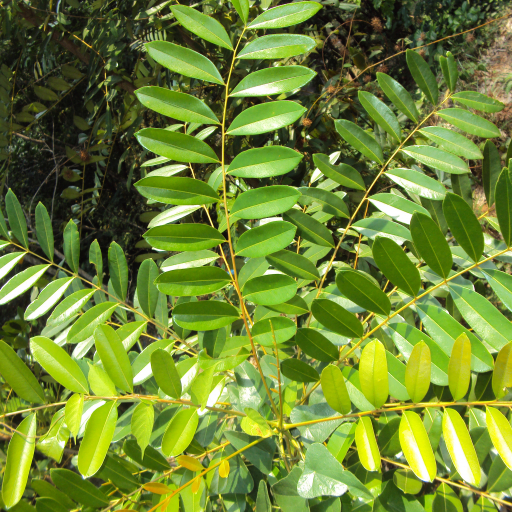
Plant Overview
Known as the Paradise Tree or Aceituno, Simarouba glauca is a tropical evergreen that truly lives up to its heavenly name. Originating from the humid forests of Central America and the Caribbean, it is celebrated for its shimmering, multi-colored foliage and its ability to thrive in poor, rocky soils where other trees might struggle. In many cultures, it is whispered to be a "pharmacy in a tree" due to its extensive history in traditional medicine.
🔍 How to Identify
- 🍃 Shimmering Foliage: The leaves are pinnate (feather-like) with a glossy, dark green surface and a distinctively pale, silvery-blue underside—the "glauca" in its name refers to this waxy, glaucous coating.
- 🌸 Delicate Blooms: It produces large, branched clusters (panicles) of tiny, cream-to-yellow flowers that attract a variety of pollinators.
- 🍒 Changing Fruits: The tree bears small, oval fruits that resemble olives; they start out green, blush into a bright red, and finally ripen to a deep purple-black.
🏡 In Your Garden
- ☀️ Sun Seeker: The Paradise Tree is a sun-lover that needs a bright, open spot to develop its full, rounded canopy. While it is young, it grows rapidly, making it an excellent choice for a quick-growing shade tree.
- 💧 Drought Warrior: Once established, this tree is incredibly drought-tolerant thanks to its deep root system. It is perfect for "lazy" gardeners or those in dry climates, as it actually prefers to dry out between waterings and hates "wet feet" (soggy soil).
- 🌱 Soil Flexibility: It isn't picky about nutrients and can grow in sandy or rocky soils, but it requires excellent drainage to prevent root rot.
⚠️ Safety & Toxicity
- ✅ General Safety: Simarouba glauca is generally safe for humans to handle and touch. It is often planted in public parks and residential landscapes without concern for skin irritation.
- 🐾 Pet & Child Caution: While the seeds are rich in edible oils (often used for industrial purposes), the raw bark and leaves contain bitter compounds called quassinoids. If ingested in large quantities by curious pets or children, it may cause digestive upset or vomiting.
✨ Fun Fact
The Paradise Tree is often called the "Tree of Life" in parts of India. Because its seeds contain about 60-70% oil, it is being studied as a major sustainable source for biodiesel, potentially helping the planet run on "green" energy!

Detailed Care Instructions
To grow a Simarouba glauca plant, also known as paradise tree, follow these steps:
- Climate and location: Ensure that you live in a tropical or subtropical region as Simarouba glauca prefers a warm climate. It is best suited for USDA hardiness zones 10-11. Provide a protected spot with partial shade during the hottest parts of the day.
- Soil requirements: Simarouba glauca prefers well-draining soil with a pH level between 5.5 and 6.5. Prepare a planting area with loose, loamy soil. If your soil is heavy or clayey, add compost or organic matter to improve drainage.
- Seed germination: Obtain Simarouba glauca seeds either from online suppliers or collect them from mature fruit. Scarify the seeds by gently scratching or filing the outer shell, or soak them in warm water overnight. This helps to enhance germination. Sow the seeds in pots or directly in the ground, burying them about 0.5-1 inch deep.
- Watering: Keep the soil consistently moist but not waterlogged after sowing. Once the seedlings develop, reduce the frequency of watering but do not allow the soil to dry out completely. Mulch around the plants to retain moisture.
- Fertilization: Simarouba glauca can benefit from organic fertilizers, such as compost, well-rotted manure, or balanced slow-release fertilizers. Apply fertilizers during the growing season in spring and summer, following the manufacturer's instructions.
- Pruning: Simarouba glauca may require light pruning to maintain a desired shape or remove dead or damaged branches. Prune during the dormant season to minimize stress on the plant.
- Pest and disease management: Simarouba glauca generally has good pest and disease resistance. However, keep an eye out for common garden pests like aphids, mealybugs, or scale insects, and treat them with insecticidal soap or neem oil if necessary.
- Harvesting: Simarouba glauca produces small fruits that resemble berries, turning from green to yellow. Harvest the ripe fruits by hand when they are fully colored and have fallen from the tree. The fruits can be used for various purposes, including oil extraction for biodiesel or traditional medicine.
Remember, Simarouba glauca is a relatively fast-growing tree, so provide ample space for it to reach its full potential.
To water this plant, you should ensure that the soil is thoroughly moistened, but not waterlogged. It is best to water when the top inch of soil feels dry to the touch. Use a watering can or a hose with a gentle flow to avoid damaging the plant. Be sure to water evenly around the base of the plant, allowing the water to soak into the soil. Avoid getting water on the leaves to prevent fungal growth. In general, this plant prefers consistent moisture but can tolerate some dry spells.
To fertilize the Simarouba Glauca plant, apply a balanced fertilizer with equal amounts of nitrogen, phosphorus, and potassium. Apply the fertilizer once every three months during the growing season. Use a granular fertilizer and spread it evenly around the base of the plant. Water the plant well after fertilizing to help the nutrients penetrate the soil. Avoid over-fertilizing, as it can lead to leaf scorch and root damage.
The most suitable type of soil for the Simarouba Glauca plant is a well-draining soil that is rich in organic matter. The soil pH should be in the range of 6.0 to 7.5, which is slightly acidic to neutral. The plant prefers a moderately fertile soil that holds moisture well, but is not waterlogged. A sandy loam soil with good drainage is ideal for Simarouba Glauca. It is recommended to incorporate compost or well-rotted manure into the soil before planting to provide additional nutrients and improve soil structure. It is important to ensure that the soil remains moist but not waterlogged, as excess water can lead to root rot. Mulching around the base of the plant can help to retain soil moisture and regulate soil temperature.
Simarouba Glauca plant can be propagated from seeds or vegetative cuttings. To propagate it from seeds, collect mature seeds from the plant, remove any fleshy material around them and soak them in water for 24-48 hours. Sow the seeds in well-draining soil, cover them with a thin layer of soil, and keep them moist. It takes about 2-3 weeks for the seeds to germinate.
To propagate it from vegetative cuttings, take stem cuttings from the mother plant that are about 10-15 cm long. Remove the lower leaves, dip the cut end into rooting hormone, and plant it in well-draining soil. Keep the soil moist and place the cutting in a location with bright, but indirect sunlight. The cutting should root in about 4-6 weeks.








