Plant Overview
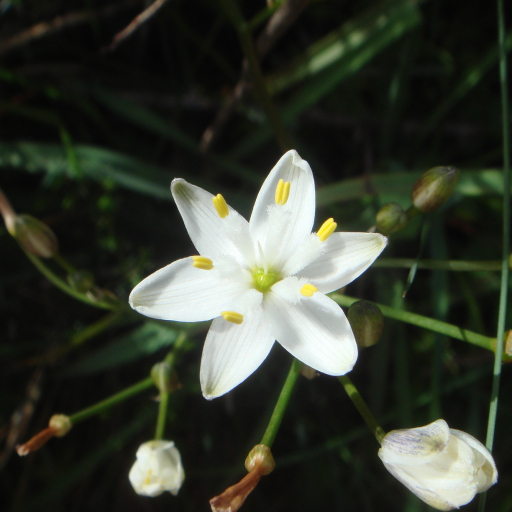
The Kerry Lily (Simethis mattiazzii) is a delicate botanical treasure that tells a story of ancient migrations. Despite its name, this elegant lily is primarily a Mediterranean native that somehow found a foothold in the wild, rugged heaths of County Kerry, Ireland. It is a rare sight for most, often hidden among gorse and heather, waiting for the late spring sun to open its star-like blossoms.
🔍 How to Identify
- 🌸 Star-Shaped Flowers: The blooms are small and pristine white on the inside, while the outside of the petals often features a soft, purplish or brownish tint.
- 🌾 Grass-like Foliage: Its leaves are long, narrow, and channeled, resembling a tuft of coarse grass before the flower spike emerges.
- 🧶 Woolly Filaments: If you look closely at the center of the flower, the stalks of the stamens (filaments) are densely covered in tiny, fuzzy white hairs, which is a key identifying trait.
🏡 In Your Garden
- 🏜️ Mediterranean Roots: This plant thrives in "Lusitanian" conditions—meaning it loves well-drained, acidic, and peaty soils. It is often found in the wild near coastal areas where the air is humid but the ground doesn't stay waterlogged.
- 🌱 Low Interference: The Kerry Lily has a sensitive root system. It dislikes being moved once established and prefers a spot where it won't be overshadowed by faster-growing, aggressive garden plants.
- 🛡️ Conservation Status: In many regions, particularly Ireland, this plant is protected. If you are lucky enough to find it in the wild, admire it with your camera only; never dig it up or pick the flowers.
⚠️ Safety & Toxicity
- 🐾 Non-Toxic Assessment: There are no widespread reports of the Kerry Lily being highly toxic to humans or common pets.
- 🚫 Precautionary Note: As with many wild lilies and iris-like plants, the bulbs can cause digestive upset if ingested. It is best kept out of reach of curious puppies or toddlers who might try to nibble the foliage.
✨ Fun Fact
The Kerry Lily is a "Lusitanian" species, a term used by botanists to describe plants found in the Iberian Peninsula and Ireland, but nowhere in between. It is a living mystery that suggests a historical land bridge or ancient seeds traveling along prehistoric trade routes!

Detailed Care Instructions
Simethis Mattiazzii plant should be watered thoroughly but sparingly. It prefers a well-draining soil mixture, so avoid over-watering as it can lead to root rot. Allow the top inch of soil to dry out before watering, and make sure that the water reaches the roots, but does not sit in the saucer for too long. Watering should be reduced during the winter months when the plant's growth slows down. It is recommended to use room temperature water to avoid shocking the plant's root system.
The recommended soil for the Simethis Mattiazzii plant should be well-draining and rich in organic matter. It should have a pH level between 5.5 to 6.5 and be slightly acidic. It is recommended to use a soil mix that consists of peat moss, perlite, and sand. The peat moss provides the necessary organic matter to improve soil fertility, while perlite and sand improve drainage and aeration. The soil should be kept moist but not waterlogged, as the Simethis Mattiazzii plant prefers slightly moist soil conditions. If the soil dries out too much, it can lead to plant stress and damage. It is also recommended to fertilize the soil every few weeks with a balanced fertilizer to promote healthy growth.








