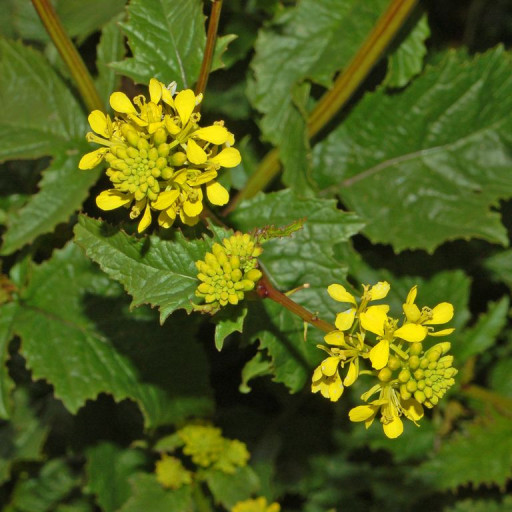
Plant Overview
Often called "Charlock" or "Field Mustard," this sun-loving wildflower is a common sight in meadows and along roadsides across the globe. While many gardeners view it as a persistent weed, it is a vital early-season food source for pollinators and has a long history as a rustic medicinal herb. Its bright yellow blooms act like tiny magnets for honeybees, signaling the height of spring.
🔍 How to Identify
- 🌼 Petal Power: Four bright yellow petals arranged in a perfect "X" or cross shape, a classic signature of the Brassicaceae (mustard) family.
- 🍃 Lobed Leaves: The lower leaves are deeply lobed with a large, rounded end, while the upper leaves are simpler, lance-shaped, and lack stalks.
- 🪶 Bristly Stems: The stems are noticeably hairy, especially near the base, with stiff hairs that point downward, giving the plant a rough texture.
🏡 In Your Garden
- 🌱 The Pioneer Spirit: This plant thrives in "disturbed" soil. If you’ve recently tilled a garden bed or dug a trench, don't be surprised to see Wild Mustard appearing first to claim the open territory.
- ⚓ Taproot Strength: It develops a sturdy, deep taproot very quickly. This makes it highly drought-tolerant, but it also means you should pull it early if you don't want it to stay—once mature, the root often snaps, allowing the plant to regrow.
⚠️ Safety & Toxicity
- 🐾 Mild Irritant: While the young leaves are technically edible for humans (often used as a bitter green), the seeds contain sinigrin, which can cause gastric distress in curious pets.
- 🚜 Livestock Caution: It is primarily a concern for farmers; if consumed in very large quantities by horses or cattle, it can cause "mustard poisoning" due to its high concentration of sulfur compounds.
✨ Fun Fact
- ⏳ The 50-Year Sleep: The seeds of Wild Mustard are incredible survivors. They can remain dormant and viable in the soil for over 50 years, waiting for a shovel or a plow to bring them to the surface so they can finally germinate.

Detailed Care Instructions
To grow Sinapis arvensis, also known as wild mustard or charlock, follow these steps:
- Climate: Sinapis arvensis thrives in temperate climates, so ensure that the conditions are suitable for its growth.
- Soil: This plant prefers well-drained soil with a pH level between 6.0 and 7.5. Prepare the soil by loosening it and removing any rocks or debris.
- Sunlight: Choose a location that receives full sun or partial shade throughout the day.
- Planting: Sow the seeds of Sinapis arvensis in early spring or fall directly into the prepared soil. Scatter the seeds evenly and cover them with a thin layer of soil, around 1/8 to 1/4 inch deep. Space the seeds about 6 inches apart.
- Watering: Keep the soil consistently moist throughout the germination period, which takes around 7 to 10 days. After that, water the plants deeply once a week if there is no rainfall.
- Weed control: Regularly check the planting area for weeds and remove them to prevent competition for nutrients and space.
- Pruning: While Sinapis arvensis does not require frequent pruning, you may trim the plant occasionally to control its size and shape.
- Fertilization: Wild mustard generally does not require heavy fertilization. However, if your soil lacks nutrients, you can apply a balanced fertilizer at the beginning of the growing season.
- Harvesting: Depending on your purpose, you can harvest Sinapis arvensis leaves, flowers, or seeds. Leaves are typically picked when young and tender for salads or cooked dishes. Flowers can be collected for culinary purposes. Seeds can be harvested when they turn brown and dry for later use as a spice or for making mustard.
- Controlling spread: Sinapis arvensis can become invasive if not managed properly. Regularly monitor its growth and take appropriate measures to prevent it from spreading beyond its intended area.
Remember that before planting Sinapis arvensis or any other plant, it's always a good idea to check with local gardening experts to ensure it is suitable for your specific location and any possible regulations or restrictions in your area.

Place in a bright room that is sun drenched almost all day. Or directly in a south-facing window.

To properly water this plant, it is important to first ensure that the soil is dry to the touch before watering. Once it is determined that the plant is in need of water, it should be given a thorough watering, making sure that the entire root system is moistened.
The watering schedule will depend on various factors such as the climate, soil type, and pot size. Generally, it is recommended to water this plant deeply but infrequently, allowing the soil to dry out between watering sessions. It is important to avoid overwatering, as this can lead to root rot and other issues.
When watering this plant, it is best to avoid getting water on the leaves, as this can promote the growth of fungal diseases. Water should be applied at the soil level using a watering can or hose with a gentle spray nozzle.
Overall, it is important to monitor the moisture levels of the soil and adjust the watering schedule accordingly to ensure the health and vitality of the plant.
- Choose a balanced fertilizer with equal parts of nitrogen, phosphorus, and potassium.
- Apply the fertilizer in the early stages of growth, when the plant is actively growing.
- Sprinkle the fertilizer evenly around the base of the plant.
- Water the plant immediately after fertilizing to help the nutrients reach the roots.
- Repeat the fertilization process every four to six weeks throughout the growing season.
- Avoid over-fertilizing, as this can cause leaf burn and other plant stress.
The best type of soil to use with this plant is a well-draining, loamy soil that is rich in organic matter. It should be slightly acidic with a pH level between 6.0 and 7.0. The soil should be well-aerated and able to retain moisture, but not waterlogged, as this can lead to root rot. The plant prefers soils that are fertile and nutrient-rich, with a balanced mix of nitrogen, phosphorus, and potassium. It requires moderate to full sunlight exposure and can tolerate drought conditions once established, but it needs consistent watering during the growing season to develop to its full potential. Neglecting to provide the appropriate soil conditions can lead to stunted growth and poor plant development, ultimately preventing the plant from thriving.
Sinapis Arvensis is a type of plant that can be propagated through various methods. One way to propagate this plant is through seed sowing. To do this, collect mature seeds from the plant and sow them in a well-prepared soil bed or container. Cover the seeds with soil and water them regularly to keep the soil moist. Seeds usually germinate within 2-3 weeks.
Another method to propagate Sinapis Arvensis is through stem cuttings. Take cuttings from the parent plant during the growing season, making sure to choose healthy, non-flowering stems. Remove the lower leaves and plant the cuttings in a pot or soil that provides good drainage. The cuttings should be watered regularly and kept in a location with bright, indirect sunlight.
Sinapis Arvensis can also be propagated through layering. To do this, select a low-growing stem and bend it down to the soil. Make a small cut in the stem at the point where it touches the soil and cover it with soil. Within a few weeks, roots will develop and a new plant will begin to grow.
In summary, Sinapis Arvensis can be propagated through seed sowing, stem cuttings, and layering. Each propagation method has its own advantages and disadvantages, so it is important to choose the one that is most suitable for your particular situation.
Common pests of the field mustard include Aphids, larvae. Make a habit of checking your field mustard frequently for pests so that any infestations can be caught and managed early.








