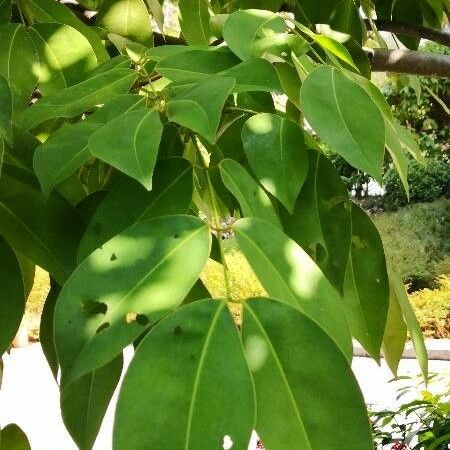
Plant Overview
Known as the "Gụ" tree or Tonkin Rosewood, Sindora tonkinensis is a legendary giant of the Southeast Asian rainforests. Highly prized for its deep, lustrous timber, it is often associated with luxury and longevity in Vietnamese culture, where it has been used for centuries to craft ornate imperial furniture. Because it grows slowly and has been heavily harvested, seeing a mature specimen today feels like encountering a living piece of history.
🔍 How to Identify
- 🌿 The Foliage: It features large, glossy, paripinnate leaves (paired leaflets) that give the canopy a dense, luxurious appearance.
- 🫛 The Seed Pods: Unlike many soft legumes, its pods are flat, woody, and almost circular, often developing a textured or slightly prickly surface as they dry.
- 🪵 The Bark: The trunk is remarkably straight and covered in smooth, greyish bark that may peel in thin flakes as the tree reaches its massive mature height.
🏡 In Your Garden
- 🌳 A Legacy Tree: This is not a plant for a small backyard or a patio pot. It is a slow-growing forest giant that requires deep, well-draining soil and plenty of room for its expansive root system.
- ☀️ Tropical Requirements: It thrives in humid, tropical climates and craves full sun once established. While it is hardy once mature, young saplings need protection from extreme winds and drying out.
⚠️ Safety & Toxicity
- 🟢 Generally Safe: Sindora tonkinensis is not known to be toxic to humans or common household pets upon contact.
- 🚫 Non-Edible: While not "poisonous" in the traditional sense, the seeds and pods are extremely hard and should not be ingested by children or animals as they pose a significant choking hazard.
✨ Fun Fact
In Vietnam, antique furniture made from Sindora tonkinensis is so durable that it is often referred to as "living wood." Over decades, the wood naturally secretes a subtle oil that causes it to darken into a rich, mahogany-like black, increasing its beauty and value as it ages.

Detailed Care Instructions

Place in a bright room that is sun drenched almost all day. Or directly in a south-facing window.

When the top few inches of soil dry out, water your plants. If the top few inches of soil are still moist, do not water your plant. Wait a few days, then poke your finger into the soil to see if anything has changed. Overwatering poses a disease risk, such as the development of fungal diseases in the roots. These plants have adaptations in there leaves that allow them to survive in low water supply.








