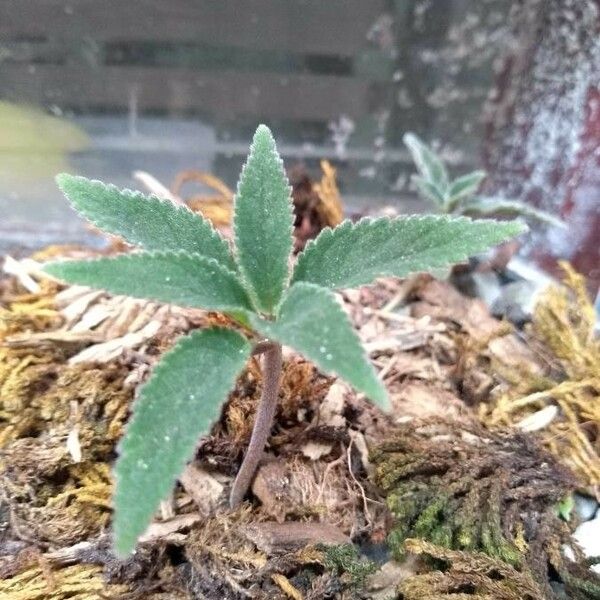
Plant Overview
Often called the "Leopard Sinningia" due to its strikingly spotted blossoms, Sinningia douglasii is a charismatic gem from the Atlantic forests of Brazil. While it belongs to the same family as the African Violet, it grows from a prehistoric-looking woody tuber that often sits proudly above the soil. This plant is a true conversation starter, blending the elegance of an orchid with the rugged charm of a succulent-like caudex.
🔍 How to Identify
- 🌸 The "Leopard" Bloom: The flowers are long, tubular, and a soft salmon-pink or dusky red, covered in intricate dark purple or maroon spots both inside and out.
- 🍃 Whorled Foliage: Broad, bright green leaves with a slightly velvety texture usually grow in distinct groups of four around the stem.
- 🥔 The Tuber: At the base of the plant sits a large, corky, potato-like tuber (caudex) that stores water and nutrients, allowing the plant to survive dry periods.
🏡 In Your Garden
- 🪵 The Drainage Secret: Because this plant grows from a tuber, it is extremely sensitive to "wet feet." Use a very porous, airy potting mix—similar to what you would use for an orchid or a cactus—to prevent the base from rotting.
- 💤 The Winter Nap: Don't panic if your plant loses its leaves! Sinningia douglasii usually goes dormant in the winter. During this time, stop watering almost entirely and keep it in a cool spot until new green shoots emerge in the spring.
⚠️ Safety & Toxicity
- ✅ Status: Generally Non-Toxic.
- 🐾 Details: This plant is considered safe for households with curious cats, dogs, and children. However, the stems are somewhat brittle, so it’s best kept on a high shelf to protect the plant’s delicate structure from accidental bumps.
✨ Fun Fact
In its native Brazilian habitat, Sinningia douglasii is often "epilithic," meaning it grows directly on mossy rocks or even nestled in the crooks of trees rather than in deep soil. This unique lifestyle is why it has evolved such a massive water-storing tuber!

Detailed Care Instructions
To successfully grow a Sinningia douglasii plant, also known as the flame violet, you can follow these steps:
- Choose the right location: Select a spot that offers bright indirect light, such as near a north or east-facing window. Avoid direct sunlight, as it can scorch the leaves.
- Provide optimal temperature: Flame violets prefer temperatures between 60-75°F (15-24°C). Avoid exposing them to extreme cold or hot conditions.
- Use well-draining soil: Use a well-draining potting mix that retains some moisture but doesn't become waterlogged. A mix of peat moss, perlite, and vermiculite is a good option.
- Watering: Keep the soil consistently moist but not overly wet. Water thoroughly when the top inch of soil feels dry. Avoid letting the plant sit in standing water, as it can lead to root rot.
- Humidity: Flame violets thrive in high humidity levels. You can increase humidity by placing the plant on a pebble tray filled with water or using a humidifier nearby. Alternatively, misting the plant occasionally can also help.
- Fertilization: Apply a balanced liquid houseplant fertilizer diluted to half strength every month during the growing season (spring and summer). Reduce or stop fertilizing during the winter months.
- Pruning: Trim off any withered or yellowing leaves to maintain the plant's health and appearance. You can also pinch off the tips of stems to encourage bushier growth.
- Propagation: Flame violets can be propagated through leaf cuttings. Select a healthy leaf, cut it into sections, and place them in a container with a moist, well-draining potting mix. Maintain high humidity, and roots should develop within a few weeks.
- Repotting: As the plant grows, you may need to repot it into a slightly larger container to provide adequate space for the roots. Repeat this process every 1-2 years during the spring.
- Pest control: Keep an eye out for common houseplant pests like aphids, mealybugs, and spider mites. If detected, treat them with insecticidal soap or neem oil following the product instructions.
By following these guidelines, you can create a suitable environment for your Sinningia douglasii plant to thrive and grow.

Place in a window with dappled sun or a spot in the middle of a room. Or directly in a window facing west or east.

To properly water this plant, first check the soil moisture level by sticking your finger into the soil about an inch deep. If the soil feels dry, it's time to water. Use a watering can or hose with a gentle stream to water the soil around the base of the plant until the water begins to drain out of the bottom of the pot. Avoid getting water on the leaves. Water this plant regularly, but only when the soil feels dry. Overwatering can lead to root rot. If the plant is in a well-draining pot with good soil, it should only need watering once a week.
To fertilize this plant, it is recommended to use a balanced fertilizer with equal amounts of nitrogen, phosphorous, and potassium. Begin fertilizing in the spring and continue every two weeks until the end of the summer. Use a diluted solution of fertilizer and pour it directly onto the soil around the plant, being careful not to get it on the leaves or flowers. Avoid fertilizing during the winter months when the plant is dormant.
The ideal soil for (plant name) is well-draining, loose and fertile. It should have a pH level of around 6.5 to 7.5. A mix of equal parts perlite, peat moss, and coarse sand or vermiculite is recommended. The soil should not be allowed to dry out completely, but also should not be kept too wet. It is important to avoid compact soils that retain moisture, which can lead to rotting of the roots. Adding a layer of gravel at the bottom of the pot can help improve drainage. Fertilization should be done sparingly, using a balanced fertilizer once a month during the growing season.
To propagate this plant, take a healthy leaf cutting with a stem and plant it in a well-draining soil mix. Make sure the leaf is inserted about an inch deep into the soil. Water the cutting and cover it with a plastic bag to create a humid environment. Keep the cutting in bright, indirect light and ensure the soil remains moist but not waterlogged. After a few weeks, new growth should appear, and the cutting can be transplanted into its own pot. It’s important to avoid overwatering the newly propagated plant, as it can be susceptible to root rot.
Common pests of the sinningia douglasii include Mealybugs, spider mites, aphids. Make a habit of checking your sinningia douglasii frequently for pests so that any infestations can be caught and managed early.








