Plant Overview
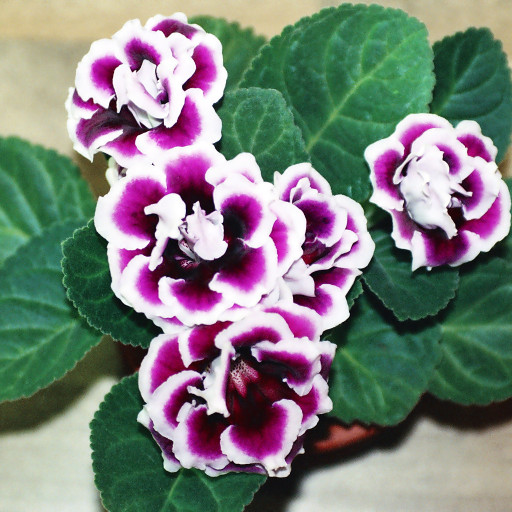
Often referred to as the Florist’s Gloxinia, Sinningia speciosa is the crown jewel of Brazilian houseplants. With its oversized, bell-shaped blooms that feel like expensive velvet, it has been a favorite centerpiece since the 19th century. While it looks like a delicate Victorian heirloom, this plant is actually a sturdy tuberous perennial that can reward you with massive floral displays year after year if you understand its rhythm.
🔍 How to Identify
- 🔔 The Blooms: Large, trumpet or bell-shaped flowers that come in rich shades of violet, crimson, pink, or white, often featuring ruffled edges or contrasting speckled throats.
- 🍃 The Foliage: Broad, oblong leaves that are dark green and densely covered in fine, silvery hairs, giving them a soft, felt-like texture.
- 🌱 Growth Habit: It grows in a low, compact rosette pattern, emerging from a thick, potato-like underground tuber.
🏡 In Your Garden
- 💧 The "No-Wet-Leaf" Rule: Much like its cousin, the African Violet, this plant is prone to crown rot and leaf spotting. Always water from the bottom or aim carefully under the leaves; getting the velvet foliage wet is a recipe for fungal trouble.
- 😴 The Secret Nap: After the spectacular flowering period ends, the plant will naturally wither and look like it’s dying. Don’t toss it! It is simply entering dormancy. Reduce water, let the leaves die back, and keep the tuber dry for a few months until new green shoots signal it's time to wake up.
⚠️ Safety & Toxicity
- 🐾 Status: Non-Toxic.
- 👶 Details: Sinningia speciosa is considered safe for cats, dogs, and children. However, because the leaves are so fuzzy, they can trap dust and hair, which might cause mild stomach upset if a curious pet decides to chew on them.
✨ Fun Fact
Despite its common name "Gloxinia," this plant was reclassified into the genus Sinningia long ago. The true Gloxinia genus actually consists of plants that look quite different, but the original nickname stuck so well that even nurseries rarely use its "real" name!

Detailed Care Instructions
| Color | White, Red, Pink, Purple, Or Blue |
| Soil Ph | Acidic, 5.5-6.5 |
| Humidity | High |
| Lighting | Part Sun |
| Soil Type | Well-Draining |
| Bloom Time | Summer |
| Difficulty | Medium |
| Plant Type | Tropical Perennial |
| Mature Size | 6-10 In. Tall And Wide |
| Native Area | Brazil |
| Temperature | 18°C - 25°C |
| Sun Exposure | Partial Shade |
| Hardiness Zones | 11-12 |
To help grow a Sinningia Speciosa plant, commonly known as the "Florist Gloxinia," you can follow these steps:
- Purchase healthy tubers or seeds: You can find Sinningia Speciosa tubers or seeds at your local garden center or purchase them online. Make sure to choose healthy and disease-free tubers/seeds.
- Planting: For tubers, choose a small pot with drainage holes. Fill it with well-draining potting soil mixed with perlite or vermiculite. Plant the tubers about 1-2 inches apart, with the concave side facing up. If using seeds, sow them on top of the potting soil and gently press them down.
- Watering: Mist the potting soil lightly to provide moisture but do not soak it. Keep the soil moist, but avoid overwatering, as it can cause rot. Water whenever the top inch of soil feels dry to the touch.
- Light conditions: Sinningia Speciosa prefers bright, indirect light. Place the pot in a location with filtered sunlight or provide artificial grow lights for about 12-14 hours a day. Avoid direct sunlight, as it can scorch the leaves.
- Temperature and humidity: Keep the plant in a warm environment with temperatures around 70-75°F (21-24°C) during the day and slightly cooler at night. Maintain humidity levels by placing the pot on a tray filled with water and pebbles or use a humidifier.
- Fertilizer: Once the plant starts producing leaves, begin applying a balanced, water-soluble fertilizer every 2-3 weeks. Follow the instructions on the fertilizer packaging and avoid fertilizing when the plant is dormant.
- Pinch or prune: To encourage bushier growth, pinch off the tips of the young plants when they reach 3-4 inches in height. This will also promote the development of more flowering stems.
- Flowering: Sinningia Speciosa usually blooms in late winter or early spring. Each tuber can produce multiple flowers, which may be single or double forms depending on the variety. Enjoy the beautiful blooms!
- Dormancy: After blooming, the plant will go through a dormant period. Reduce watering and fertilizing gradually, and allow the plant to rest for a few months. During this period, store the tubers in a cool, dark, and dry place, such as a basement or refrigerator, until it's ready to be replanted.
By following these steps, you can successfully grow Sinningia Speciosa and enjoy its lovely flowers.

Place in a window with dappled sun or a spot in the middle of a room. Or directly in a window facing west or east.

Sinningia Speciosa plants should be watered regularly, but not excessively. It is important to allow the soil to dry out slightly between waterings to prevent the roots from becoming waterlogged. When watering, pour water slowly and evenly around the base of the plant, taking care not to get water on the leaves or flowers. It is recommended to use room temperature, non-chlorinated water. In addition, Sinningia Speciosa plants prefer a humid environment, so misting the leaves can help to keep them healthy.
To fertilize this plant, mix a balanced, water-soluble fertilizer into a watering can according to the instructions on the fertilizer packaging. Water the plant with the fertilizer solution once a month during the growing season, which is typically in the spring and summer months. Be sure to water the plant before applying the fertilizer to prevent root burn and allow the fertilizer to fully dissolve in the soil. Avoid fertilizing during the winter months when the plant is dormant.
Sinningia Speciosa is a type of plant that requires specific soil characteristics in order to thrive. It requires a well-draining soil that is slightly acidic with a pH range between 5.5 and 6.5. A soil that is too alkaline may result in poor growth and nutrient deficiencies. It is recommended to use a soil mix that is composed of 60% peat moss and 40% perlite or vermiculite. This will help ensure that the plant gets the right amount of moisture without being waterlogged. Additionally, it is important to fertilize the plant regularly, using a balanced fertilizer at half-strength once a month during the growing season. Overall, proper soil management is crucial to the healthy growth and development of the Sinningia Speciosa plant.
To propagate this plant, take cuttings from the stem that are at least 4 inches long and contain a minimum of two nodes. Remove the lower leaves and dip the cut end into rooting hormone. Plant the cutting in a well-draining soil mix that is kept moist but not waterlogged. Place the cutting in a bright location but not direct sunlight. Cover the cutting with a plastic bag or dome to maintain humidity and promote root growth. Once roots have formed, the new plant can be potted up and gradually acclimated to normal growing conditions.
Common pests of the brazilian gloxinia include Mealybugs, spider mites, aphids. Make a habit of checking your brazilian gloxinia frequently for pests so that any infestations can be caught and managed early.








