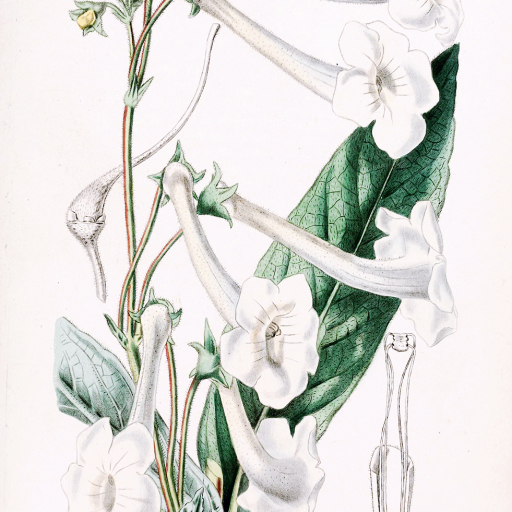
Plant Overview
Known as the Hardy White Gloxinia or Trumpet Flower, Sinningia tubiflora is a fragrant superstar of the Gesneriad family. Hailing from the sun-drenched grasslands of Argentina and Uruguay, this plant defies the "fussy" reputation of its indoor cousins by being remarkably resilient and vigorous. Its most enchanting trait is its powerful perfume—a sweet, citrusy scent that intensifies as the sun sets to attract nocturnal visitors.
🔍 How to Identify
- 🎺 The Flowers: Produces long, elegant, pure white tubular blooms that can reach up to 4 inches in length. They clusters at the top of tall, sturdy flower stalks.
- 🌿 The Foliage: Features soft, velvety, bright green leaves that grow in a low-mounded rosette. The texture is noticeably fuzzy to the touch.
- 🥔 The Root System: Beneath the soil, it develops large, potato-like tubers that store water and nutrients, allowing the plant to survive periods of drought or cold.
🏡 In Your Garden
- ☀️ Sun Seeker: Unlike most Gloxinias that prefer deep shade, Sinningia tubiflora craves bright light. To get those dramatic flower spikes, it needs plenty of sun, though it appreciates a little afternoon break in scorching climates.
- 💧 Drainage is Key: Because it grows from a tuber, "wet feet" is its biggest enemy. Plant it in gritty, well-draining soil. It is surprisingly cold-hardy for a tropical-looking plant, often surviving outdoors in temperate zones if the soil stays dry during winter dormancy.
- 🦋 Pollinator Magnet: The deep, nectar-rich tubes are a favorite for hummingbirds during the day and hawkmoths at twilight, making it a "must-have" for a wildlife-friendly garden.
⚠️ Safety & Toxicity
- ✅ Status: Non-toxic and generally safe.
- 🐾 Details: This plant is considered non-toxic to cats, dogs, and horses. It is a great choice for households with curious pets, though it’s always best to discourage munching to keep the velvety leaves looking their best.
✨ Fun Fact
The flowers of Sinningia tubiflora are specifically "designed" by nature for the Hawkmoth. The long, narrow tube ensures that only insects with an exceptionally long proboscis (tongue) can reach the nectar, ensuring the moth gets covered in pollen to carry to the next bloom!

Detailed Care Instructions
To grow Sinningia Tubiflora (commonly known as the Brazilian edelweiss), you can follow these steps:
- Choose a suitable location: Find a location in your home or garden that receives bright, indirect light. This plant prefers a warm environment with temperatures between 65-75°F (18-24°C).
- Prepare the soil: Sinningia Tubiflora thrives in well-draining soil. Mix equal parts potting soil, perlite, and peat moss to create a loose and well-aerated medium.
- Planting: Select a small pot with drainage holes and fill it with the prepared soil mixture. Place the Sinningia Tubiflora bulb in the pot, burying it lightly with the top exposed. Firmly press the soil around the bulb.
- Watering: Water the plant thoroughly after planting. Keep the soil moist, but not waterlogged. Water when the top inch of the soil feels dry. Avoid overwatering, as it can cause root rot.
- Humidity: Sinningia Tubiflora appreciates high humidity. You can increase humidity by placing a tray of water near the plant or using a humidifier. Mist the leaves occasionally.
- Fertilization: Feed the plant with a balanced liquid fertilizer once every two weeks during the growing season (spring and summer). Follow the instructions on the fertilizer label for application rates.
- Pruning: Prune any dead or yellowing leaves to maintain the plant's appearance and health. Pinch back the stems to encourage bushier growth.
- Overwintering: Sinningia Tubiflora is not winter hardy in most regions. In late fall, before the first frost, bring the plant indoors. It can go into a dormant period during winter. Reduce watering and place it in a cool, dark location with temperatures around 50°F (10°C).
- Repotting: As the Sinningia Tubiflora grows, it may need to be repotted into a larger container. Repot during the spring months using fresh potting soil.
- Propagation: Sinningia Tubiflora can be propagated through stem cuttings. Take 2-3 inch long stem cuttings, remove the lower leaves, and place them in a moist potting mix. Keep the cuttings warm and lightly mist them to keep the moisture level up.
By following these steps, you should be able to successfully grow your Sinningia Tubiflora plant. Enjoy its beautiful flowers and unique foliage!

Place in a bright room that is sun drenched almost all day. Or directly in a south-facing window.

When watering this plant, it is important to allow the soil to dry out slightly between waterings. Overwatering can lead to root rot and other issues. It is recommended to use room temperature water and to water the plant thoroughly, making sure water reaches the roots. It is also important to avoid getting water on the leaves or flowers, as this can cause damage or disease. If the plant is potted, make sure the pot has good drainage to prevent water from sitting in the bottom.
- Prepare a well-draining potting mix.
- Water the soil until it is moist, but not waterlogged.
- Mix a balanced fertilizer into the soil, following the instructions on the package.
- Apply the fertilizer once a month during the growing season (spring and summer).
- Use a liquid fertilizer and dilute it to half strength.
- Apply the fertilizer to the soil around the base of the plant, taking care not to get it on the leaves or flowers.
- Water the plant thoroughly after fertilizing to help distribute the nutrients.
- Avoid overfertilizing, as this can lead to fertilizer burn and damage the plant.
- Monitor the plant for signs of nutrient deficiencies, such as yellow leaves, stunted growth, or poor flowering. Adjust the fertilizer application as needed.
The optimal soil for Sinningia Tubiflora should be a well-draining mix that is high in organic matter and has a slightly acidic pH. A mix of peat moss, perlite, and vermiculite is recommended to ensure good drainage while retaining moisture. Adding a small amount of sand can also be beneficial. It is important to avoid using a heavy potting soil or one that contains a high amount of nutrients, as this can lead to root rot and other issues. In addition, adding a slow-release fertilizer or regularly feeding the plant with a balanced liquid fertilizer can help promote healthy growth.
The propagation of this plant can be achieved by division or leaf cuttings. For division, the plant should be carefully dug up and separated into smaller sections with roots. Each section should have at least one stem and some healthy roots. These divisions can then be potted up separately and treated as individual plants.
For leaf cuttings, healthy leaves should be selected and cut into sections of around 5cm in length. These sections should be placed on a moist potting mix, with the bottom end inserted just below the surface. The container should be covered with a plastic bag to maintain humidity and the cutting should be kept out of direct sunlight until new growth appears. The cuttings can then be transplanted into individual pots.
It is important to keep the soil moist and control the temperature and light conditions during the propagation process to achieve the best results.








