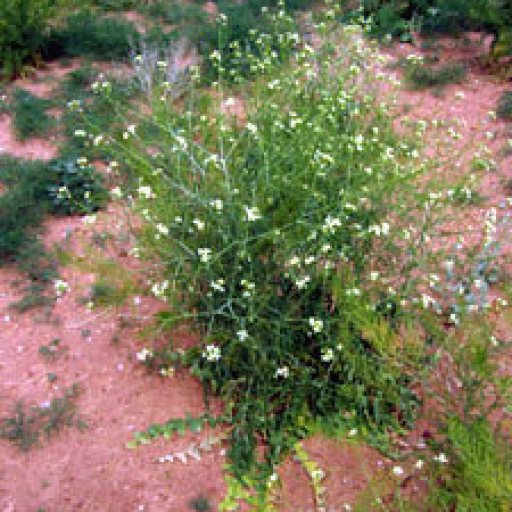
Plant Overview
Known as the Tumble Mustard or Jim Hill Mustard, this lanky traveler is a classic icon of the American West, though it actually hails from Eurasia. It gained its fame for its "nomadic" lifestyle; once the plant dies and dries out, it snaps at the base and rolls across the plains like a skeletal ball, shaking out millions of seeds with every bounce.
🔍 How to Identify
- 🌼 Petite Blooms: It features small, pale yellow flowers with four petals arranged in a cross shape, a signature look for members of the mustard family.
- 🌿 Transforming Leaves: The foliage changes as it grows; bottom leaves are large and deeply lobed (resembling dandelion leaves), while the upper leaves are thin, delicate, and almost thread-like.
- 🍢 Stiff Seed Pods: Look for exceptionally long, needle-thin seed pods (siliques) that spread outward from the stem, giving the mature plant a "twiggy" or wiry appearance.
🏡 In Your Garden
- 🏜️ The Ultimate Survivor: This plant thrives in "disturbed" soil—think roadsides, construction sites, or neglected garden corners. Its long taproot allows it to find water deep underground, making it nearly impossible to wilt even in extreme heat.
- 🏃♂️ Fast Spreader: While it isn't usually planted on purpose, it is a master of colonizing open space. If you find one in your yard, it’s best to remove it before the stem hardens, or you may find hundreds of "babies" next season thanks to its tumbling seed-dispersal method.
⚠️ Safety & Toxicity
- ✅ Generally Safe: Tumble Mustard is not considered toxic to humans or common household pets. In many cultures, the young, tender leaves are actually harvested as a spicy salad green.
- 🐄 Livestock Caution: While safe for humans, it can accumulate high levels of nitrates if grown in over-fertilized soil. This can occasionally be an issue for grazing cattle or horses if they eat it in very large quantities.
✨ Fun Fact
It earned the nickname "Jim Hill Mustard" after James J. Hill, the mogul of the Great Northern Railway. Legend has it the plant's seeds hitched rides on his trains, spreading across the entire North American continent along the path of the tracks!

Detailed Care Instructions
To grow Sisymbrium altissimum, also known as Tall Tumblemustard or Jim Hill mustard, you can follow the steps below:
- Soil preparation: Choose a well-draining soil with a pH range between 6.0 to 7.5. Amend the soil with organic matter, such as compost or well-rotted manure, to improve its fertility.
- Sowing seeds: Sow the seeds directly in the ground in early spring or late fall. Choose a sunny location for the best growth. You can also start the seeds indoors 4-6 weeks before the last frost date and transplant them later.
- Seed spacing: Sow the seeds about 1/4 to 1/2 inch deep in the soil. Leave approximately 10-12 inches of space between each seed. You can sow them in rows or scatter them in a broadcasting manner.
- Watering: Keep the soil moist but not waterlogged during the germination and establishment period. After the plant starts growing well, water it regularly, especially in dry periods, to promote healthy growth.
- Fertilizer: Sisymbrium altissimum is not a heavy feeder and generally does not require much fertilization. Before planting, you can add a balanced fertilizer to the soil according to the manufacturer's instructions. However, too much nitrogen may decrease the number of flowers it produces.
- Weed control: Ensure that the planting area is weed-free, as weeds can compete for resources and hinder the growth of Sisymbrium altissimum. Regularly remove any competing plants or weeds near the plant to allow it to flourish.
- Mulching: Applying a layer of mulch around the plant can help retain moisture, suppress weed growth, and regulate soil temperature. Organic materials like straw or wood chips make good mulching options.
- Pruning: Although Sisymbrium altissimum does not typically require pruning, you can trim back any dead or damaged branches to maintain a neat appearance.
- Self-seeding: Sisymbrium altissimum is an annual or biennial plant that readily self-seeds. Allow some flowers to mature and produce seed pods. They will drop their seeds, allowing for natural propagation in the following seasons.
- Pests and diseases: Sisymbrium altissimum is relatively resistant to pests and diseases. However, it may occasionally attract aphids, flea beetles, or caterpillars. Monitor the plant regularly for any signs of infestation and take appropriate measures if necessary, such as using insecticidal soaps or organic insecticides.
Remember to check your local regulations regarding the cultivation of Sisymbrium altissimum as it may be considered invasive in some regions.

Place in a bright room that is sun drenched almost all day. Or directly in a south-facing window.

1. Determine the watering needs: Before watering the plant, it is important to determine its watering needs. The amount and frequency of watering depend on various factors such as the plant's age, size, growth rate, soil type, and weather conditions.
2. Check the soil moisture: Check the soil moisture by inserting your finger into the soil up to the first knuckle. If the soil feels dry, it's time to water the plant. However, if it feels moist, wait for a few more days and check again. Overwatering can cause root rot and damage the plant.
3. Water in the morning: Water the plant in the morning to allow the soil to absorb the water before the heat of the day causes evaporation. If you water in the evening, the plant may be at risk of fungal diseases as the moist soil can favor fungal growth overnight.
4. Water at the base: Water the plant at the base of the stem using a watering can or a hose with a nozzle attachment. Avoid watering the leaves or flowers as it can lead to fungal infections and damage the plant.
5. Use a well-draining soil: Use a well-draining soil to ensure that excess water drains away quickly, preventing waterlogging and root rot.
6. Mulch the soil: Mulch the soil around the plant with organic matter such as leaves or bark to help retain moisture and keep the soil cool. Mulching also suppresses weed growth.
7. Monitor the plant: Monitor the plant for signs of overwatering or under-watering, such as yellowing leaves, wilting, or stunted growth. Adjust the watering schedule accordingly after observing the plant's response.
The Sisymbrium Altissimum plant requires regular fertilization to support its growth. Use a balanced fertilizer every two weeks during the growing season, diluting it to half the recommended strength. Avoid fertilizing during the plant's dormant period. Pull any weeds around the plant to ensure it receives all the nutrients it needs. Also, provide a well-draining soil to avoid fertilizer burn. With proper fertilization, the Sisymbrium Altissimum plant will thrive and produce a beautiful display of flowers.
Sisymbrium Altissimum prefers well-draining soil that is rich in organic matter. The soil should be slightly alkaline with a pH range between 7.0 and 8.0. It is essential to avoid using heavy clay soils because it can hold onto too much water and eventually lead to root rot. A loose, loamy soil that allows for good aeration is ideal for this plant. Adding compost to the soil before planting can provide necessary nutrients. Sisymbrium Altissimum is drought-tolerant and can grow in different soil types, including sandy or loamy soils. However, it is always best to check the soil requirements of any plant before planting it to ensure its long-term success.
To propagate this plant, take cuttings from the stems of the mature plant. Make sure the cutting is at least 4 inches long and has a few leaves on it. Remove any lower leaves from the cutting and dip the end in rooting hormone. Place the cutting in a pot filled with moist soil and cover it with a plastic bag to maintain humidity. Keep the pot in a shaded area and water it regularly. In a few weeks, roots should start to form. Once the cutting has established itself, it can be transplanted into a larger pot or the garden.








