Plant Overview
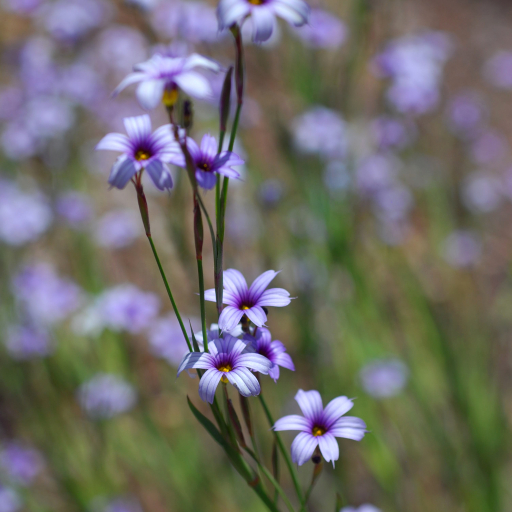
Often called the River Plate Blue-eyed Grass, this dainty perennial is a hidden gem hailing from the grasslands of South America. Despite its common name and blade-like foliage, it isn’t actually a grass at all—it belongs to the prestigious Iris family. It brings a touch of wild, meadow-like charm to any landscape, looking like tiny fallen stars caught in a tuft of turf.
🔍 How to Identify
- 🌿 Foliage: Linear, flat, sword-shaped leaves that form dense, grass-like clumps, typically reaching about 15–20 cm in height.
- 🌸 Flowers: Small, six-petaled blooms that range from pale lavender to violet, featuring a distinct "eye" of bright yellow at the center.
- 📏 Stem: The flower stalks are unique—they are slightly flattened or "winged," often making them look like a continuation of the leaves themselves.
🏡 In Your Garden
- 🌱 Meadow Aesthetic: It thrives in sunny spots that mimic its native pampas habitat. It’s a perfect choice for rock gardens or the edges of gravel paths where its small stature won't be overshadowed by larger, aggressive plants.
- 💧 Self-Sowing Nature: While it is a polite neighbor, it does have a tendency to self-seed if it is happy in its environment. If you want to keep it contained, simply snip off the tiny round seed pods after the "blue eyes" fade in late spring.
⚠️ Safety & Toxicity
- ✅ Safe for All: This plant is generally considered non-toxic and is a safe addition to gardens frequented by curious pets and children.
- 🧤 Sap Sensitivity: As with many members of the Iridaceae family, the sap may cause very mild skin irritation for those with highly sensitive skin if the leaves are crushed or broken.
✨ Fun Fact
Despite its delicate appearance, Sisyrinchium platense is a "fair-weather friend"—its blossoms are known to open fully only during bright, sunny hours, literally "winking" at you as the clouds pass by!

Detailed Care Instructions
To grow Sisyrinchium Platense (also known as Argentine blue-eyed grass), follow these steps:
- Choose a suitable location: Sisyrinchium Platense thrives in full sun or partial shade. Ensure the selected area has well-draining soil.
- Prepare the soil: Loosen the soil by digging it up to a depth of around 6-8 inches. Add organic matter like compost to improve drainage and enrich the soil.
- Sowing seeds: Sow the seeds directly into the prepared soil. Spread them evenly and lightly press them into the soil. Do not cover the seeds with additional soil, as they require sunlight to germinate.
- Watering: Water the seeds gently immediately after sowing. Keep the soil moist but not waterlogged. Watering 2-3 times a week is generally sufficient, but adjust based on the soil and weather conditions.
- Thin out seedlings: Once the seedlings have emerged and are a few inches tall, thin them out to provide enough space for growth. Maintain a distance of about 4-6 inches between plants.
- Weeding and mulching: Regularly remove any weeds that compete with the Sisyrinchium Platense plants for nutrients and space. Applying a layer of organic mulch around the plants can help suppress weed growth and retain moisture.
- Fertilization: Apply a balanced slow-release fertilizer once or twice a year to provide necessary nutrients to the plants. Follow the instructions on the fertilizer packaging for the correct application rate.
- Pruning: Deadhead the faded flowers regularly to encourage continuous blooming and prevent self-seeding. Additionally, trim back any overgrown foliage to maintain a neat appearance and promote air circulation.
- Overwintering: In regions with cold winters, Sisyrinchium Platense may die back. To protect the plants, cover them with a layer of straw or leaves before the first frost arrives. Uncover in spring when the danger of frost has passed.
- Pests and diseases: Sisyrinchium Platense is generally resistant to pests and diseases. However, keep an eye out for common garden pests such as aphids or snails. If necessary, treat with appropriate organic or chemical control methods.
By following these guidelines, you can successfully grow Sisyrinchium Platense and enjoy its beautiful blue flowers.

Place in a window with dappled sun or a spot in the middle of a room. Or directly in a window facing west or east.

To water this particular type of plant, it is important to take note of its soil and drainage requirements. The soil should be well-draining to prevent waterlogging and root rot. It is suggested to water moderately, deepening on the weather conditions and temperature. During dry months, frequent watering may be required, such as once a week. If it’s cold and the plant is dormant, watering should be decreased. It is recommended to water the soil directly and avoid wetting the foliage to avoid leaf damage.
To fertilize your plant, use a balanced fertilizer with equal parts nitrogen, phosphorous, and potassium. Apply the fertilizer once a month during the growing season and reduce the frequency during winter. Avoid over-fertilization as this can burn the roots and damage the plant. Water the plant before and after fertilization to prevent stress.
Sisyrinchium Platense plant prefers well-draining soil that is rich in organic matter and has a slightly acidic pH level. It needs soil that doesn't hold too much water as this can lead to root rot. The best soil for this plant is a mixture of topsoil, compost, and sand to ensure good drainage and aeration. You can also add some perlite to the soil to improve its drainage capacity. It is important to avoid using heavy clay soils or those that are too compacted as they can suffocate the roots of the plant. Additionally, you should avoid using fertilizers that contain too much nitrogen as this can lead to excessive growth and weak stems. A balanced fertilizer with a lower nitrogen content is recommended to promote healthy growth and blooming.
To propagate this plant, you will need to take stem cuttings from mature plants during the growing season. Use a clean sharp knife or scissors to make a clean cut close to the main stem.
Prepare a small container with well-draining soil or mix of potting soil and perlite. Make a small hole in the soil with your finger or a pencil and insert the cutting, gently pressing the soil around it to hold it in place.
Water the soil thoroughly and place the container in a bright, warm location, out of direct sunlight. Keep the soil moist but not waterlogged, and mist the plant occasionally to increase humidity.
After a few weeks, new growth should appear, indicating that the cutting has rooted. You can then transplant it into a larger pot or into the garden when it has reached a suitable size.








