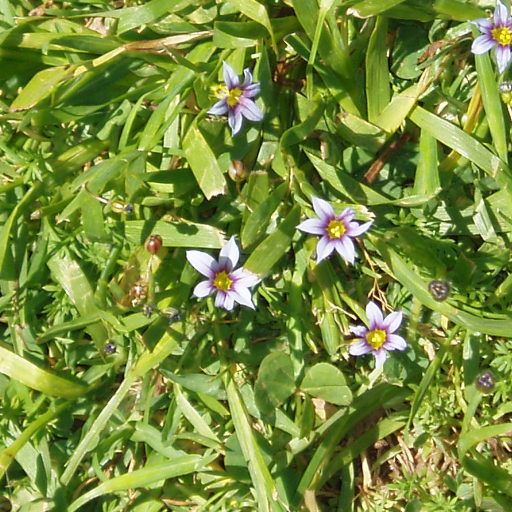
Plant Overview
Often called the Annual Blue-eyed Grass, this charming little wildflower is a master of disguise. While its name and slender foliage suggest it belongs in the grass family, it is actually a dainty member of the Iris family. Often seen "winking" from the edges of lawns or sandy paths in the springtime, it is a beloved sight for those who appreciate the miniature wonders of the natural world.
🔍 How to Identify
- 🌸 The Starry Bloom: Tiny, six-petaled flowers that are usually lavender, rosy-pink, or white. Each flower features a distinct, bright yellow "eye" at the center.
- 🍃 Grass-like Leaves: The foliage consists of flat, narrow blades that form a neat rosette, making it nearly invisible among turfgrass until it begins to bloom.
- 📏 Miniature Stature: It is a low-growing plant, typically reaching only 4 to 8 inches in height, perfect for tucking into the front of a garden border.
🏡 In Your Garden
- 🌱 Sun & Soil Nuance: This plant thrives in full sun and prefers sandy or well-draining soil. It is often found in "disturbed" areas, meaning it actually appreciates a bit of foot traffic or the occasional mowing.
- 🌾 Self-Seeding Habit: As an annual, its life cycle is short. It relies on dropping seeds to return the following year. If you want it to come back, avoid heavy mulching which might prevent the seeds from reaching the soil.
⚠️ Safety & Toxicity
- ✅ General Safety: Sisyrinchium rosulatum is considered non-toxic and is generally safe to have around children and curious pets.
- 🐾 Pet Context: While not poisonous, it is always best to discourage pets from grazing on garden plants, as large amounts of any non-food plant can cause mild stomach upset.
✨ Fun Fact
Despite its delicate appearance, the Annual Blue-eyed Grass is incredibly hardy and was historically used in folk remedies; however, its most famous "job" today is providing an early spring nectar source for small native bees and hoverflies!

Detailed Care Instructions
Sisyrinchium Rosulatum, also known as the rosette blue-eyed grass, is a perennial plant that is native to North America. Here are some tips on how to grow this plant:
- Choose a sunny location: Sisyrinchium Rosulatum prefers full sun to partial shade. Make sure to plant it in a location that receives at least 6 hours of sunlight per day.
- Well-drained soil: This plant prefers sandy or loamy soil that is well-drained. If your soil is heavy or clay-like, consider amending it with some organic matter to improve drainage.
- Watering: Water the plant regularly, especially during hot, dry weather. However, make sure not to overwater as this can cause root rot. Allow the soil to dry out slightly between waterings.
- Fertilization: Sisyrinchium Rosulatum does not require much fertilization. You can apply a balanced fertilizer once a year in the spring to promote healthy growth.
- Propagation: You can propagate Sisyrinchium Rosulatum by dividing the clumps in the spring or fall. Simply dig up the clump and separate it into smaller sections, each with its own roots, and then replant them in the desired location.
- Mulching: Mulch around the base of the plant to help retain moisture and suppress weed growth. Make sure not to mulch too close to the stems as this can cause rot.
- Pruning: Remove any dead or yellowing leaves to promote healthy growth. You can also deadhead the flowers after they have bloomed to encourage more blooms.
By following these tips, you can successfully grow Sisyrinchium Rosulatum in your garden and enjoy its delicate blue flowers all season long.

Place in a bright room that is sun drenched almost all day. Or directly in a south-facing window.

To water this plant, it is important to first check the soil moisture level. Stick your finger about an inch deep into the soil and if it feels dry, it is time to water. When watering, pour water onto the soil directly, making sure not to splash water onto the leaves or flowers. Water until the top inch of soil is moist but not soaking. To avoid overwatering, make sure the soil has adequate drainage and allow it to slightly dry out between waterings. This plant prefers to be kept evenly moist, but not waterlogged.
To fertilize Sisyrinchium Rosulatum, apply a balanced, slow-release fertilizer in early spring before new growth appears. Follow the manufacturer's instructions for proper application rate and frequency. Avoid over-fertilizing, as it can lead to excessive leaf growth and reduced flower production. Water the plant thoroughly after fertilizing to help distribute the nutrients evenly in the soil. Monitor the plant for signs of nutrient deficiencies, such as yellowing leaves, and adjust the fertilization schedule as needed.
Sisyrinchium rosulatum can thrive in a diverse range of soil types, as long as they are well-draining and contain a good mix of organic matter and nutrients. It is particularly well-suited to soils that are slightly acidic to neutral, with a pH range of 6.0-7.0. Adding sand or gravel to heavier soils can improve their drainage and prevent waterlogging, which can be detrimental to the plant's health. Sisyrinchium rosulatum tends to prefer soils that are moist but not waterlogged, so it is important to monitor soil moisture levels and adjust watering accordingly. Fertilizing once or twice a year with a balanced, slow-release fertilizer can help ensure that the plant has access to the nutrients it needs to grow and thrive.
To propagate Sisyrinchium rosulatum, you can follow these steps:
- Divide the plant: One way to propagate Sisyrinchium rosulatum is by dividing the plant. To do this, carefully dig up the plant and separate the clumps of roots into smaller sections. Make sure each section has enough roots and foliage to support itself.
- Plant the divisions: Once you have divided the plant, replant the sections in a suitable location with well-draining soil. Make sure to water the newly planted divisions thoroughly and keep the soil consistently moist until they establish themselves.
- Collect and plant seeds: Another way to propagate Sisyrinchium rosulatum is by collecting and planting seeds. Wait until the plant produces seed pods, then harvest the seeds and sow them in pots or directly into the ground. Keep the soil moist and provide adequate sunlight for the seeds to germinate and grow.
- Softwood cuttings: You can also propagate Sisyrinchium rosulatum using softwood cuttings. Take a small section of a stem with at least one leaf node, remove the lower leaves, and plant the cutting in a pot with well-draining soil. Keep the soil moist and provide indirect sunlight until the cutting develops roots and can be transplanted into a larger container or garden bed.
By following these propagation methods, you can expand your collection of Sisyrinchium rosulatum plants and enjoy their beautiful flowers in your garden.








