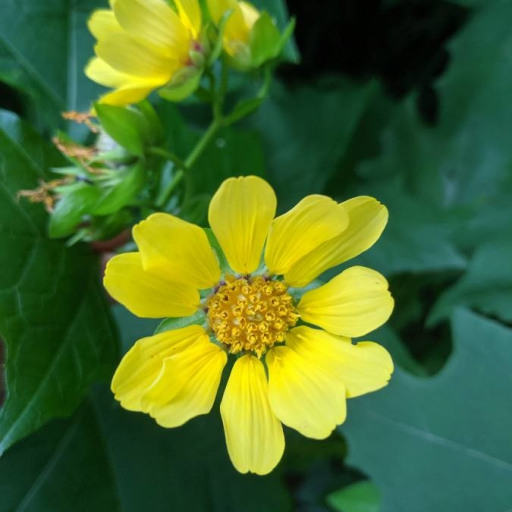
Plant Overview
Often called Bear’s Foot or Yellow Leafcup, this towering North American wildflower is a hidden giant of the sunflower family. It is famous for its massive, architectural leaves that look remarkably like the footprint of a grizzly bear. Historically, it was a staple in indigenous medicine, prized for its resinous roots and its bold, statuesque presence in shaded woodland borders.
🔍 How to Identify
- 👣 The "Bear's Foot" Leaves: The most striking feature is the enormous, dark green leaves that can grow over a foot wide. They are deeply lobed and shaped like a broad palm or a large paw print.
- 🌻 Sunny Blooms: At the very top of its tall stems, you’ll find clusters of bright yellow, daisy-like flowers. While the petals (ray florets) are often few and somewhat irregular, the centers are rich with pollen.
- 📏 Stature & Stem: This is no small garden herb; it can easily reach heights of 7 to 10 feet. The stems are thick, sturdy, and often covered in fine, sticky hairs that give them a textured feel.
🏡 In Your Garden
- 💧 Moisture Lover: In the wild, it loves "cove" forests and stream banks. If you plant it at home, ensure the soil stays consistently moist. It is a thirsty plant that will wilt dramatically if left in a parched spot.
- 🐝 Pollinator Magnet: Because it blooms in late summer and autumn, it provides a vital nectar source for bees and butterflies when many other flowers have already faded. It is a fantastic choice for a "wild" corner of a pollinator garden.
⚠️ Safety & Toxicity
- 🟢 General Safety: Bear's Foot is generally considered non-toxic to touch, though some gardeners with sensitive skin might experience mild irritation from the sticky, hairy stems.
- 🐾 Pets & Ingestion: While not typically listed on major toxic plant databases for pets, the roots contain potent resins once used medicinally. It is best to keep curious chewers away, as it is not an edible garden plant.
✨ Fun Fact
The "Leafcup" name comes from the way the large leaf bases wrap around the stem, forming a small "cup" that can actually collect and hold a tiny pool of rainwater!

Detailed Care Instructions
To grow Smallanthus Uvedalia (also known as bear's foot or elephant's ear), follow these steps:
- Climate and soil: Bear's foot is native to the southern United States, so it thrives in warm climates. It prefers well-draining soils that are rich in organic matter. If you live in a cooler region, consider growing it in a container that you can bring indoors during winter.
- Propagation: Smallanthus Uvedalia can be propagated through seeds or cuttings. If you have access to seeds, sow them in pots or seed trays filled with moist, well-draining potting soil. Place the seeds about 1/4 inch deep and keep the soil consistently moist until germination.
- Position: Choose a spot in your garden or a large container with partial sunlight to full shade. Bear's foot can tolerate a range of light conditions but prefers dappled shade.
- Transplanting: Once the bear's foot seedlings have developed several sets of true leaves, transplant them into individual pots or directly into your garden. If you're moving them outdoors, ensure any chance of frost has passed.
- Watering: Keep the soil consistently moist but not soggy, as the plant does not appreciate overly wet conditions. Mulching around the plants can help retain moisture and control weeds.
- Fertilizing: Apply a balanced, slow-release fertilizer in the spring and mid-summer to provide essential nutrients to the plants. Follow the package instructions for application rates.
- Maintenance: Remove any weeds around the Smallanthus Uvedalia plant regularly. The plant may benefit from staking or support, especially if it grows tall and starts to lean.
- Harvesting: Smallanthus Uvedalia produces tuberous roots that can be harvested in late fall or early winter. Dig up the roots carefully, making sure not to damage them, and store them in a cool, dry place until ready to use.
With proper care, your Smallanthus Uvedalia plant should grow well and provide you with attractive foliage and edible roots.

Smallanthus Uvedalia is a perennial plant that requires regular watering to thrive. To water this plant, you should first check the soil moisture level by sticking your finger 2 inches into the soil. If the soil feels dry, it's time to water the plant.
The best way to water Smallanthus Uvedalia is to use a watering can or hose with a gentle flow. Avoid watering the leaves or flowers directly, as this can cause damage and disease. Instead, water the soil around the base of the plant, taking care to soak the soil evenly.
In general, you should aim to keep the soil consistently moist but not waterlogged. Smallanthus Uvedalia prefers well-draining soil, so make sure to avoid letting water collect around the roots. In periods of hot weather or dry spells, you may need to water the plant more frequently to keep it hydrated.
Finally, be mindful of the time of day you water your plant. Early morning or late afternoon are the best times, as watering during the hottest parts of the day can cause the water to evaporate too quickly or scorch the leaves. With the right watering routine, your Smallanthus Uvedalia plant should thrive and produce beautiful blooms.
To fertilize the Smallanthus Uvedalia plant, use a balanced, water-soluble fertilizer with an NPK ratio of 10-10-10 or 20-20-20. Dilute the fertilizer to half the strength recommended on the label and apply it to the soil every two weeks during the growing season, which is typically spring and summer. Be sure to water the plant thoroughly before and after fertilizing to prevent burning the roots. Avoid fertilizing during the dormant season in winter.
The ideal soil for Smallanthus Uvedalia plant should be rich in organic matter and well-drained. It is recommended to use a mixture of peat moss, perlite, and compost in equal proportions to create a suitable growing medium. The soil should have a slightly acidic to neutral pH level between 6.0 and 7.0. Adding composted cow manure or worm castings can also provide essential nutrients for the plant's growth. It is recommended to avoid using heavy clay soils, as they can retain too much moisture, which can lead to root rot. Additionally, using a pot with drainage holes is essential to prevent waterlogging, which can also harm the plant.
Smallanthus Uvedalia is a plant species that belongs to the Asteraceae family. This species can be propagated in several ways, but the most common method is through division.
To propagate Smallanthus Uvedalia through division, you will need to follow these steps:
- Choose a mature and healthy plant that you want to propagate.
- Dig up the plant carefully, making sure that you don't damage the roots.
- Gently shake off any soil from the roots and cut the plant into sections using a sharp and sterile knife. Make sure that each section has both roots and shoots.
- Plant each section in a new container or in a well-drained garden bed. Make sure that the soil is moist and that the plant receives adequate sunlight.
- Water the newly planted sections regularly until they become established.
Another method of Smallanthus Uvedalia propagation is through seed. To propagate this plant through seed, you will need to follow these steps:
- Collect fully matured seeds from a healthy plant.
- Soak the seeds in warm water for 24 hours before planting.
- Sow the seeds in a well-draining soil mix in a seed tray or a small pot.
- Cover the seeds with a light layer of soil and water them well.
- Place the seed tray or the pot in a warm and humid location, with indirect sunlight.
- Keep the soil moist and not soggy until the seeds germinate, which can take anywhere between 1 to 3 weeks depending on the climate.
- Once the seedlings have developed their second set of true leaves, transplant them into individual containers or in a well-drained garden bed.
Propagation through division is the easiest and most reliable method of propagating Smallanthus Uvedalia. However, if you are looking to grow multiple plants, seed propagation may be a good option.








