Plant Overview
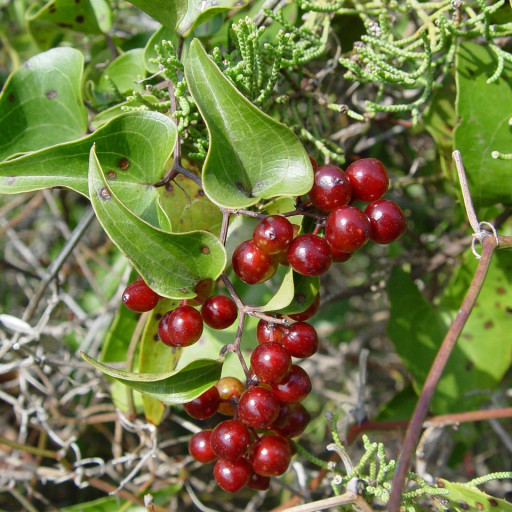
Often called the "Rough Bindweed" or "Mediterranean Smilax," Smilax aspera is the prickly, evergreen guardian of the wild Mediterranean scrub. This tough-as-nails climber is famous for its heart-shaped leaves and its role as the botanical relative of the original sarsaparilla soda flavoring. It creates dense, tangled thickets that provide excellent cover for wildlife, though it can be a bit of a "thorny" neighbor for gardeners.
🔍 How to Identify
- 🍃 Leathery Foliage: The evergreen leaves are glossy, stiff, and heart-shaped (or arrow-shaped). Look closely at the leaf margins; they often feature small, sharp prickles.
- 🌵 Zig-Zag Stems: The stems are wiry and tough, growing in a distinct zig-zag pattern and armed with hooked thorns that help the plant "anchor" itself as it climbs.
- 🔴 Winter Berries: In late autumn and winter, the plant produces hanging clusters of small, round berries that turn from a bright, waxy red to a deep black as they ripen.
🏡 In Your Garden
- 🧗 Structural Scrambler: Smilax aspera uses twin tendrils (found at the base of the leaves) to pull itself upward. It is perfect for "wild" corners of a garden where you want a natural, impenetrable barrier or green screen.
- 🏜️ Drought Warrior: This plant is exceptionally hardy in poor, rocky soils. Its deep, tuberous root system allows it to survive long periods of heat and neglect, but it can be difficult to relocate once those roots take hold.
⚠️ Safety & Toxicity
- 🐾 Pet & Child Caution: The berries are considered toxic to humans and pets. They contain saponins which, if ingested, can cause nausea, vomiting, and stomach cramps.
- 🧤 Physical Hazard: The thorns are the primary danger. They are hooked and can easily tear through light clothing or skin. Always wear heavy-duty leather gloves when pruning this vine to avoid "smilax scratches."
✨ Fun Fact
🫐 Smurf Snacks: In the original Belgian "Smurfs" comic books, the Smurfs' favorite food is actually the leaves of the Sarsaparilla (Salsepareille). While the berries are off-limits for humans, these blue forest-dwellers simply can't get enough of them!

Detailed Care Instructions
To grow Smilax aspera (commonly known as rough bindweed or climbing lily), you can follow these steps:
- Climate and requirements: Smilax aspera is a hardy, perennial plant that thrives in temperate to subtropical climates. It prefers full sun to partial shade and moderately moist, well-drained soil. Make sure your climate and conditions meet the plant's requirements.
- Propagation: Smilax aspera can be propagated through seeds or root division. Seeds have hard coats, so scarify them by nicking or rubbing with sandpaper before sowing. Alternatively, you can divide the roots of an established plant during the dormant season.
- Planting: Sow the seeds or plant the divided roots in your prepared garden bed or container. Place them at a depth of about 1-2 inches, ensuring they have enough space to spread out. If planting in a pot, make sure it has good drainage.
- Watering: Keep the soil slightly moist but not waterlogged. Smilax aspera prefers moderate watering, so water it when the top few inches of soil feel dry. During the dry season or in hot weather, you may need to increase watering frequency.
- Mulching and support: Apply a layer of organic mulch around the base of the plant to conserve moisture and suppress weeds. Smilax aspera is a climbing vine, so provide a trellis or other support structure for it to climb. You may also need to tie the tendrils to the support until it starts climbing on its own.
- Fertilization: Smilax aspera does not require excessive fertilization. In the spring season, you can apply a slow-release fertilizer or a balanced organic fertilizer according to the package instructions. Avoid over-fertilizing, as it can lead to excessive foliage growth rather than flowering.
- Pruning: Prune any dead or damaged stems to maintain the plant's health and shape. You can also prune to control its size or encourage bushier growth.
- Pests and diseases: Smilax aspera is relatively pest and disease-resistant. However, keep an eye out for common issues like aphids, spider mites, and powdery mildew. Treat them with appropriate organic or chemical controls if necessary.
With proper care and maintenance, your Smilax aspera plant should grow and thrive, providing you with its unique foliage and possibly clusters of small, inconspicuous flowers.

Place in a bright room that is sun drenched almost all day. Or directly in a south-facing window.

When watering the plant in question, it is important to consider the soil type and drainage. This plant prefers well-draining soil that is moist but not waterlogged. Overwatering can lead to root rot and other issues.
To water, gently pour water around the base of the plant, aiming for the soil rather than the leaves. Allow the soil to absorb the water and then check the moisture level by sticking your finger into the soil about an inch deep. If it feels dry, it's time to water again.
It's also important to note that this plant prefers moderate humidity levels, so misting the foliage can be beneficial.
During the growing season, which is typically spring through fall, the plant may require more frequent watering. However, in the winter months, reduce the frequency of watering to prevent waterlogging and to mimic a drier dormant period.
To fertilize this plant, use a balanced fertilizer with equal amounts of nitrogen, phosphorus, and potassium. Apply the fertilizer every 4-6 weeks during the growing season, starting in early spring and ending in late summer. Follow the manufacturer's instructions for the amount to use based on the size of the plant. Be careful not to over-fertilize, as this can harm the plant. Water the plant deeply after fertilizing to help distribute the nutrients evenly.
The ideal soil for Smilax Aspera plant is a well-draining soil that is rich in organic matter. The pH level of the soil should be slightly acidic to neutral, ranging from 5.5 to 7.0. It is recommended to use a loamy soil mix that is not excessively sandy or dense. A mixture of half peat moss and half perlite or vermiculite is a good option to ensure proper drainage and aeration. It is also important to ensure that the soil is consistently moist but not waterlogged, as Smilax Aspera thrives in moist soil conditions. Over-fertilization should be avoided, as excessive nutrients can lead to stunted plant growth and reduced foliage.
To propagate this plant, it would be best to use cuttings taken in the early summer. Cut a stem from the parent plant, measuring 3-5 inches in length. Remove any leaves from the lower two-thirds of the cutting. Dip the cut end in rooting hormone powder and then plant it in a pot filled with well-draining soil that is kept moist. Provide filtered light and keep the cutting in a warm, humid location until it develops roots, usually in about six weeks. Once established, transplant the new plant into a larger pot or directly into the garden.








