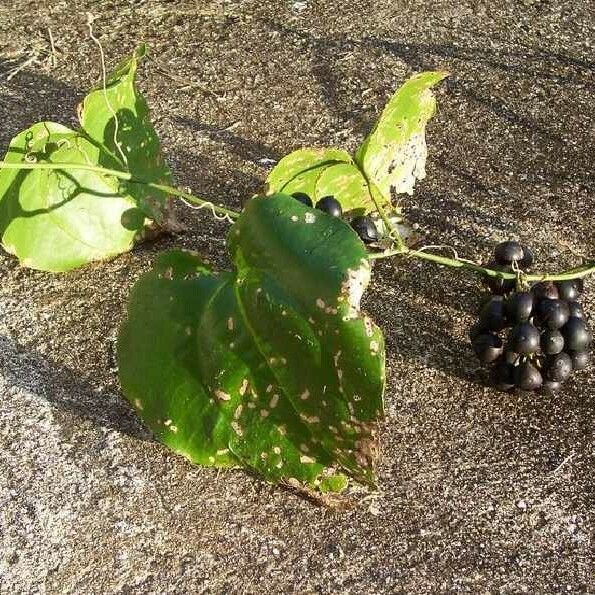
Plant Overview
Often called the "Greenbrier of the East," Smilax orbiculata is a master of the vertical world. Known for its glossy, rounded foliage and its prickly "don’t touch" attitude, this vine has been used for centuries in traditional herbalism throughout Asia. In the wild, it acts as a natural barbed wire, creating dense, protective thickets that provide a safe haven for small birds and mammals.
🔍 How to Identify
- 🍃 The Leaves: True to its name (orbiculata), the leaves are distinctly rounded or broadly ovate. They have a waxy, leathery texture and feature prominent longitudinal veins that arch from the base to the tip.
- 🪝 The Stems: The woody vines are armed with sharp, scattered prickles. Look for the pair of wiry tendrils at the base of the leaf stalks, which the plant uses to "lasso" nearby branches to climb.
- 🔮 The Fruit: It produces small, spherical berries that grow in umbrella-like clusters (umbels). These berries typically transition from green to a dark, blue-black or purple hue as they ripen.
🏡 In Your Garden
- 🧱 Support is Key: Because this plant uses tendrils to climb, it requires a sturdy trellis or fence. It is a vigorous grower and can quickly overtake smaller plants if not given its own dedicated "climbing zone."
- 🌱 Root Resilience: Smilax species are known for their massive, woody underground tubers. This makes them incredibly drought-tolerant and difficult to remove once established, so choose your planting spot carefully!
⚠️ Safety & Toxicity
- 🌵 Physical Hazard: The primary danger of Smilax orbiculata is its thorns. They are sharp and can easily snag clothing or skin, making it a plant to keep away from high-traffic paths.
- 🐾 Pet & Human Safety: While the young shoots of many Smilax species are technically edible, the berries and older leaves can cause digestive upset if consumed in large quantities. The roots contain saponins, which are generally safe for humans in small amounts (used in root beer flavorings) but can be irritating to cats and dogs.
✨ Fun Fact
The roots of the Smilax family were the original source of "Sarsaparilla" flavoring. Before synthetic extracts were used, these prickly vines were harvested to create the distinct, medicinal-tasting soda popular in the Old West!

Detailed Care Instructions








