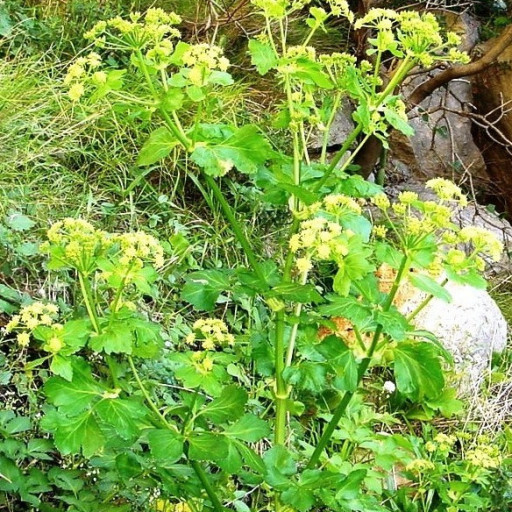
Plant Overview
Commonly known as Alexanders or "Black Lovage," this sturdy Mediterranean native was once the superstar of European vegetable gardens. Brought to the British Isles and Northern Europe by the Romans, it was their go-to "pot herb" long before celery became popular. Today, it is most often found growing wild near the coast, where it braves the salty sea spray with its glossy, vibrant green foliage.
🔍 How to Identify
- 🍃 Glossy Foliage: The leaves are a deep, lustrous green, divided into three broad, serrated leaflets that look remarkably like oversized parsley.
- 🌼 Yellowish-Green Umbels: In late winter or early spring, it produces globe-shaped clusters of tiny, lime-yellow flowers that are a vital early food source for bees.
- ⚫ Inky Black Seeds: As the plant matures in summer, it develops large, ridged seeds that turn a distinctive jet-black color, giving the plant its "Black Lovage" nickname.
🏡 In Your Garden
- 🌊 Salt Tolerance: This is a "halophyte," meaning it thrives in salty air. If you live near the ocean where nothing else grows, Alexanders will likely flourish.
- 🌱 Biennial Habit: It follows a two-year life cycle. In the first year, it stays low to the ground as a leafy rosette; in the second year, it shoots up a thick, hollow flowering stalk that can reach nearly 5 feet tall.
- 🚜 Self-Seeding Nature: Be warned—Alexanders is a prolific spreader. If you don't want a garden full of them, you’ll need to harvest the black seeds before they fall to the ground.
⚠️ Safety & Toxicity
- 🛑 The Deadly Look-alike: While Alexanders is historically edible, it belongs to the Apiaceae family, which includes the deadly Poison Hemlock. Never forage or consume this plant unless you are 100% certain of your identification.
- 🧴 Skin Sensitivity: The sap of the plant can cause mild "phytophototoxicity" in some people, meaning your skin might become sensitive to sunlight and blister after touching the crushed leaves.
- 🐶 Pet Caution: While not listed as highly toxic to pets, the high essential oil content in the seeds and stalks can cause stomach upset in dogs or cats if ingested.
✨ Fun Fact
Alexanders is often called a "living fossil" of the Roman kitchen. Every single part of the plant is edible—the roots can be boiled like parsnips, the stems candied like angelica, and the spicy, pungent seeds were once used as a substitute for black pepper!

Detailed Care Instructions
To grow Smyrnium Olusatrum, also known as Alexanders or black lovage, follow these steps:
- Climate: Ensure you live in a suitable climate for growing Smyrnium Olusatrum. It is a perennial plant that thrives in temperate regions with cool summers and mild winters.
- Soil: Prepare a well-drained soil rich in organic matter. Till the soil and remove any weeds or rocks, ensuring a loose texture.
- Planting: Smyrnium Olusatrum is propagated by seeds or root division. If starting from seeds, sow them directly into the prepared soil in early spring or fall. Cover the seeds lightly with soil and keep the area evenly moist until germination.
- Sunlight: Choose a location with partial shade to full sun, as Smyrnium Olusatrum prefers bright light but can tolerate some shade.
- Watering: Keep the soil consistently moist but not waterlogged. Do not let the soil dry out between watering.
- Fertilization: Apply a balanced organic fertilizer once every few months during the growing season to promote healthy growth.
- Mulching: Mulch around the base of the plants to help retain moisture and suppress weed growth.
- Maintenance: Remove any weeds that may compete with Smyrnium Olusatrum for nutrients and water. Regularly check for pests and diseases, though this plant is generally pest-resistant.
- Harvesting: You can start harvesting the leaves and young shoots once the plant has established itself. Harvesting should typically begin in the second year. Use the leaves and stems in various culinary preparations, as they have a celery-like flavor.
- Propagation: Smyrnium Olusatrum can be propagated through root division during the dormant season (late fall or early spring). Simply dig up the plant, divide the clumps, and replant them in prepared soil.
Remember to always research specific growth requirements for Smyrnium Olusatrum in your region, as local conditions may vary.

Place in a bright room that is sun drenched almost all day. Or directly in a south-facing window.

Smyrnium Olusatrum is a perennial plant that belongs to the Apiaceae family. It has a height between 60 to 150 centimeters and produces small yellow flowers. To effectively water this plant, it is essential to consider the following steps:
1. Check the Soil Moisture: The first step in watering this plant is to check the moisture content in the soil. You can use your fingers to test the top layer of soil. If it feels dry to the touch, it is time to water the plant.
2. Watering Amount: The ideal amount of water required by the plant varies depending on the climate and season. In general, the plant requires sufficient water to keep the soil consistently moist. It is recommended not to over-water as this can lead to root rot.
3. Watering Frequency: The frequency of watering also varies depending on the environmental conditions. In the summer, the plant requires watering more frequently as the soil dries out quickly. In contrast, you can reduce the frequency during the winter season.
4. Use the Right Tools: It is essential to use the right tools to water the plant effectively. A watering can with a long spout is ideal for reaching the base of the plant without damaging the stems or leaves.
5. Watering Time: The best time to water the plant is during the early morning or late evening. This ensures that the water is absorbed effectively without evaporating in the hot sun.
6. Monitor the Plant: Regular monitoring of the plant's overall health is crucial in ensuring the correct amount, frequency, and timing of watering. Take note of any changes such as yellowing or wilting leaves, which indicate over or under-watering.
By following these steps, you can water Smyrnium Olusatrum plant and keep them healthy and thriving.
The plant should be fertilized during the growing season, typically from late spring to early fall. Use a slow-release, all-purpose fertilizer and apply it according to the instructions on the packaging. Avoid over-fertilizing, as this can lead to the plant becoming too lush and weak. Water the plant thoroughly after fertilizing to help distribute the nutrients throughout the soil.
The ideal soil composition for the plant species is a well-draining, fertile soil with a pH level of 6.5 to 7.5. It should be rich in organic matter and have good moisture retention capabilities while also allowing excess water to drain. A mixture of compost, sand, and loam soil is recommended for optimal growth and development. It is also important to ensure that the soil is free from any contaminants and is not compacted to promote healthy root growth.
To propagate this plant, you will need to collect the seeds after the plant has finished flowering. Store the seeds in a cool, dry place until planting. Sow the seeds in a seed tray or small pots filled with well-draining soil. Place the tray or pots in a warm, bright location and keep the soil moist but not waterlogged. The seeds should start to germinate within a few weeks. Once the seedlings have grown to a few inches tall, they can be transplanted into their permanent outdoor location. Alternatively, you can also propagate the plant by dividing the root ball in early spring or late fall. Carefully dig up the plant and use a sharp knife to separate the roots into several sections. Replant each section in a new location with well-draining soil and keep the soil moist until the plant is established.








