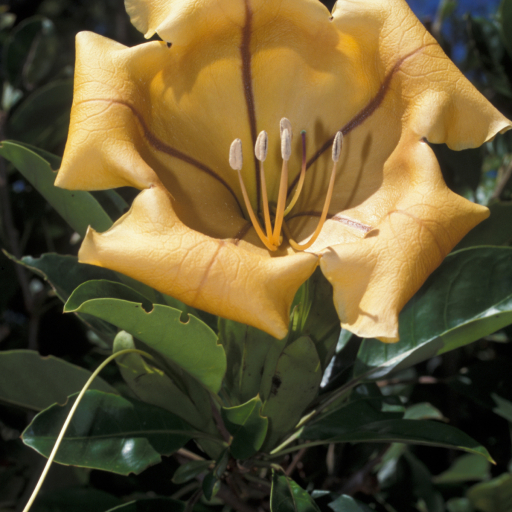
Plant Overview
Often called the "Cup of Gold" or "Chalice Vine," Solandra maxima is a show-stopping tropical climber that looks like it belongs in a prehistoric jungle. Native to Mexico and Central America, this vigorous evergreen vine is famous for its massive, bowl-shaped yellow flowers that can reach the size of a human head. It’s a high-drama plant that brings an instant Mediterranean or "Hawaiian" feel to any sun-drenched landscape.
🔍 How to Identify
- 🌼 The "Chalice" Bloom: Enormous trumpet-shaped flowers (up to 8 inches wide) that start out creamy yellow and deepen to a rich gold as they age, featuring five distinct purple or brown lines inside the throat.
- 🍃 Waxy Foliage: Broad, elliptical leaves that are thick, glossy, and leathery, providing a dense green backdrop even when the plant isn't blooming.
- 🪵 Woody Vigor: Unlike delicate ivy, this vine develops thick, heavy, woody stems that can climb up to 40 feet or more if left unpruned.
🏡 In Your Garden
- 🏗️ Heavyweight Support: This is not a plant for a flimsy plastic trellis. Because the woody vines become incredibly heavy, it requires a sturdy pergola, a stone wall, or a reinforced fence to support its weight.
- 🥥 Nightly Perfume: The flowers are "nocturnal" in their scent profile. While they look beautiful by day, they release a powerful, delicious fragrance at night that many describe as a mix of coconut, banana, and vanilla.
- ✂️ Pruning for Blooms: Since it is a fast grower, it can quickly overwhelm a space. It responds well to hard pruning, which actually encourages the plant to produce more of its spectacular flowers on new growth.
⚠️ Safety & Toxicity
- 🚫 High Toxicity: As a member of the Nightshade family (Solanaceae), all parts of this plant contain tropane alkaloids which are toxic if ingested.
- 🐾 Pet & Child Safety: Keep this plant out of reach of curious pets and children. Ingestion can cause severe symptoms including dilated pupils, nausea, hallucinations, and rapid heartbeat.
- 🧤 Sap Irritant: Some gardeners report skin or eye irritation from the sap when pruning, so wearing gloves is highly recommended.
✨ Fun Fact
The flowers of the Chalice Vine are true "transformers." When they first open, they are a pale, buttery yellow, but over the course of just two or three days, they deepen into a magnificent burnished gold before eventually fading.

Detailed Care Instructions
To grow Solandra Maxima, also known as the Cup of Gold vine, you can follow these steps:
- Climate: Solandra Maxima thrives in warm climates. Ensure that your growing region has a minimum temperature of 50°F (10°C) and preferably above 60°F (15°C) for optimal growth.
- Location: Choose a sunny location for your plant. Solandra Maxima prefers full sunlight but can tolerate some shade in hotter regions. Ensure the planting area has well-draining soil.
- Planting: Dig a hole that is slightly larger than the root ball of the plant. Place the plant in the hole, making sure it is at the same level as it was in its previous container. Gently fill in the soil around the plant and firm it down.
- Watering: Water the plant thoroughly after planting and keep the soil evenly moist during the first year of growth. Once established, Solandra Maxima is relatively drought-tolerant but appreciates regular watering during periods of dry weather.
- Pruning: Prune the vine regularly to maintain its shape and control growth. Remove dead or diseased branches and cut back overgrown or tangled growth to encourage new growth.
- Trellis or support: Solandra Maxima is a climbing vine and needs support to grow upward. Provide a trellis, arbor, or fence for the plant to climb on. Ensure the support is sturdy enough to carry the weight of the vine.
- Fertilizing: Apply a balanced slow-release fertilizer in spring and summer to provide nutrients for growth. Follow the package instructions for the appropriate amount to use based on the plant's size.
- Pests and diseases: Monitor the plant for common pests like aphids and spider mites. Treat any infestations promptly and regularly inspect the plant for signs of disease. Prune and dispose of any affected plant material to prevent the spread of diseases.
- Propagation: Solandra Maxima can be propagated through stem cuttings or layering. Take cuttings from healthy plants and root them in well-draining soil or water until they develop roots. Layering involves bending a flexible stem down to the ground and burying a section of it to encourage root formation.
- Overwintering: Solandra Maxima may not tolerate frost, so if you live in an area with cold winters, consider bringing the plant indoors or providing frost protection during the colder months.
By following these steps, you can successfully grow Solandra Maxima and enjoy its beautiful flowers.

Place in a bright room that is sun drenched almost all day. Or directly in a south-facing window.

The watering requirements of this plant will depend on various factors such as the soil composition, temperature, humidity, and amount of light it receives. As a general rule, it is essential to avoid overwatering, as this can lead to root rot and other fungal diseases.
The best way to water this plant is by checking the soil moisture level at regular intervals. Stick your finger into the soil up to your second knuckle and see if it is moist to touch. If it is, then you do not need to water it yet.
If the soil feels dry, it is time to water. Use a watering can or a hose with a gentle spray nozzle to water the soil evenly. Make sure that the water flows evenly into the soil and reaches the deeper roots.
To avoid waterlogging, it is essential to provide adequate drainage for the plant. This can be achieved by ensuring that the soil is well-draining and by using a pot with drainage holes.
During the winter months, it is crucial to reduce the watering frequency, as the plant’s growth slows down due to lower light levels and cooler temperatures.
Overall, it is important to maintain a balance between not overwatering and not letting the soil become too dry. Regular monitoring of the soil moisture level and adjusting the watering frequency accordingly is key to keeping this plant healthy and happy.
The best way to fertilize this plant is to use a balanced, all-purpose fertilizer that contains equal amounts of nitrogen, phosphorus, and potassium. You should apply the fertilizer at least once a month during the growing season, which is typically spring and summer. It is important to water the plant thoroughly before and after fertilizing, as this will help to distribute the nutrients evenly throughout the soil. Be careful not to over-fertilize, as this can lead to leaf burn and other problems.
When planting Solandra Maxima, it is essential to choose a soil type that is well-draining and fertile. The best soil for this plant is a mixture of high-quality potting soil, sand, and perlite in equal parts. The soil should be loose and airy to allow the roots to grow freely and prevent them from becoming waterlogged. It is also recommended to add organic matter such as compost or aged manure to the soil to improve its nutrient content.
When planting Solandra Maxima in a container, it is important to ensure that the pot has adequate drainage holes to prevent the soil from becoming waterlogged. Before planting, it is also recommended to moisten the soil to ensure that it is evenly distributed and compacted around the roots.
Overall, the ideal soil for Solandra Maxima should be well-draining, loose, fertile, and rich in organic matter. With the right soil and proper care, this plant can thrive and produce beautiful blooms.
To propagate this plant, you will need to take a stem cutting from the parent plant. Choose a healthy stem that has at least two nodes and is around 6 inches in length. Make a clean cut with a sharp, sterilized pair of scissors or garden shears. Remove any lower leaves and twigs from the cutting, leaving just one or two sets of leaves at the top.
Prepare a pot filled with well-draining, moist soil. Dip the cut end of the stem into rooting hormone powder and gently tap off the excess. Then, insert the cutting into the soil, making sure that the nodes are buried and the leaves are above the soil surface.
Water the cutting thoroughly and cover the pot with a plastic bag to create a humid atmosphere. Place the pot in a bright, warm location, but out of direct sunlight. Check the cutting regularly to ensure that the soil remains moist and mist the leaves if necessary.
After a few weeks, the cutting should start to develop roots. At this point, you can remove the plastic bag and gradually acclimate the new plant to its permanent location. Once the plant has established itself in its new home, you can care for it as you would any other Solandra Maxima plant.
Common pests of the hawaiian lilly include Scale insect, spider mites, aphids. Make a habit of checking your hawaiian lilly frequently for pests so that any infestations can be caught and managed early.








