Plant Overview
The Solanum aculeatissimum, often called the "Love-Apple" or "Cock’s-rooster," is a master of deception. While its bright, cherry-like fruits might look like a tempting snack from a farmer's market, this plant is armored from head to toe in sharp, needle-like prickles. Native to tropical regions, it has traveled the world as a hardy, wild-growing weed that commands respect—mostly because if you touch it without gloves, it will certainly poke back!
🔍 How to Identify
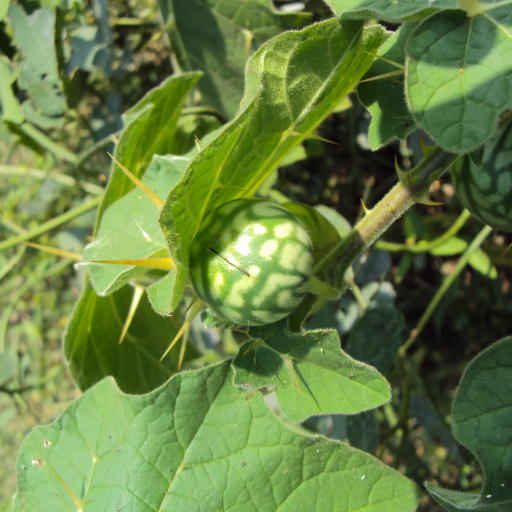
- ⚔️ Spiny Armor: The most striking feature is the presence of straight, yellowish prickles that cover the stems and even the veins on both the top and bottom of the leaves.
- 🍃 Lobed Foliage: The leaves are broad and deeply lobed, often covered in a fine layer of velvety hairs that catch the light, giving the plant a soft appearance that hides its sharp defenses.
- 🌼 Starry Blooms: It produces small, star-shaped flowers that are typically white or very pale blue, featuring a prominent yellow "beak" of anthers in the center, a classic look for the Nightshade family.
- 🍎 Deceptive Fruit: The berries are perfectly round and smooth. They start out green with white marbling (looking like tiny watermelons) and mature into a brilliant, waxy orange-yellow.
🏡 In Your Garden
- 🌱 Resilient Survivor: This plant isn't one you usually buy at a nursery; it often "invades" garden edges or waste or areas. It loves disturbed soil and can thrive in full sun with very little water thanks to its deep, stubborn taproot.
- 🚧 Space Invader: If you find one in your garden, be aware that it spreads easily via seeds. Because birds occasionally eat the fruit (and are immune to the toxins), you might find new seedlings popping up far from the original "mother" plant.
- 🧤 Handling with Care: If you need to relocate or remove it, do not attempt to grab the stem with bare hands. The spines are sharp enough to pierce standard gardening gloves, so heavy-duty leather protection is recommended.
⚠️ Safety & Toxicity
- 🚫 High Toxicity: This plant is definitely "look but don't touch." All parts of the plant, especially the unripe and ripe berries, contain solanine and other toxic alkaloids.
- 🐾 Pet & Child Danger: Because the fruits look like cherry tomatoes, they are a high risk for curious children and pets. Ingestion can cause severe gastrointestinal distress, sweating, and neurological symptoms.
- 🌵 Mechanical Injury: Beyond the chemicals, the physical spines can cause skin irritation or infections if they break off under the skin.
✨ Fun Fact
In some cultures, despite its toxicity, the fruit has been historically used in highly diluted forms for traditional medicine or even as a primitive form of detergent. However, its most common modern use is as a "rootstock" in science, helping more delicate plants survive harsh soil conditions!

Detailed Care Instructions
To grow Solanum aculeatissimum (Prickly Nightshade), you can follow these steps:
- Purchase Seeds or Seedlings: Obtain Solanum aculeatissimum seeds or seedlings from a reputable nursery or online seller.
- Choose the Growing Location: Select an area that receives full sun or partial shade. The plant can tolerate various soil types but prefers well-draining soil.
- Prepare the Soil: Remove any weeds or grass from the selected area. Loosen the soil and mix in compost or organic matter to improve drainage and fertility.
- Planting Seeds: If you have seeds, sow them directly into the prepared soil, ensuring they are evenly spaced. Cover the seeds lightly with soil and water gently.
- Transplanting Seedlings: If using seedlings, dig holes in the prepared soil, ensuring they are spaced adequately apart. Carefully remove the seedlings from their containers and place them in the holes. Backfill with soil and gently pat it down. Water thoroughly.
- Watering: Keep the soil consistently moist but avoid overwatering. Provide water whenever the soil feels dry to the touch, especially during hot and dry periods.
- Mulching: Apply a layer of organic mulch around the plant to help retain moisture, suppress weed growth, and regulate the soil temperature.
- Fertilization: Apply a balanced, slow-release fertilizer according to the manufacturer's instructions during the growing season to provide essential nutrients.
- Pruning and Training: Train the plant to grow upright by using stakes or trellises. Regularly prune to maintain its shape and remove any dead or diseased branches.
- Pests and Diseases: Monitor for pests like aphids, whiteflies, or spider mites. Treat infestations with organic insecticidal soap or neem oil. Watch out for diseases like powdery mildew, which can be treated with appropriate fungicides if necessary.
- Harvesting: Prickly nightshade produces small round fruits. Harvest them when fully ripe but still green. Be cautious while handling as the plant has prickly stems and leaves.
Remember to consult local gardening resources or experts for specific recommendations tailored to your region's climate and growing conditions.

Place in a bright room that is sun drenched almost all day. Or directly in a south-facing window.

To water this plant, you should ensure that the soil is moist but not waterlogged. This can be achieved by watering the plant thoroughly once a week, allowing the soil to drain completely before watering again. When watering, avoid getting water on the leaves or stem as this may encourage fungal growth. During dry seasons, increase the frequency of watering to twice a week. It is important to note that this plant prefers well-draining soil and may not tolerate standing water around its roots.
For optimal growth and flowering, fertilize the Solanum Aculeatissimum plant every two weeks during the growing season with a balanced, water-soluble fertilizer. Use a half-strength solution to avoid burning the roots. Additionally, you can add organic compost or well-rotted manure to the soil around the base of the plant once per year during the spring season. Make sure to follow the instructions and dosage recommended by the fertilizer manufacturer.
The best soil to use for Solanum Aculeatissimum plant is a nutrient-rich, well-draining soil with a slightly acidic to neutral pH level. It should have good drainage to prevent waterlogging, which can lead to root rot. The ideal soil texture for this plant is loamy or sandy. Adding organic matter such as compost or aged manure to the soil will provide additional nutrients and improve soil structure. It is important to avoid heavy clay soils or soils that are too compacted as they will hinder root growth and nutrient uptake. The plant also prefers full to partial sun exposure and regular watering.
To propagate this plant, first gather mature seeds from the parent plant or purchase fresh seeds from a reputable source. Next, prepare a well-draining potting mix using a combination of peat moss, vermiculite, and perlite. Sow the seeds on the surface of the soil and cover lightly with a thin layer of vermiculite. Keep the soil moist and place the pot in a warm, brightly lit location. After germination, you can transplant the seedlings into individual pots and continue to care for them until they are strong enough to be planted in their permanent location in the garden. Another method of propagation is through stem cuttings. Take 4-6 inch long cuttings from the parent plant and remove the lower leaves. Dip the cut end of the stem in rooting hormone and plant it in a well-draining potting mix. Keep the soil moist and the cutting in a warm location with bright, indirect light until roots have formed. Pot up the new plant and care for it as you would a seedling.








