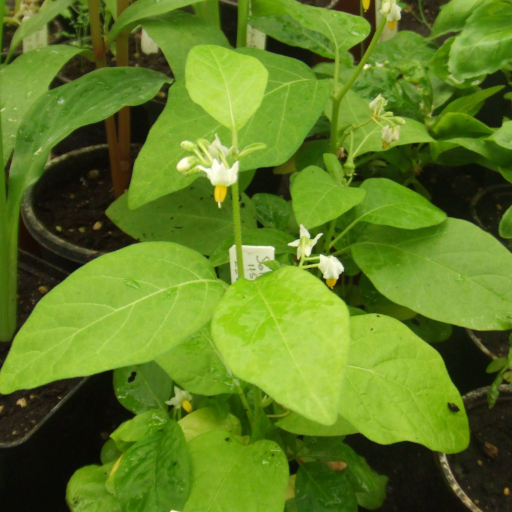
Plant Overview
Often called the Ethiopian Eggplant, Mock Tomato, or the whimsical "Pumpkin on a Stick," Solanum aethiopicum is a vibrant, multi-purpose wonder. While it looks like a miniature heirloom tomato, it is actually a species of eggplant native to Sub-Saharan Africa. Whether grown for its edible fruits and leaves or its stunning ornamental value in floral arrangements, this plant brings a splash of fiery color and a touch of the exotic to any garden.
🔍 How to Identify
- 🍅 The Fruit: Round or oval berries that are deeply ribbed, looking remarkably like tiny pumpkins. They transition from green to a glossy, vibrant orange or deep scarlet red as they ripen.
- 🍃 The Foliage: Large, broad, and slightly lobed green leaves. In some varieties, the undersides of the leaves or the stems may feature small, protective prickles.
- 🌸 The Blooms: Small, star-shaped flowers that are typically white or pale violet, featuring a prominent yellow cone of anthers at the center—a classic hallmark of the nightshade family.
🏡 In Your Garden
- ☀️ Heat Seekers: These plants are true sun-worshippers. They thrive in warm climates and require a long, hot growing season to develop their signature bright red color. If you live in a cooler zone, they do best in pots that can be moved to the sunniest spot on the patio.
- 💧 Bitterness & Water: The flavor of the fruit can range from mild to quite bitter. Consistent watering is key; if the plant becomes drought-stressed, the fruits tend to develop a much more intense bitterness, which is prized in some African cuisines but might surprise the uninitiated gardener!
- ✂️ Support Systems: Because the branches become heavy with clusters of "mini pumpkins," providing a small stake or cage helps prevent the stems from snapping under the weight of their own bounty.
⚠️ Safety & Toxicity
- 🐾 Pet Warning: Like many members of the Solanaceae (Nightshade) family, the green parts of the plant and unripe fruits contain solanine. This can be toxic to dogs, cats, and horses if ingested in large quantities.
- 🍽️ Edibility: While the ripe fruits and young leaves are widely eaten in many cultures (often sautéed or added to stews), always ensure you have a culinary variety. Some ornamental types are bred specifically for looks and may be excessively bitter or cause mild stomach upset if eaten raw.
✨ Fun Fact
In the floral industry, Solanum aethiopicum is a superstar during the autumn season. Florists dry the stems—with the bright orange fruits still attached—to use in fall bouquets and wreaths, where they are affectionately nicknamed "Pumpkin Bush."

Detailed Care Instructions
Growing Solanum aethiopicum, commonly known as Ethiopian eggplant or nakati, requires following these steps:
- Climate requirements: Ethiopian eggplant thrives in a warm climate with full sun exposure. The ideal temperature range for its growth is between 70°F and 85°F (21°C and 29°C).
- Soil preparation: Prepare well-draining soil rich in organic matter. Remove any weeds or rocks from the area where you plan to grow the plants.
- Seed selection: Choose high-quality seeds, ensuring they are not genetically modified, and preferably organic. You can purchase them from garden centers or reputable online seed suppliers.
- Starting seeds: Start the seeds indoors 6-8 weeks before the last frost date in your area. Fill seed trays or small pots with seed-starting soil mix, plant the seeds at a depth of 1/4 inch, and water gently. Maintain the soil moisture throughout the germination period. Transplant the seedlings outdoors after the last frost when the soil temperature is consistently above 60°F (15°C).
- Planting: Prepare the outdoor planting area by loosening the soil and incorporating organic compost. Space the transplant seedlings properly, leaving about 18-24 inches (46-61 cm) between each plant and rows spaced 24-36 inches (61-91 cm) apart.
- Watering: Water the plants thoroughly after planting and maintain consistent soil moisture. Avoid overwatering, as it can lead to root rot. Water deeply but infrequently, allowing the top inch of soil to dry out before watering again.
- Mulching: Apply a layer of organic mulch around the plants to help retain soil moisture, suppress weed growth, and regulate soil temperature.
- Fertilization: Feed the plants with a balanced organic fertilizer once a month during the growing season. Follow the manufacturer's instructions for proper dosage.
- Pruning: Prune the plants to promote bushier growth. Pinch off the growing tips when the plants reach a height of about 8-10 inches (20-25 cm). This will encourage lateral branching.
- Pest and disease control: Monitor the plants regularly for common pests such as aphids, whiteflies, and spider mites. Use organic insecticidal soaps, neem oil, or natural predators like ladybugs to control them. Keep an eye out for diseases such as fungal infections and treat accordingly with appropriate organic fungicides.
- Harvesting: Ethiopian eggplants are typically ready for harvesting 70-90 days after planting. Harvest when the fruits are firm and glossy, but before they become overripe and turn yellow.
By following these steps, you should be able to successfully grow Solanum aethiopicum plants and enjoy a bountiful harvest of flavorful eggplants.

Place in a window with dappled sun or a spot in the middle of a room. Or directly in a window facing west or east.

To water this plant, use a watering can or hose to ensure that water reaches the soil around the base of the plant. Avoid getting water on the leaves as it can lead to disease. Water the plant deeply, allowing the water to soak into the soil rather than just moistening the surface. It is important to allow the soil to dry slightly in between waterings to prevent overwatering. The frequency of watering will depend on the specific environmental conditions and needs of the plant.
To fertilize the Solanum Aethiopicum plant, apply a balanced fertilizer with equal amounts of nitrogen, phosphorus, and potassium, such as a 10-10-10 or 20-20-20. Apply the fertilizer every two weeks during the growing season, avoiding contact with the leaves and stem. Water the plant after fertilizing to help distribute the nutrients evenly. Additionally, incorporating organic matter, such as compost or aged manure, into the soil before planting can also help provide essential nutrients for healthy growth.
The ideal soil for Solanum Aethiopicum plant should be well-drained, loamy soil with a pH level of 5.5 to 7.5. It should be rich in organic matter with good water holding capacity, but not too dense or compact, as this could hinder root growth and development. The soil should also be fertile, with a balanced blend of nitrogen, phosphorus, and potassium, as well as other essential micronutrients. It is recommended to amend the soil with compost or other organic matter before planting, and to mulch around the plants to help retain moisture and suppress weed growth.
To propagate this plant, first select a healthy parent plant and take a cutting that is 3-6 inches long. Remove the bottom leaves and cut the stem at a 45-degree angle.
Next, dip the cutting in rooting hormone powder and plant it in a pot filled with moist potting soil. Cover the pot with a plastic bag to create a mini greenhouse and place it in a bright spot, but out of direct sunlight.
Over the next few weeks, check the pot regularly to make sure the soil stays moist. After a few weeks, roots will start to develop, and new growth will appear.
When the new growth is a few inches tall, it can be transplanted into a larger pot or directly into the ground. It is best to wait until the new plant has several sets of leaves before transplanting it.
This method can be repeated as many times as desired to create more plants from the parent plant.
Common pests of the bitter tomato include Spider mites, aphids, whiteflies, larvae. Make a habit of checking your bitter tomato frequently for pests so that any infestations can be caught and managed early.








