Plant Overview
Known as the Chilean Potato Vine, this vigorous climber brings a splash of South American sunshine to any vertical space. Despite its name, you won’t find any edible tubers under the soil; instead, it offers a breathtaking summer display of fragrant, violet-blue blossoms. It is a favorite for gardeners looking to quickly hide an unsightly fence or transform a bare pergola into a lush, Mediterranean-style retreat.
🔍 How to Identify
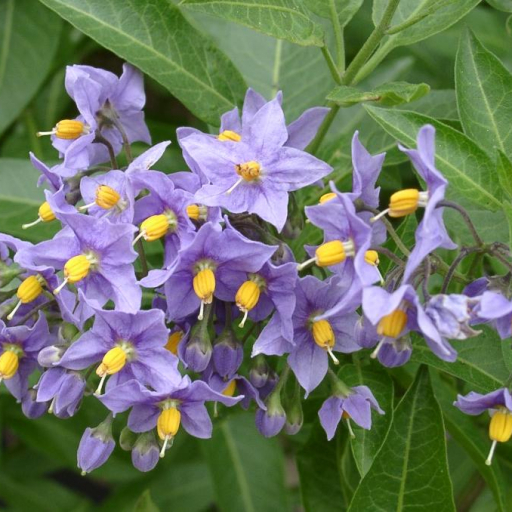
- 🌸 Starry Flowers: Clusters of delicate, five-petaled flowers that range from lavender to deep purple, each featuring a prominent, bright yellow "beak" of anthers in the center.
- 🍃 Wavy Foliage: Simple, oval leaves with a rich green hue and slightly ruffled or "crisp" edges—a trait that gives the plant its species name, crispum.
- 🌿 Vining Habit: A woody, scrambling shrub that can reach heights of over 15 feet. It doesn't have tendrils, so it leans and weaves through supports to climb.
🏡 In Your Garden
- ☀️ The Sun Seeker: This plant craves a sheltered, south-facing spot. It is a "living curtain" that loves to bake in the sun, which encourages the most prolific flowering from summer through autumn.
- ✂️ Growth Management: Because it grows so rapidly, it can become a tangled mess if left to its own devices. Pruning it back hard after the flowers fade helps maintain its shape and prevents it from overtaking smaller garden neighbors.
⚠️ Safety & Toxicity
- 🚫 Toxic Status: All parts of the plant are toxic if ingested.
- 🐾 Pet & Child Safety: As a member of the Nightshade family (Solanaceae), it contains solanine. The small, creamy-white berries that follow the flowers are particularly dangerous if eaten by pets or curious children. It is best planted in areas where it can be admired from a distance.
✨ Fun Fact
While it is purely ornamental, Solanum crispum is a cousin to the common potato and the tomato. You can see the family resemblance in the shape of the flowers, which look almost identical to those found in a vegetable patch!

Detailed Care Instructions
To grow Solanum crispum, also known as Chilean potato vine or potato vine, follow these guidelines:
- Location: Choose a spot with full sun to partial shade. Solanum crispum prefers a sheltered area away from strong winds.
- Soil: The plant thrives in well-draining soil with a slightly acidic to neutral pH (around 6.0 to 7.0). If the soil is heavy clay, add organic matter such as compost or peat moss to improve drainage.
- Planting: The best time to plant Solanum crispum is in the spring after the danger of frost has passed. Dig a hole twice the size of the root ball and loosen the soil around it. Place the plant in the hole, backfill with soil, and gently firm it around the base.
- Watering: Water the plant deeply after planting and keep the soil consistently moist but not soggy. Once established, the Chilean potato vine is drought-tolerant but still appreciates regular watering during dry periods.
- Pruning: Prune Solanum crispum in early spring or late winter before new growth begins. Remove dead or damaged branches and trim for shape and size control. This plant can become vigorous, so regular pruning will prevent it from getting too unruly.
- Support: Provide support like a trellis, arbor, or fence for the plant to climb on. Solanum crispum is a vine and can grow up to 20 feet, so giving it something to climb helps it reach its full potential.
- Fertilizer: Apply a balanced, slow-release fertilizer in the spring to encourage healthy growth. Follow the instructions on the fertilizer package for proper application.
- Mulching: Apply a layer of mulch around the base of the plant to help retain moisture, suppress weeds, and moderate soil temperature.
- Pests and Diseases: Solanum crispum is generally resistant to pests and diseases. However, keep an eye out for aphids, whiteflies, and spider mites, as well as common fungal diseases like powdery mildew. If any issues arise, treat them with appropriate insecticidal soap or fungicide.
- Overwintering: In frost-prone regions, the Chilean potato vine may die back to the ground in winter. Protect the root zone by applying a layer of mulch before the first frost. If needed, cover the plant with a frost blanket or move potted plants indoors.
By following these tips, you can successfully grow Solanum crispum and enjoy its attractive purple flowers and lush green foliage.

Place in a bright room that is sun drenched almost all day. Or directly in a south-facing window.

To properly water this plant, it is important to keep the soil moist but not waterlogged. One should water it deeply and thoroughly so that the roots can absorb the water properly. It is recommended to water it regularly and consistently but avoid over-watering as it can lead to root rot and other problems. One can check the soil moisture level by inserting their finger about an inch deep into the soil surface. If it feels dry, it's time to water the plant. Watering in the morning is also recommended so that the excess water evaporates during the day and the leaves have a chance to dry before the cooler night temperatures.
To fertilize Solanum crispum effectively, follow the instructions below:
- Choose a balanced, water-soluble fertilizer with a ratio of 10-10-10 or a similar composition. This ratio signifies the relative amounts of nitrogen (N), phosphorus (P), and potassium (K) in the fertilizer.
- Dilute the fertilizer according to the package instructions. Generally, mix 1 tablespoon of fertilizer per 1 gallon of water.
- Apply the fertilizer during the growing season, typically from spring to early fall. Avoid fertilizing during dormancy or winter months.
- Check the soil moisture before fertilizing. If the soil is dry, water the plant thoroughly a day or two before applying the fertilizer.
- Slowly pour the diluted fertilizer onto the soil around the plant's base, avoiding direct contact with the foliage.
- Start with a small amount of fertilizer, gradually increasing the quantity over time. Over-fertilizing can harm the plant.
- During the initial months, apply fertilizer every 4-6 weeks. Once established, reduce frequency to every 6-8 weeks.
- Confirm that the soil is well-draining to prevent excess fertilizer buildup. Stagnant water can lead to root rot or nutrient imbalances.
- Use organic fertilizers, like compost or well-rotted manure, as an alternative to synthetic options. Apply these natural fertilizers following the same dilution and frequency guidelines.
- Monitor the plant's response to the fertilizer. If the foliage turns yellow, reduce the fertilizer amount or frequency. Conversely, if the plant appears healthy and vigorous, continue with the current fertilizing routine.
Remember, it's always beneficial to refer to specific fertilizing recommendations for Solanum crispum or consult a local horticulturist/gardening expert for more personalized guidance.
The recommended soil for Solanum Crispum plant should contain a mixture of materials such as peat moss, loamy soil, perlite or vermiculite, and sand. The pH level of the soil should be slightly acidic, ideally between 6.0 and 6.5. Additionally, the soil should be well-draining to prevent waterlogging and root rot. It is recommended to mix in organic matter such as compost or aged manure to enhance the soil quality and fertility. Adequate watering and fertilization are essential for the healthy growth of Solanum Crispum plant.
To propagate Solanum Crispum, also known by its common names, you need to follow these steps:
- Start by collecting seeds from a mature fruit of a healthy Solanum Crispum plant.
- Soak the seeds overnight in warm water to help soften the outer seed coat, which can improve germination rates.
- Prepare a well-draining potting mix by combining equal parts of peat moss, perlite, and compost. Fill small containers or seed trays with this mix.
- Sow the seeds on top of the potting mix, gently pressing them into the surface. Cover the seeds with a thin layer of the potting mix, but do not bury them too deeply.
- Moisten the potting mix with a fine mist sprayer until it is evenly damp, but not saturated. Maintain moisture levels by misting the surface regularly or covering the tray with a plastic dome to retain moisture.
- Place the tray or container in a warm location with bright indirect light. The ideal temperature for germination is between 70-75°F (21-24°C). A heating pad or seedling heat mat can provide consistent warmth if the environment is too cold.
- Germination typically takes around 2-4 weeks, although it can vary. Keep checking the tray and misting as needed to prevent the surface from drying out.
- Once the seedlings have grown their first set of true leaves, they can be transplanted into individual pots filled with a well-draining potting mix. Handle the seedlings carefully to avoid damaging the fragile roots.
- Provide the young plants with bright, indirect sunlight and moderate moisture. Avoid overwatering, as this can lead to root rot.
- As the plants grow, they will develop climbing or sprawling vines. Provide a trellis, stake, or other support system to help them climb and sprawl in a controlled manner.
- Once the Solanum Crispum plants are established and show signs of vigorous growth, they can be transplanted into the desired garden location or larger containers.
By following these steps, you should be able to successfully propagate Solanum Crispum from seeds and enjoy the beauty of this plant in your garden.
Common pests of the chilean nightshade include Spider mites, aphids, whiteflies, larvae. Make a habit of checking your chilean nightshade frequently for pests so that any infestations can be caught and managed early.








