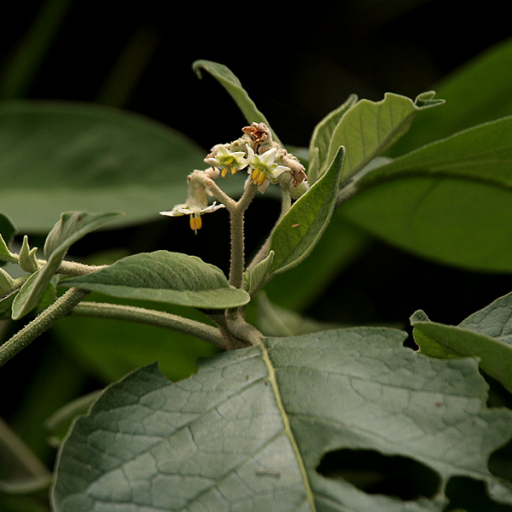
Plant Overview
Often called the Potato Tree or Velvet Nightshade, Solanum erianthum is a striking, fast-growing shrub that looks like a giant, fuzzy version of a common garden vegetable. Native to the tropical Americas and parts of Southern Florida, it is prized by native plant enthusiasts for its soft, silvery foliage and its ability to provide a quick privacy screen in warm climates. Despite its "comfy" appearance, it holds the mysterious and potent characteristics typical of the Nightshade family.
🔍 How to Identify
- 🍃 The Velvet Touch: The most defining feature is the dense covering of star-shaped hairs (trichomes) on the leaves and stems. This gives the plant a soft, felt-like texture and a dusty, grey-green or silvery hue.
- 🌼 Starry Blooms: It produces flat-topped clusters of small, white, star-shaped flowers with prominent yellow centers, which look remarkably like the blossoms found on tomato or potato plants.
- 🟡 Marble Fruits: The flowers give way to round, berry-like fruits about the size of a marble. They start as a fuzzy green and ripen into a dull, brownish-yellow color.
🏡 In Your Garden
- 🕊️ Wildlife Sanctuary: If you are looking to attract life to your yard, this is a powerhouse. While the berries are not for human consumption, they are a favorite snack for many tropical birds, who treat the plant like a natural vending machine.
- ☀️ Resilient Pioneer: This plant is a "pioneer species," meaning it is one of the first to grow in cleared or disturbed soil. It is incredibly drought-tolerant once established and thrives in full sun, making it an excellent choice for low-maintenance xeriscaping in tropical zones.
⚠️ Safety & Toxicity
- 🚫 Toxic Status: High. Like most wild members of the Solanum genus, this plant contains solanine and other glycoalkaloids.
- 🐾 Keep Away: Every part of the plant, especially the unripe green berries, is toxic if ingested. It should be kept out of reach of curious children and pets (dogs, cats, and livestock), as ingestion can cause severe gastrointestinal distress and neurological symptoms.
✨ Fun Fact
🧤 The Living Scrub-Brush: In various traditional cultures, the coarse, velvety leaves were historically used as a natural abrasive. Before modern sponges existed, people would use bunches of these leaves to scrub grease and grime off their cooking pots!

Detailed Care Instructions
To successfully grow Solanum erianthum, also known as the Hawaiian nightshade, you can follow these steps:
- Climate and Location: Solanum erianthum is native to tropical and subtropical regions. It thrives in warm climates with temperatures between 70-90°F (21-32°C). It is important to ensure that your location has the appropriate climate and temperature range for this plant.
- Soil: Solanum erianthum prefers well-draining soil that is rich in organic matter. Amend the soil with compost or well-rotted manure to improve its fertility and drainage. Avoid heavy clay soils that retain water and do not drain well.
- Propagation: You can propagate Solanum erianthum from seeds, stem cuttings, or root divisions. Seeds can be directly sown in the soil, while stem cuttings and root divisions should be taken during the active growing season.
- Planting: If planting from seeds, sow them about 1/4 inch (0.6 cm) deep in the soil and cover lightly with a thin layer of compost. If you are using stem cuttings or root divisions, plant them in prepared soil at a depth that matches their size.
- Watering: Water the plant moderately, allowing the soil to dry slightly between watering sessions. Solanum erianthum prefers regular watering but can tolerate short periods of drought once established.
- Light and Sun Exposure: Solanum erianthum requires full sun to partial shade. Choose a location where the plant can receive at least six hours of direct sunlight per day for optimal growth.
- Fertilizer: Apply a balanced, slow-release fertilizer during the growing season to promote healthy growth and flowering. Follow the manufacturer's instructions for application rates and frequency.
- Pruning: Solanum erianthum may need occasional pruning to control its growth. Remove any dead or damaged branches to maintain a tidy appearance and encourage new growth.
- Pest and Disease Control: Monitor the plant regularly for signs of pests or diseases, such as aphids, whiteflies, or leaf spots. Treat any issues promptly with appropriate organic or chemical controls.
- Support: Solanum erianthum is a vine-like plant that may benefit from a trellis or support structure to climb. Provide a suitable support system to prevent the plant from sprawling on the ground.
Remember to research and follow any specific care guidelines for Solanum erianthum in your particular region or gardening zone.

Place in a bright room that is sun drenched almost all day. Or directly in a south-facing window.

To water this plant, you should check the soil moisture level regularly by sticking your finger into the soil up to about an inch deep. If the soil feels dry at that level, it's time to water the plant. Use room temperature water and pour it slowly around the base of the plant until the water begins to come out from the drainage holes at the bottom of the pot. Avoid getting water on the leaves or flowers of the plant, and do not overwater as this plant prefers well-draining soil. Wait until the top inch of the soil has dried out before watering again.
To fertilize this plant, use a nitrogen-rich fertilizer during the growing season. Apply the fertilizer every three weeks to promote healthy growth. Avoid over-fertilizing, as this can lead to salt buildup in the soil and harm the plant. Additionally, ensure that the soil is well-draining and moist, but not waterlogged.
The preferred soil for Solanum Erianthum is a well-draining soil with good fertility. The pH should be slightly acidic to neutral (between 6.0 and 7.0). It is recommended to use a soil mix that is high in organic matter, such as compost or peat moss, to ensure good water retention and nutrient availability. Additionally, adding a slow-release fertilizer or organic amendments such as bone meal or fish emulsion can provide adequate nutrients for this plant. It is important to avoid overwatering or allowing the soil to become waterlogged, as this can cause root rot and ultimately harm the plant.
To propagate this plant, you will first need to take stem cuttings from a healthy, mature plant. Cuttings should be around 6 inches long and taken from the top or middle of the plant. Remove any leaves from the bottom half of the stem.
Next, dip the cut end of the stem into rooting hormone powder to encourage root growth. Plant the cutting into a well-draining soil mixture and water thoroughly. Keep the cutting in a warm, humid environment with bright, indirect light for several weeks until new growth emerges.
Once the cutting has established roots and new growth, it can be transplanted into a larger container or planted in a sunny location in the garden. Ensure adequate drainage and moderate watering to promote healthy growth.








