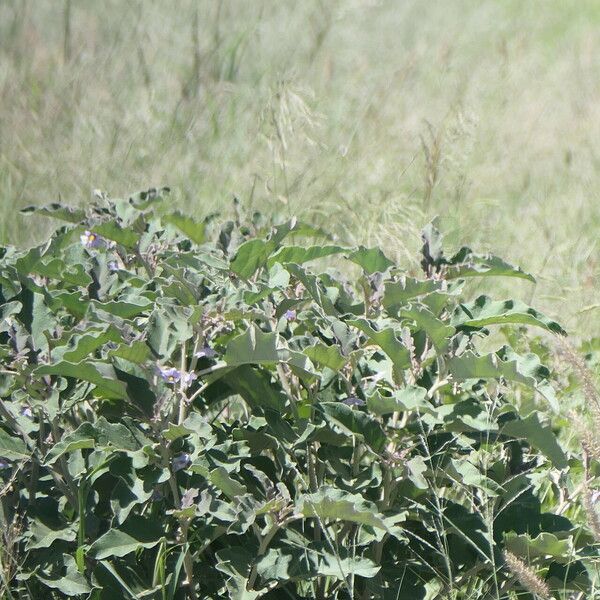
Plant Overview
Commonly known as the Bitter Apple or Lichtenstein's Nightshade, this resilient shrub is a striking member of the nightshade family native to the arid regions of Southern Africa. While its bright, melon-like fruits might look tempting to a hungry traveler, they carry a "bitter" reputation for a reason. In its native habitat, it’s a tough survivor, often found standing tall in dusty fields where other plants wither.
🔍 How to Identify
- 🌿 Velvety Foliage: The leaves are a soft, silver-green or greyish-green, often covered in fine hairs that give them a felt-like texture. They usually have wavy or lobed edges.
- ⚔️ Prickly Defense: Watch your fingers! The stems and even the midribs of the leaves are often armed with sharp, straight, yellowish prickles.
- 🟣 Star-Shaped Blooms: It produces classic nightshade flowers—five-pointed stars in shades of mauve or purple with a prominent "beak" of bright yellow anthers in the center.
- 🟡 Deceptive Fruit: The most recognizable feature is the round fruit. They start green with darker mottled stripes (looking like tiny watermelons) and ripen into a smooth, bright yellow.
🏡 In Your Garden
- ☀️ Sun Seeker: This plant is built for the heat. It thrives in full sun and is exceptionally drought-tolerant, making it a "xeriscaping" candidate in its native range, though it is rarely cultivated intentionally in home gardens due to its thorns.
- 🌱 Disturbed Soil: It is a pioneer species. You’ll often find it "volunteering" in areas where the soil has been turned over or overgrazed, as it has a deep taproot that helps it find water where others cannot.
- 🦋 Pollinator Magnet: Despite its prickly nature, the purple flowers are a favorite for carpenter bees and other large pollinators who use "buzz pollination" to release the pollen.
⚠️ Safety & Toxicity
- 🚫 Status: TOXIC. This plant should be handled with extreme caution and never consumed.
- 🐾 Details: Like many Solanum species, it contains high levels of glycoalkaloids (solanine). Ingesting the fruit can cause severe gastrointestinal distress, sweating, and respiratory issues. It is particularly dangerous for curious pets and livestock; in the wild, most animals instinctively avoid it because of its intense bitterness.
✨ Fun Fact
In some traditional African cultures, the juice from the bitter fruit has been used as a substitute for rennet to curdle milk for cheese-making, or even applied to the skin to treat certain parasites—though this requires expert knowledge to avoid poisoning!

Detailed Care Instructions

Place in a bright room that is sun drenched almost all day. Or directly in a south-facing window.

Some plants require more regular watering than others, which should be done every few days. It's critical to maintain the soil moist all of the time. The water requirements of the same plant placed in pots with varying sizes will differ. Because the water in the smaller pot evaporates faster than the water in the larger pot, it will require more watering. Regardless of pot size, the surface should constantly be maintained moist.








