Plant Overview
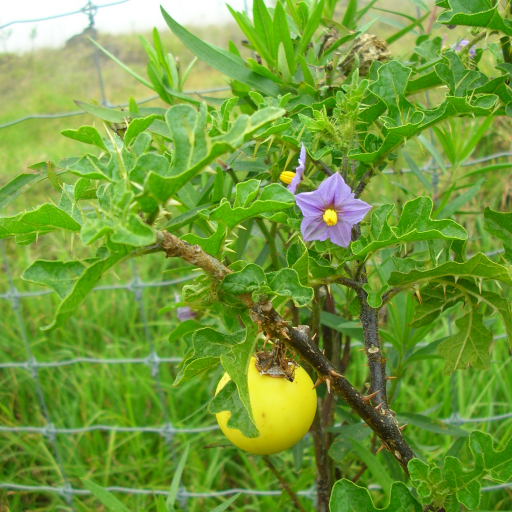
Commonly known as the Apple of Sodom or Devil’s Apple, this prickly shrub is a member of the Nightshade family that carries a reputation as dark as its name. Native to South Africa but now a common sight in Mediterranean climates and Australia, it is famous for its deceitful fruit—round, yellow berries that look like cherry tomatoes but are dangerously bitter. In ancient lore, it was said to grow near the Dead Sea, serving as a metaphor for things that look beautiful on the outside but are "dust and ashes" within.
🔍 How to Identify
- 🌵 Armed Stems: The plant is covered in formidable, straight yellow prickles that line the stems and even the midribs of the leaves, making it very painful to touch.
- 🌸 Starry Flowers: It produces delicate, five-petaled flowers that range from pale violet to deep purple, featuring a prominent yellow "beak" of stamens in the center.
- 🟡 Deceptive Fruit: The most striking feature is the round, golf-ball-sized fruit. They start with a green-and-white marbled pattern (similar to a tiny watermelon) and turn a bright, waxy yellow when mature.
🏡 In Your Garden
- 🌱 Tough Competitor: This plant is an opportunistic survivor. It thrives in poor, disturbed soils and is often found in neglected pastures or along roadsides where other plants struggle to grow.
- 🚜 Invasive Potential: Because livestock and most wildlife avoid eating it due to its bitterness and thorns, it can quickly take over a landscape, forming dense, impenetrable thickets that crowd out native species.
⚠️ Safety & Toxicity
- 🚫 Toxic Status: Highly Poisonous. Like many nightshades, the Apple of Sodom contains high levels of solanine and other toxic glycoalkaloids.
- 🐕 Risk Profile: The fruit is extremely dangerous if ingested by children or pets. Symptoms include severe stomach pain, vomiting, and neurological distress. Additionally, the sharp thorns can cause skin irritation or physical injury; always wear thick gardening gloves if you are attempting to remove it.
✨ Fun Fact
The name "Apple of Sodom" was used by the ancient historian Josephus, who claimed the fruit would dissolve into smoke and ashes if plucked—while it doesn't actually explode, its bitter, poisonous juice would certainly make a "sinner" regret taking a bite!

Detailed Care Instructions
To grow Solanum linnaeanum, also known as flannel weed, follow these steps:
- Soil preparation: Choose a well-draining soil with a pH level between 6 to 7.5. Prepare the soil by removing any weeds or debris and amend it with organic matter, such as compost, to improve fertility.
- Seed collection and germination: Collect mature seeds from a mature Solanum linnaeanum plant. Firstly, wash the seeds to remove any pulp or fruit residue. Then, soak the seeds in water for 24 hours before planting. This soaking process helps with germination.
- Planting: Plant the soaked seeds in a seed tray or small pots filled with the prepared soil. Place one seed per pot, burying it about 1 cm deep. Water the soil lightly after planting.
- Germination: Place the tray or pots in a warm location with indirect sunlight or under a grow light. Maintain a temperature of around 20-25 degrees Celsius (68-77 degrees Fahrenheit). The germination process may take around 1-2 weeks.
- Transplantation: Once the seedlings have grown multiple leaves and are around 10-15 cm (4-6 inches) tall, they are ready for transplantation. Choose a sunny location or a spot with partial shade for Solanum linnaeanum. Make sure to provide enough space between the plants, around 60 cm (24 inches), as they can become bushy.
- Watering and fertilizing: Water the plants regularly, keeping the soil slightly moist but not waterlogged. Avoid overwatering, as it can lead to root rot. Fertilize the plants every few weeks with a balanced, slow-release fertilizer to promote healthy growth.
- Pruning and maintenance: Prune the plants to control their growth and to remove any dead or damaged leaves. Regularly check for pests or diseases and address them promptly.
- Harvesting: Solanum linnaeanum usually produces fruits that are small and brightly colored. Harvest the ripe fruits carefully and handle them with gloves, as some people may experience skin irritation when in contact with the plant, specifically the fruits.
Note: It's important to remember that Solanum linnaeanum is considered an invasive species in some regions. Before growing this plant, check with your local agricultural authority or extension office to ensure it is legal and doesn't pose a threat to native ecosystems.

Place in a bright room that is sun drenched almost all day. Or directly in a south-facing window.

To properly water this plant, you should first ensure that the soil is dry to the touch before watering. When it is time to water, you should give the plant a thorough and deep watering to encourage root growth. It is important to avoid getting water on the leaves and to water the plant at the base, where the roots are located. This plant prefers well-draining soil, so it is important to avoid overwatering, which can lead to root rot. It is also recommended to avoid letting the plant sit in standing water. Additionally, in hotter or drier climates, the plant may require more frequent watering.
To fertilize the Solanum Linnaeanum plant, use a balanced fertilizer with equal amounts of nitrogen, phosphorus, and potassium. Apply the fertilizer once every four weeks during the growing season, usually from spring to summer. Mix the fertilizer with water as directed on the package and apply it to the soil around the plant's base. Avoid getting the fertilizer on the leaves or stem to prevent burning. Water the plant thoroughly after applying the fertilizer to help it absorb nutrients effectively.
Solanum Linnaeanum is a plant that requires well-draining, nutrient-rich soil to thrive. The soil should be slightly acidic with a pH of 5.5-6.5. It is recommended to use a high-quality potting mix that is rich in organic matter, such as sphagnum moss or compost, to provide essential nutrients for the plant. The soil should also be moist but not waterlogged, as excessive moisture can lead to root rot. Adding perlite or sand to the soil can improve drainage and prevent waterlogging. It is important to regularly fertilize the plant with a balanced fertilizer to encourage healthy growth and flowering. Overall, the soil used for Solanum Linnaeanum should be well-draining, nutrient-rich, slightly acidic, and moist but not waterlogged.
To propagate this plant, you will need to gather fresh seeds from the fruit. Clean the seeds and allow them to dry for a few days. Then, sow the seeds in a well-draining potting mix in a sunny location. Cover the seeds lightly with soil and keep the soil moist. Germination can take anywhere from 1-4 weeks. Once the seedlings have a few sets of true leaves, transplant them into larger pots or into the garden. Additionally, you can propagate Solanum Linnaeanum through stem cuttings. Take a cutting from a healthy plant and remove the lower leaves. Dip the cutting in rooting hormone and plant it in a well-draining potting mix. Keep the soil moist and in a warm location with bright indirect light. Roots should form in a few weeks and the cutting can be transplanted.








