Plant Overview
Often called the African Eggplant or Gboma, this vibrant member of the nightshade family is a staple in West African gardens and kitchens. Unlike the common purple eggplant found in Western supermarkets, Solanum macrocarpon is a multipurpose powerhouse, prized as much for its nutritious, bitter leaves as it is for its distinctive, ribbed fruits. It carries a deep history of hospitality, often served to guests as a traditional gesture of welcome.
🔍 How to Identify
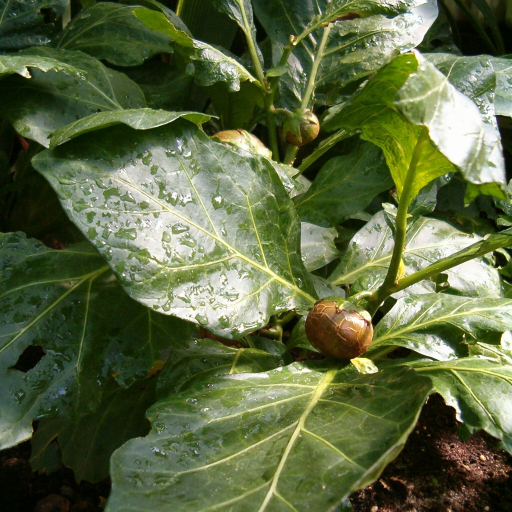
- 🍃 Large, Lobed Leaves: The foliage is broad, glossy, and wavy-edged, often resembling a cross between a tobacco leaf and a kale leaf.
- 🌸 Star-Shaped Flowers: It produces delicate, five-petaled flowers that range from white to pale violet, each featuring a bright yellow central cone (the anthers).
- 🍅 Ribbed, Oblate Fruit: The fruits are typically round but flattened at the ends, featuring prominent vertical ridges. They start a creamy green or ivory and ripen into a striking yellow or warm orange.
🏡 In Your Garden
- ☀️ Tropical Heat Seeker: This plant is native to tropical Africa and demands warmth. If temperatures dip below 50°F (10°C), the plant will stop growing and may drop its leaves, so it is best grown in a sunny, sheltered spot or a greenhouse in cooler climates.
- 🍲 Heavy Feeder: Because the plant produces both dense foliage and heavy fruits, it requires rich, loamy soil. It "eats" a lot of nitrogen and potassium, so regular mulching with compost is essential to keep the harvest plentiful.
⚠️ Safety & Toxicity
- ✅ Edible Status: The fruits and young leaves are safe and highly nutritious for human consumption when properly prepared. They are commonly used in soups and stews.
- 🐾 Pet Warning: Like all members of the Solanaceae (Nightshade) family, the raw stems, roots, and green parts contain solanine. This can be toxic to dogs, cats, and horses if eaten in significant quantities, leading to digestive upset or lethargy.
- 👅 Bitter Note: The leaves have a natural bitterness. While this is a desired culinary trait in many cultures, it can be surprising to the uninitiated!
✨ Fun Fact
In many Nigerian cultures, the African Eggplant is more than just food; it is a symbol of fertility and blessing. It is traditionally presented to visitors alongside kola nuts to signify a wish for a fruitful and prosperous life for the guest.

Detailed Care Instructions
To grow Solanum macrocarpon, also known as African eggplant or African nightshade, you can follow these steps:
- Seed selection: Obtain high-quality seeds from a reputable source or save seeds from a mature fruit. Ensure that the seeds are viable and not damaged.
- Germination: Start by sowing the seeds in small pots or seedling trays filled with a well-draining seed-starting mix. Plant the seeds about 1/4 inch deep and lightly cover them with soil. Water the soil gently to maintain moisture.
- Temperature and location: Solanum macrocarpon prefers warm conditions with temperatures between 70-90°F (21-32°C). Place the seedlings in a warm, sunny location that receives at least 6-8 hours of sunlight per day. Alternatively, you can use grow lights if natural sunlight is limited.
- Watering: Keep the soil evenly moist but not waterlogged. Water the plants when the top inch of soil feels dry. Avoid overwatering as it can lead to root rot.
- Transplantation: When the seedlings develop 2-3 true leaves, transplant them into larger pots or directly into the garden. Ensure a spacing of about 18-24 inches between plants.
- Soil requirements: Solanum macrocarpon thrives in well-draining soil enriched with organic matter. The pH range should be around 6.0-7.5. If your soil is heavy clay, consider amending it with compost or organic matter to improve drainage.
- Fertilization: Apply a balanced organic fertilizer according to package instructions or use compost to provide necessary nutrients for healthy growth. Repeat the fertilization process every 4-6 weeks throughout the growing season.
- Pruning and support: As the plant grows, you may need to provide support, such as stakes or trellises, to prevent the branches from breaking under the weight of the fruit. Prune the plant regularly to shape it and remove any dead or diseased parts.
- Pests and diseases: Monitor the plants for common pests like aphids, whiteflies, and spider mites. If detected, treat them with organic insecticides or use homemade solutions like neem oil. Practice good garden hygiene to prevent diseases and remove any infected plant material immediately.
- Harvesting: Solanum macrocarpon typically produces fruit within 70-90 days. Harvest the fruit when it reaches full size, shiny, and firm. Cut the fruit off the plant using a sharp knife or pruning shears, leaving a short stem attached.
Remember to always refer to local gardening guidelines and adapt the care instructions as per your specific growing conditions.
When watering this plant, it is important to avoid getting water on the leaves as it can cause damage. Instead, water the soil thoroughly and deeply, allowing the excess to drain away. The frequency of watering will depend on factors such as the temperature, humidity, and soil type, but a good rule of thumb is to water when the top inch of soil feels dry to the touch. Be sure to check the soil moisture level regularly and adjust your watering schedule accordingly. Overwatering can lead to root rot and other fungal diseases, while underwatering can cause the plant to wilt and become stressed. It is also important to provide adequate drainage to prevent water from pooling around the roots.
For optimal growth, apply a balanced fertilizer with equal amounts of nitrogen, phosphorus, and potassium. Apply the fertilizer every 2-3 weeks during the growing season, following manufacturer's instructions for dosage. Water the plant thoroughly after applying the fertilizer to help it absorb the nutrients. Avoid over-fertilizing, as it can damage the plant and reduce fruit production.
The ideal soil for this plant is a well-draining soil that is high in organic matter and has a pH level of 5.5-7.0. It should be rich in nutrients such as nitrogen, phosphorus, and potassium to promote healthy growth and fruit production. The soil should not become waterlogged, as this can cause root rot, but it should also not become too dry, as this can stress the plant. A mixture of compost, sand, and loam soil is recommended for optimal growing conditions.
Propagation of this plant can be done through stem cuttings. Select a healthy stem from the parent plant and cut it into sections that are 4-6 inches long. Remove the leaves from the bottom two-thirds of the stem and dip the cut end into a rooting hormone. Plant the stem cutting into a pot filled with moist soil and cover it with a plastic bag to create humidity. Place it in a bright location but avoid direct sunlight. Keep the soil moist but not waterlogged. After 2-3 weeks, roots should start to form and the plastic bag can be removed. Once the plant is established, it can be transplanted into a larger pot or into the ground.








