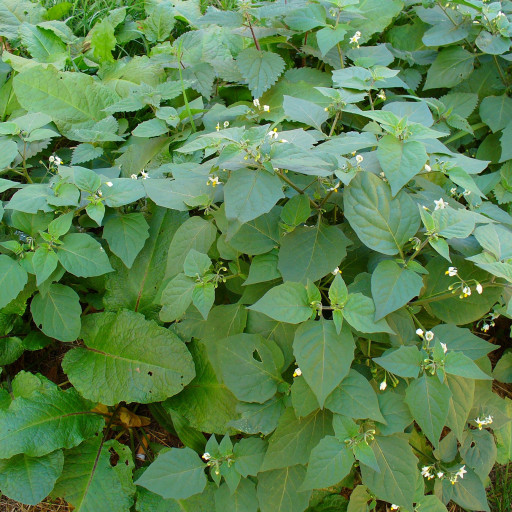
Plant Overview
Often shrouded in mystery and mistaken for its more dangerous relatives, Solanum nigrum, commonly known as Black Nightshade, is a resilient "wanderer" found across the globe. While it belongs to the same family as tomatoes and potatoes, this plant has a complex reputation, acting as a common garden weed that has been both feared and utilized by various cultures for centuries. Despite its dark name, it is a fascinating example of botanical adaptability.
🔍 How to Identify
- 🌼 The Flowers: Look for small, star-shaped white flowers with five petals. A distinctive cluster of bright yellow anthers pokes out from the center, looking much like a tiny version of a tomato flower.
- 🍃 The Leaves: The leaves are typically ovate or diamond-shaped with slightly wavy or "toothed" edges. They have a deep green hue and a soft, matte texture.
- 🌑 The Berries: This is the most famous feature. Small, round berries grow in drooping clusters, transitioning from a dull green to a deep, glossy ink-black when fully mature.
🏡 In Your Garden
- 🌱 The Opportunist: Black Nightshade loves "disturbed" soil, meaning it often pops up unexpectedly in your vegetable patches or flower beds after you’ve tilled the earth. It thrives in rich, nitrogen-heavy soil but is hardy enough to grow in sidewalk cracks.
- 🔄 Growth Habit: It grows as an upright, branching herb that can reach up to 2-3 feet tall. Because it produces a high volume of seeds within its berries, it can quickly become the "neighbor who never leaves" if not managed early in the season.
⚠️ Safety & Toxicity
- 🚫 Status: Toxicity varies significantly. All parts of the plant, especially the unripe green berries, contain solanine, a glycoalkaloid that can cause gastrointestinal distress, sweating, and drowsiness.
- 🐾 Pets & Kids: The dark, shiny berries can be tempting to children and curious pets. Ingestion of green berries or large amounts of foliage can lead to vomiting or more severe neurological symptoms in small animals.
- 🧪 The Identity Trap: Never confuse this with "Deadly Nightshade" (Atropa belladonna). While Solanum nigrum is less toxic, the two are often confused by hobbyists. S. nigrum berries grow in clusters, whereas Atropa berries grow individually.
✨ Fun Fact
In many parts of the world, including parts of Africa, Greece, and India, specific varieties of Solanum nigrum are actually cultivated as a food source! The leaves are boiled multiple times to remove toxins and eaten like spinach, and the fully ripe black berries are sometimes used in jams—though this should never be attempted without expert local knowledge.

Detailed Care Instructions
| Color | Dull, Dark Green Leaves With White To Purple Blooms And Green Fruit Which Turn Black When Ripe |
| Soil Ph | 5.5-7.5 |
| Invasive | Weed |
| Lighting | Full Sun |
| Toxicity | Non-Toxic |
| Soil Type | Moist, Well-Draining, Sandy, Loamy, Clay |
| Bloom Time | Early Summer To Early Autumn |
| Plant Type | Annual Or Perennial |
| Mature Size | Up To 2 Feet Tall With A 1 Foot Spread |
| Native Area | Northwestern Africa, Europe, China, Central And Western Asia, And The Indian Subcontinent |
| Sun Exposure | Full Sun To Partial Shade |
| Hardiness Zones | 10-11 |
Here are some steps to help you grow the Solanum Nigrum plant:
- Obtain seeds or seedlings: You can either purchase Solanum Nigrum seeds or search for seedling nursery. Seeds should be fresh and viable, and seedlings should be healthy.
- Choose a planting location: Solanum Nigrum prefers full sun or partial shade, so find a suitable spot in your garden. The plant can also tolerate a variety of soil types but prefers well-draining soil.
- Prepare the soil: Before planting, prepare the soil by removing any weeds or debris. If the soil is not well-draining, you can add organic matter such as compost or peat moss to improve drainage.
- Sow seeds or plant seedlings: If using seeds, sow them directly into the prepared soil at a depth of about 1/4 inch. Alternatively, if using seedlings, dig a hole slightly larger than the root ball and place the seedling in the hole. Gently cover the root ball with soil and pat it down.
- Water the plant: After planting, water the Solanum Nigrum thoroughly. Keep the soil moist but not waterlogged. Water regularly and deeply, especially during dry periods.
- Mulch: Apply a layer of organic mulch around the base of the plant to help retain moisture, suppress weeds, and regulate soil temperature.
- Prune if needed: Solanum Nigrum plants can become quite large, so if space is limited, you may need to prune the plant to control its size and shape. Pruning can be done in early spring or after flowering.
- Fertilize: Apply a balanced fertilizer (10-10-10) once or twice a growing season to provide essential nutrients for healthy growth. Follow the product's instructions for application rates.
- Monitor for pests and diseases: Keep an eye out for common pests like aphids, whiteflies, or spider mites. Promptly address any issues with appropriate organic or chemical controls.
- Harvesting: Solanum Nigrum produces small berries that turn from green to black when ripe. Harvest the berries when they are fully black and use them for culinary purposes or to collect seeds for future plantings.
With proper care and attention, you should be able to successfully grow Solanum Nigrum plants in your garden.

Place in a window with dappled sun or a spot in the middle of a room. Or directly in a window facing west or east.

To water this plant, the soil should be checked by inserting a finger into the soil to determine if it is dry or moist. If the soil is dry, then water should be applied at the base of the plant, taking care not to wet the foliage. The amount of water needed may vary depending on the level of sunlight, temperature, and humidity. It is recommended to water deeply but infrequently to encourage strong root growth and avoid overwatering. Additionally, it is important to ensure that the pot or planting bed has proper drainage to prevent waterlogging of the roots.
To fertilize this plant, apply a balanced fertilizer with a ratio of 10-10-10 or 12-12-12 once a month during the growing season. Water the plant deeply before fertilizing and then apply the fertilizer according to the package instructions. Avoid applying fertilizer when the soil is dry or the plant is under stress. Additionally, use a slow-release fertilizer for a longer-lasting effect.
For growing the plant Solanum Nigrum, it is recommended to use a well-draining soil mix with a slightly acidic pH level between 5.5 to 6.5. The soil mix should be rich in organic matter such as compost or well-rotted manure. The plant prefers moist but not waterlogged soil, so it is important to ensure that the drainage of the soil is good to prevent waterlogging. Additionally, adding perlite or coarse sand to the soil mix will improve drainage and aeration. It is also recommended to fertilize the soil with a balanced fertilizer every few weeks during the growing season.
Propagation of this plant can be achieved through several methods such as stem cuttings, seed propagation, and division of root clumps. One of the common methods is stem cutting propagation which involves taking a healthy stem cutting from the parent plant, making sure it has a few leaves at the top and removing any leaves from the bottom 2/3 of the stem. The cutting is then dipped into rooting hormone and planted in a pot filled with a well-draining potting mix. The pot is then covered with a plastic bag to create a greenhouse effect and placed in a warm, bright area until the cutting forms roots.
Seed propagation involves collecting the seeds from the parent plant and sowing them in a pot filled with seed-starting mix. The seeds should be lightly covered with soil and kept in a warm, moist environment until they germinate. Once the seedlings have grown to a suitable size, they can be transplanted to their permanent location.
Root clump division involves digging up the parent plant, dividing the root clump into smaller sections, and replanting the smaller sections in a new location. It is important to make sure that each section has enough roots and leaves to support its growth.
Common pests of the black nightshade include Spider mites, aphids, whiteflies, larvae. Make a habit of checking your black nightshade frequently for pests so that any infestations can be caught and managed early.








