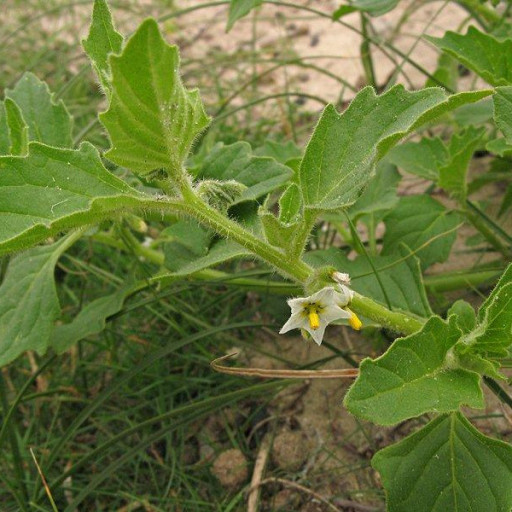
Plant Overview
Often mistaken for a wild tomato seedling, Solanum physalifolium—popularly known as Hoe Nightshade—is a hardy traveler originally from South America. While it shares a family tree with potatoes and eggplants, this plant is a master "hitchhiker" that has spread across the globe. It is a master of camouflage, blending into garden beds and agricultural fields until its distinct, berry-filled clusters give it away.
🔍 How to Identify
- 🍃 Foliage: The leaves are heart-to-oval shaped with noticeably wavy or "toothed" edges. They are covered in fine, sticky hairs that can give the plant a slightly dusty appearance.
- 🌸 Starry Flowers: It produces small, white, five-petaled flowers with a bright yellow cone of anthers at the center, looking exactly like a miniature version of a tomato blossom.
- 🟢 The Fruit: The berries are small and marble-sized. Unlike many nightshades that turn black or red, these usually stay green or turn a brownish-yellow, and they are partially cupped by an enlarged green "cloak" (the calyx).
🏡 In Your Garden
- 🌱 The Opportunist: This plant is a "pioneer species," meaning it is usually the first to sprout in freshly tilled or disturbed soil. If you’ve recently cleared a garden bed, the Hoe Nightshade is likely to be your first uninvited guest.
- ☀️ Sun Seeker: It thrives in full sun and rich soil, often outcompeting slower-growing vegetables. Because it produces thousands of seeds per plant, it is often managed as a weed to prevent it from taking over the yard.
⚠️ Safety & Toxicity
- 🚫 Toxic Status: High. Like most wild members of the Solanum genus, this plant contains glycoalkaloids (including solanine).
- 🐾 Risk Factor: All parts of the plant are toxic if ingested, but the green berries are particularly concentrated with toxins. It is dangerous to children and pets. Contact with the sticky foliage can also cause mild skin irritation or "contact dermatitis" in sensitive individuals.
✨ Fun Fact
The species name physalifolium literally means "leaves like a Physalis." It was named this because its foliage and the way its fruit is cradled in a green husk look suspiciously like a Tomatillo or Cape Gooseberry—but don't be fooled, this one is definitely not for the dinner table!

Detailed Care Instructions
To grow Solanum Physalifolium, also known as the cutleaf nightshade, you can follow these steps:
- Obtain Seeds or Seedlings: Acquire high-quality seeds or young seedlings from a trusted source or nursery.
- Select a Suitable Location: Choose a sunny location for planting, preferably with well-draining soil. This plant can tolerate partial shade but thrives best in full sun.
- Prepare the Soil: Prior to planting, prepare the soil by loosening it with a garden fork or tiller. Remove any weeds or grass from the area and mix in organic matter like compost to improve the soil structure and fertility.
- Planting Seeds: If starting with seeds, sow them directly into the prepared soil, following the recommended depth mentioned on the seed packet. Space the seeds adequately, about 1-2 feet apart, as this plant can spread.
- Planting Seedlings: If using young seedlings, dig holes slightly deeper and wider than the seedling's root ball. Gently place the seedling into the hole, ensuring the top of the root ball is level with the soil surface. Fill the hole with soil and press it gently around the base of the seedling.
- Watering: After planting, water the seeds or seedlings thoroughly but avoid over-watering, as it can lead to root rot. Keep the soil slightly moist during the germination and establishment period.
- Mulching: Apply a layer of organic mulch, like straw or wood chips, around the base of the plants to help conserve moisture, suppress weeds, and regulate soil temperature.
- Support (if necessary): If the plant starts sprawling or drooping, you can provide support by gently staking it with a garden stake or trellis. Tie the plant loosely to the support to avoid damage.
- Pruning: Regularly prune the plant to control its growth and shape. Cut back any dead, damaged, or diseased branches, and remove any excessive growth that might hinder airflow or light penetration.
- Fertilization: Apply a balanced fertilizer according to the manufacturer's instructions during the growing season to provide essential nutrients to the plant.
- Pest and Disease Control: Monitor the plant regularly for any signs of pests or diseases, such as aphids or fungal infections. Use appropriate organic pest control methods if necessary.
- Harvesting: Harvest the fruits or berries when they are fully ripe. The ripe fruits will have a yellowish-orange color and are enclosed within protective husks.
Remember to research specific care instructions for Solanum Physalifolium in your particular region, as climatic conditions can vary.

Place in a bright room that is sun drenched almost all day. Or directly in a south-facing window.

To water the plant known by the scientific name Solanum Physalifolium, first, check the soil moisture level by digging down a few inches with your finger. If the soil feels dry, it's time to water.
Choose a watering can or hose with a gentle spray nozzle to avoid damaging the plant. Water the base of the plant, rather than the leaves, to prevent fungal growth.
Slowly water the soil until it becomes moist, but not soggy. Avoid overwatering, as this can cause root rot.
During summer months, the plant may require more frequent watering, while in cooler weather it may need less.
Additionally, it's important to note that Solanum Physalifolium prefers well-draining soil, so make sure excess water can escape from the pot or planting hole.
To fertilize this plant, apply a balanced fertilizer, with equal parts of nitrogen, phosphorus, and potassium, every four to six weeks during the growing season. Dilute the fertilizer to half strength and apply it to the soil around the base of the plant. Water the plant well after fertilizing to ensure that the nutrients reach the roots. Avoid over-fertilizing, as it can lead to excessive growth or damage to the plant.
Solanum Physalifolium plant prefers a well-draining soil with a slightly acidic to neutral pH level. The soil should be fertile and rich in nutrients, particularly nitrogen and potassium. It is important to avoid using heavy or overly compacted soil, as this can hinder root growth and lead to poor plant health. Organic matter, such as compost or aged manure, can be added to the soil to improve its structure and nutrient content. Adding a layer of mulch around the base of the plant can also help to retain moisture and regulate soil temperature.
There are several ways to propagate this plant. One way is to take stem cuttings. Select a healthy stem and cut it at a 45-degree angle just below a node. Remove the lower leaves and dip the cut end in rooting hormone. Plant the cutting in a pot filled with moist potting soil. Keep the cutting in a warm and bright location, and mist it regularly. Roots should develop within a few weeks.
Another way to propagate this plant is through layering. Select a healthy stem and bend it to the ground. Make a small incision in the stem where it touches the soil. Cover the incision with soil and weigh down the stem with a rock or other heavy object. Keep the soil moist and wait for roots to develop. Once the stem has rooted, cut the stem from the parent plant and transplant the new plant.
Lastly, this plant can also be propagated through division. Carefully dig up the parent plant and separate the root ball into smaller sections. Each section should have its own stem and roots. Transplant the new sections into individual pots filled with potting soil. Keep the soil moist and in a warm and bright location until they establish.








