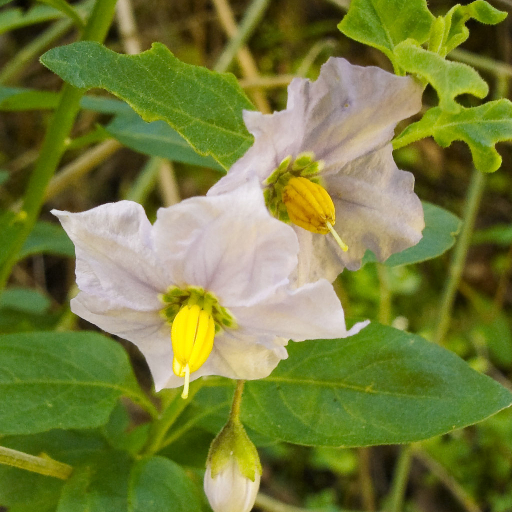
Plant Overview
Known as the Bluewitch Nightshade, this enchanting perennial shrub sounds like it stepped right out of a dark fairy tale. Native to the rugged chaparral and oak woodlands of the American West, it is prized for its ethereal, violet-blue blossoms and its ability to thrive where other plants might wither under the sun. It acts as a beacon for local pollinators, adding a touch of mystical color to wild landscapes.
🔍 How to Identify
- 💜 The Flowers: Deep blue to violet star-shaped petals with a distinct "beak" of fused bright yellow anthers in the center.
- 🍃 The Foliage: Small, dark green leaves that are often slightly fuzzy or sticky to the touch, growing on semi-woody stems.
- 🍒 The Fruit: After flowering, it produces small, round green berries that eventually turn a dull purple-black when fully ripe.
🏡 In Your Garden
- 🦋 Wildlife Magnet: It is a vital source of nectar for bumblebees and butterflies. Interestingly, bees must "buzz pollinate" these flowers, vibrating their wings at a specific frequency to release the pollen.
- 🏜️ Tough as Nails: Once established, this plant is incredibly drought-tolerant. It prefers well-draining soil and can handle rocky slopes where many other garden plants would struggle.
- ✂️ Pruning Needs: Because it can get a bit "leggy" or woody over time, a light pruning in the late fall helps maintain a compact, bushy shape and encourages more flowers the following spring.
⚠️ Safety & Toxicity
- 🚫 Status: TOXIC. Like many members of the Nightshade family, the Bluewitch contains solanine and other alkaloids.
- 🐾 Details: All parts of the plant, especially the unripe green berries, are poisonous if ingested. Keep this plant away from curious pets and children who might be tempted by the berry-like fruit. Skin contact is generally fine, but some sensitive individuals may experience mild irritation from the fuzzy leaves.
✨ Fun Fact
The "witch" in its name likely refers to its membership in the Solanaceae family—the same family as belladonna and mandrake—which has been associated with witchcraft, potions, and folklore for centuries!

Detailed Care Instructions
To grow Solanum umbelliferum (blue witch nightshade) plants, follow these steps:
- Seed selection: Obtain good quality seeds from a reputable source or collect the seeds from mature, healthy plants.
- Germination: Start the germination process indoors about 8-10 weeks before the last frost date in your region. Sow the seeds in a seed-starting tray or small pots filled with a well-draining seed starting mix. Lightly cover the seeds with soil and keep them consistently moist.
- Light and temperature: Provide bright, indirect light to encourage healthy growth. Maintain a temperature between 65-75°F (18-24°C) during germination and seedling development. Use a heating mat if necessary to maintain warmth.
- Transplanting: Once the seedlings have developed their second set of true leaves, they can be transplanted into slightly larger pots or directly into the garden. Harden off the seedlings by gradually acclimating them to outdoor conditions over a period of 7-10 days.
- Soil requirements: Choose a well-draining soil that is rich in organic matter. Solanum umbelliferum prefers a soil pH slightly on the acidic side, around 6.0-6.5.
- Sun exposure: Select a planting location that receives full sun to partial shade. Solanum umbelliferum can tolerate a wide range of light conditions, but it tends to produce more flowers and fruits in full sun.
- Watering: Water the plants thoroughly after transplanting and maintain regular watering throughout the growing season. Allow the soil to dry out slightly between watering to prevent overwatering.
- Fertilizing: Apply a balanced, slow-release fertilizer or a water-soluble fertilizer every 4-6 weeks during the growing season to promote healthy growth.
- Pruning: Prune the plants annually to maintain their shape and remove any dead or damaged branches. This will also improve air circulation and reduce the risk of disease.
- Pests and diseases: Monitor the plants regularly for common pests like aphids, spider mites, and whiteflies. Treat any infestations promptly with organic pest control methods. Solanum umbelliferum is relatively disease-resistant but may be susceptible to fungal infections if kept in overly damp conditions.
- Propagation: Solanum umbelliferum can be propagated by seeds or through stem cuttings. Take 6-8 inch stem cuttings from healthy, mature plants and root them in a well-draining potting mix.
By following these steps, you should be able to successfully grow Solanum umbelliferum plants in your garden.

Place in a bright room that is sun drenched almost all day. Or directly in a south-facing window.

To water this particular plant, you will need to consider the soil type, weather conditions, and the age of the plant. It is recommended to have well-draining soil, allowing water to flow through and out of the pot or soil efficiently. The plant should be watered at the base, avoiding pouring water directly onto the plant's foliage. Younger plants will require more frequent watering, while mature plants can go longer periods without watering. Additionally, it is essential to avoid overwatering the plant, as this can lead to root rot and other fungal diseases. Always check the top layer of soil before watering, and only water when the soil feels dry to the touch. Lastly, it is best to water in the early morning or late evening when temperatures are cooler to avoid evaporation.
- Determine the appropriate time to fertilize based on the plant's growth stage and the soil's nutrient requirements.
- Use a balanced fertilizer with equal parts of nitrogen, phosphorus, and potassium.
- Follow the package instructions for application rates and frequency.
- Apply the fertilizer evenly around the plant's root zone.
- Water the plant after applying the fertilizer to help it absorb the nutrients.
- Avoid using too much fertilizer, as it can burn the plant's roots and cause damage.
- Monitor the plant's growth and adjust the fertilizer application as needed.
The ideal soil for Solanum umbelliferum should be well-draining and slightly acidic, with a pH range of 5.5 to 6.5. The soil should be rich in organic matter and have good water retention capacity, but not be waterlogged. It should be loose and crumbly, allowing for good root growth and aeration. The plant prefers sandy or loamy soils, but can also grow in clay and rocky soils if they are high in organic matter. The soil should be fertilized with a balanced fertilizer, such as a 10-10-10, every 4-6 weeks during the growing season. It is important to avoid over-fertilizing as it can lead to excessive growth and decreased fruit production.
Propagation of this plant can be done through seeds or cuttings. To propagate through seeds, collect the ripe berries from the parent plant and remove the pulp. Sow the seeds on moist soil and keep them in a warm and bright location until they germinate.
To propagate through cuttings, select a healthy stem from the parent plant and cut a 6-inch stem. Remove the leaves from the bottom 2 inches of the stem and dip the cut end into rooting hormone. Plant the stem in moist soil and keep it in a warm and bright location until it develops roots.
Regardless of the propagation method used, it is important to keep the new plants moist and protected from direct sunlight until they are established.








